
Guitars have been in constant flux ever since their first predecessors were created some 2,500 years ago. It was in the 1600s that the guitar in Spain started to look more like its modern version, but guitars were still subject of experimentation between the 17th and 18th century.
“The seventeenth century was a period during which the guitar went through any number of structural changes”
-Bellow
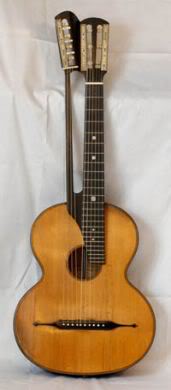
By the 1800s, six string guitars had been established as the norm, but seven-string, or heptachords, and other extended-range guitars were still around in the hands of luthiers and guitar players. In its early forms, additional strings in seven-string and other extended range guitars were not fretted, but attached to the side of the neck. These guitars are often referred to as harp guitars
The additional strings in these guitars were plucked only as open strings, as seen in the composition “La Zuyderzee” by French composer…
View original post 241 more words

 msamba