
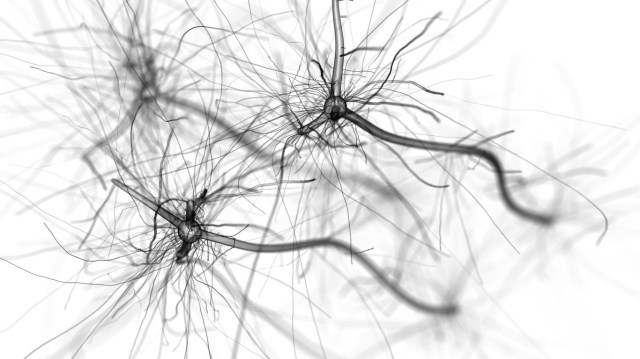
 The ability to obtain new memories in adulthood may depend on neurogenesis — the generation of new neurons in the hippocampus — to clear out old memories that have been safely stored in the cortex, according to research in male rats published in JNeurosci.
Previous research suggests that the hippocampus has a finite capacity to acquire and store new memories. It is unknown how the brain compensates for this limitation to facilitate learning throughout life.
Kaoru Inokuchi and colleagues show that reducing neurogenesis in rats impairs recovery of learning capacity while promoting neurogenesis through physical activity on a running wheel increased hippocampal capacity.[…]

 msamba
Apart from some neurogenesis, dendritic spreading is one way single cells can multiply their capabilities. A finite mass of neurons has many times over it’s cell population of possible connections since they can rearrange, add, and subtract connections.
LikeLiked by 1 person