
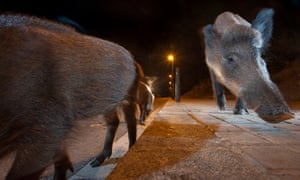
Research involving 62 species found mammals spent relatively less time being active during the day when humans were nearby
Human disturbance is turning mammals into night owls, with species becoming more nocturnal when people are around, research has revealed.
The study, encompassing 62 species from around the globe, found that when humans were nearby, mammals spent relatively less time being active during the day and were more active at night – even among those already classed as nocturnal.
Experts say such a shift might not only affect particular animals themselves – for example impacting their ability to navigate or find food – but also have numerous knock-on effects across other species.
Kaitlyn Gaynor, first author of the research and a doctoral student at the University of Berkeley, said the findings echoed the past, noting it was only after the extinction of the dinosaurs that mammals started exploring the daylight.
“Humans are now this ubiquitous terrifying force on the planet and we are driving all the other mammals back into the night-time,” she said.
Gaynor said the shift might affect numerous interactions between species, noting that coyotes in California are moving from eating diurnal creatures like squirrels and birds to nocturnal animals like mice, rats and rabbits, while sable antelope in Zimbabwe are less able to access water during the day as they shift towards increased nocturnal behaviour

 msamba