
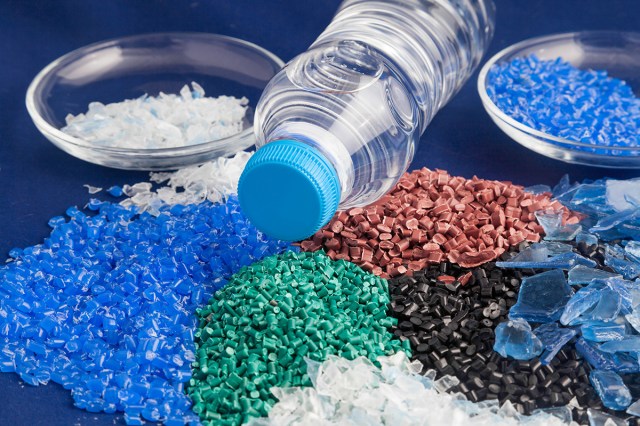
At face value, taxing consumption of materials derived from petrochemicals and subsidizing production of bioplastics both sound like they’d encourage sustainable consumption. But applying these policies to meet a hypothetical 5% target for bioplastics use reveals a different story, according to scientists in Germany.
Today, bioplastics have a market share of around 1%, but as this number rises so does the amount of sugar- and starch-based feedstock that must be grown.
The researchers found that land use changes to provide this feedstock — particularly, the conversion of managed forests into cropland, eliminating valuable carbon sinks — lead to an overall rise in greenhouse gas emissions.
Both taxes and subsidies help suppress the market for petroleum-derived plastics (by 0.37% and 0.07%, respectively). But subsidies increase competition for land, displacing other uses, and taxes risk economic penalties.
Calculations based on the tax scenario reveal a subsequent contraction of all sectors employing plastics, equivalent to an annual drop of 0.07% in global real GDP.
The group, based at the University of Bonn, is directing its analysis at policy makers and points out that it could take more than 20 years for bioplastic feedstocks to pay back the carbon lost through deforestation.
“Policy support to bioplastics via taxes or subsidies needs to be complemented by governance initiatives and conservation policies to prevent deforestation in those countries producing feedstock to be used for bioplastic production,” says Neus Escobar. “Our findings encourage research in advanced technologies which do not compete with food and feed uses, such as those based on algae or perennial crops cultivated in marginal land.”
Escobar adds that it’s important to focus on biodegradability and recyclability as much as on the origin of the feedstock.
“Just because a plastic is biodegradable, this doesn’t necessarily mean that it will be fully degradable in marine environments,” Escobar cautions.
The group’s results highlight shortcomings for both taxes and subsidies as policy tools for protecting the environment and mitigating climate change by promoting bio-based plastic consumption. So what should governments do instead?

 msamba