
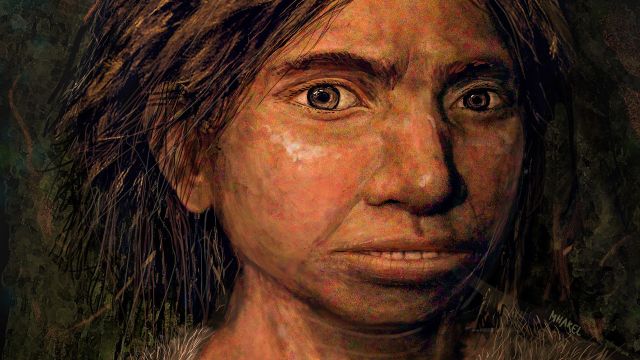
Many of us can picture the face of a Neanderthal, with its low forehead, beetled brows, and big nose. But until now, even scientists could only guess at the features of the extinct Denisovans, who once thrived across Asia. For more than 10 years, these close cousins of Neanderthals have been identified only by their DNA in a handful of scrappy fossils.
Now, a new method has given the Denisovans a face. A recently developed way to glean clues about anatomy from ancient genomes enabled researchers to piece together a rough composite of a young girl who lived at Denisova Cave in Siberia in Russia 75,000 years ago. The results suggest a broad-faced species that would have looked distinct from both humans and Neanderthals.
Ludovic Orlando, a molecular archaeologist at the University of Copenhagen who wasn’t involved in the work, calls the approach “clever.” But he and others caution against making specieswide generalizations based on a single individual.[…]
More: Ancient DNA puts a face on the mysterious Denisovans, extinct cousins of Neanderthals

 msamba