
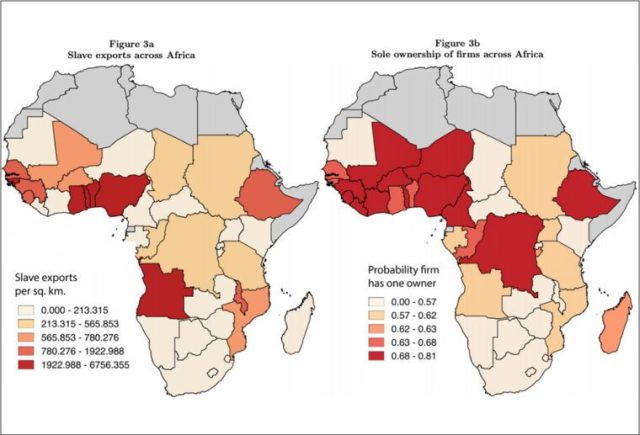
The effects of the African slave trade persist today among businesses in parts of the continent, with companies more often tightly controlled by individuals or families — often because they have limited access to equity funding and shared ownership.
Meanwhile, businesses in African countries less affected by the slave trade have more diversified ownership structures.
While closely held ownership isn’t necessarily bad, research co-authored by a faculty member at Washington University in St. Louis’ Olin Business School suggests some African firms may miss 21st century growth opportunities without the ability to raise capital through shared ownership.
“The slave trade appears to predict ownership structure in ways that nothing else can explain,” said Lamar Pierce, professor of organization and strategy at Olin School and co-author of the new study.
In particular, the research showed that manufacturing firms — heavily dependent on investment capital through debt or equity — tend to have much more closely held ownership structures in countries heavily affected by slavery, primarily in western and central Africa.[…]
Read more: Research finds slave trade’s effect on firm ownership persists today – ScienceBlog.com

 msamba