

Astronaut Karen Nyber,Expedition 36 flight engineer,with a snack of peanut butter and chocolate sandwiched between two waffles. Photo taken in the Node 1 module of the International Space Station. Nyber sent this image back to earth as a Twitter message. Photographer: Karen Nyberg. Courtesy NASA
Dan Kendall, Curator at the National Space Centre, offers a bite-sized history of food in space
In space, food is a critical factor for mission success. If you’re going to send humans into space, you’d better well feed them. Obviously. But back in 1961, when Yuri Gagarin prepared to be Earth’s first space traveller, scientists didn’t know for sure if it was even possible to eat in space. Would all that floating about in micro-gravity make swallowing or digestion tricky?
Gagarin quickly determined that eating in space was OK. That is to say, it was possible, but perhaps not all that tasty. The first food ever eaten in space was a tube of beef and liver paste. Meat-paste in a toothpaste style tube. As Homer Simpson wouldn’t say, ‘Mmmmm.’
Gagarin polished off another tube (so perhaps it wasn’t as bad as it sounds), before washing it down with a tube of chocolate pudding. Much of the early space food was in this pureed baby food style, or bite-sized chunks.
Both the American and Soviet space programmes recognised that messy foods like sandwiches break apart into crumbs. Here on Earth gravity helps mess fall onto your plate, but in the weightless micro-gravity inside a spacecraft, crumbs will float away – with the potential to be really dangerous. Imagine if crumbs floated away and got into your eyes or into electrical machinery damaging the spacecraft. As a result, wraps are often used as a substitute for crumbly bread.[…]
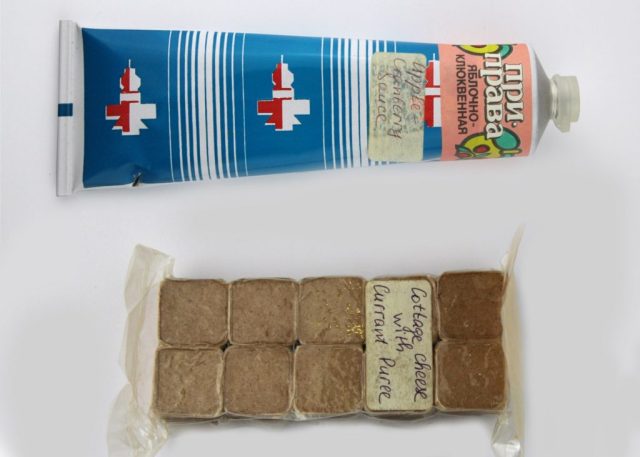
Examples of 1980s and 1990s Soviet space food. Courtesy National Space Centre
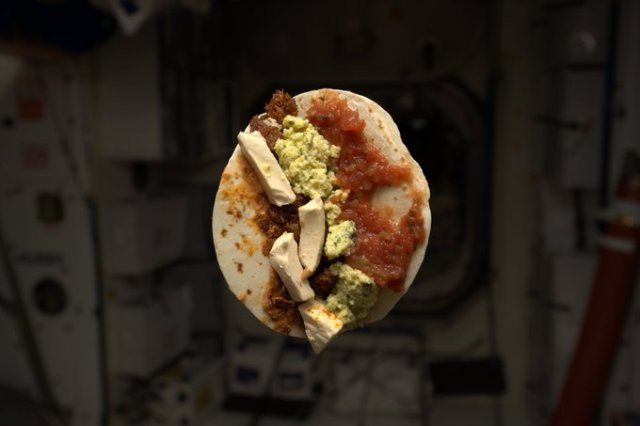
Breakfast taco floating on the International Space Station – Credit: Tim Kopra / NASA
Read More: In space no one can hear you chew: The history of Space Food

 msamba