
 The first question many people ask about artificial intelligence (AI) is, “Will it be good or bad?” The answer is … yes.
Canadian company BlueDot used AI technology to detect the novel coronavirus outbreak in Wuhan, China, just hours after the first cases were diagnosed. Compiling data from local news reports, social media accounts and government documents, the infectious disease data analytics firm warned of the emerging crisis a week before the World Health Organization made any official announcement.
While predictive algorithms could help us stave off pandemics or other global threats as well as manage many of our day-to-day challenges, AI’s ultimate impact is impossible to predict.
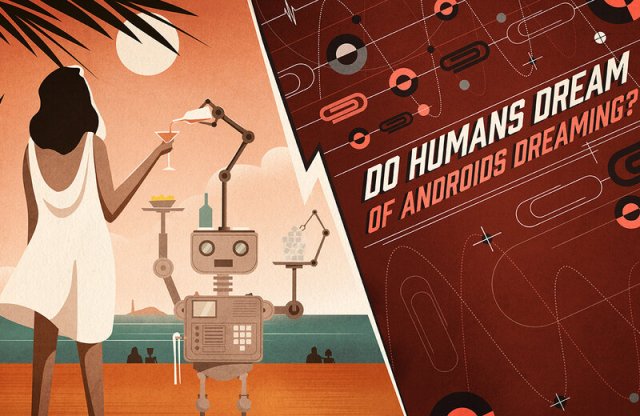
One hypothesis is that it will bring us an era of boundless leisure, with humans no longer required to work. A more dystopian thought experiment concludes that a robot programmed with the innocuous goal of manufacturing paper clips might eventually transform the world into a giant paper clip factory. But sometimes reality is more profound than imagination. As we stand at the threshold of the Fourth Industrial Revolution, now may be the most exciting and important time to witness this blurring of boundaries between the physical, digital and biological worlds.
“The liminal is always where the magic happens. This is always where we get crazy new identities, new debates, new philosophies,” says Tok Thompson, professor (teaching) of anthropology at USC Dornsife, and an expert on posthuman folklore.
For better or worse, we know AI will be created in our own image — warts and all. A dash of humankind’s mercurial ethics, wonky reasoning and subconscious biases will be stirred a priori into the algorithmic soup.[…]
Continue reading: What does the future of artificial intelligence mean for humans? – ScienceBlog.com

 msamba