
 As mountain gorillas number more than 1,000 and India’s tiger populations rebound, recovery efforts reap their rewards.
As we mark World Conservation Day this week, it is a good time for some heartening news from the environmental world, which shows how the determined efforts of the few can create positive change and even bring species back from the brink.
Deep in central Africa – where the borders of the Democratic Republic of the Congo, Rwanda and Uganda meet – lies one of the most ancient habitats on the continent and the last refuge of one of the rarest animals on earth: the mountain gorilla.
By the 1980s, the effects of decades of devastating civil war and unbridled poaching had reduced their numbers to about 350 animals. The shadow of extinction was closing in.
When we flew through the mist swirling over forest-clad mountains in 2011, the primate was still critically endangered. From above we could see how the hillsides had been stripped bare for cultivation, butting up against the edge of Uganda’s Bwindi Impenetrable National Park, where half the world’s remaining mountain gorillas live.
The potential for conflict between man and great ape was clear, the fields providing easy pickings for the gorillas which were often subsequently killed in large numbers.
Fear and wonder
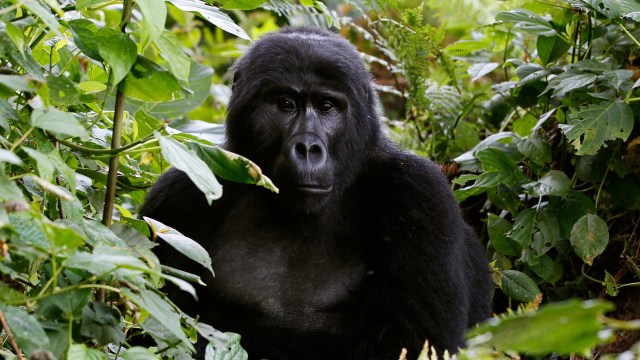
After a sweltering trek of several hours through the rainforest, we homed in on a gorilla group. I remember being so close that we could pick out their scent – pretty much how pungent, sweaty humans would smell after a lifetime without shower gel. They share 98 percent of our DNA after all.
Suddenly Safari, a big alpha male, bowled purposefully into view, stopped and stared us down.[…]
Continue reading: Wildlife revival: Conservation wins for tigers and gorillas

 msamba