
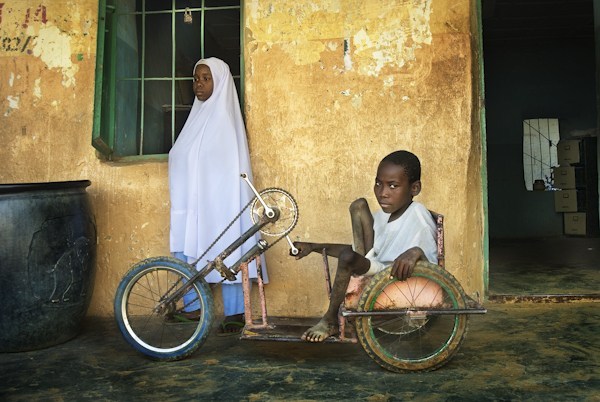
Polio victims Naja Atu Yusif (L) and Adamu Yusif (R), in the courtyard of their primary school in Kano. While Naja can limp, Adamu can’t walk and has to use a tricycle to move around. Kano, Nigeria
Writer, Videographer and Documentary Photographer Tadej Znidarcic is the Edge of Humanity Magazine contributor of this social documentary photography. From his project ‘Living With Polio In Northern Nigeria‘
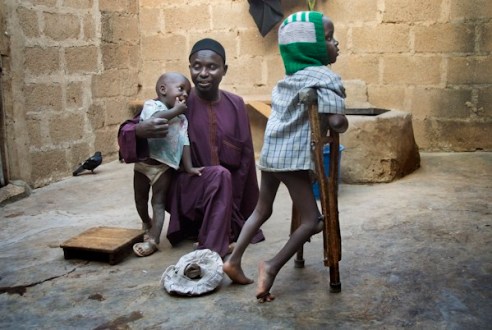
Aminu Ahmed Tudun-Wada, chairman of KPVTA, with two of his children at his home in Kano. Umar (R) is his only child affected by polio. Umar was born in 2003 when immunization was boycotted in the State of Kano and its surroundings; he contracted polio few months after his birth. Kano, Nigeria
In July 2014, Nigeria recorded the last case of wild poliovirus. Polio paralyses its victims and there is no cure for it. The only way to fight it is to vaccinate all the children. If Nigeria can go three years without a new poliovirus case, it will be declared a non-endemic country by the end of July 2017. That’s an immense achievement for a country that in 2008 reported the most new polio cases in the world. The majority of new infections were concentrated around Kano, a major city in the predominantly Muslim north of the country. Once the government, traditional and religious leaders stepped together, the reluctance to vaccinations slowly eroded. Still, thousands of people now live with life-long disabilities caused by polio. Some of the polio victims have self-organized and they continue to inform the public about the importance of immunization, persuade parents to send their crippled children to school and to provide training in different vocational trades to victims who can now earn a living with their work. And for entertainment they invented para-soccer.[…]
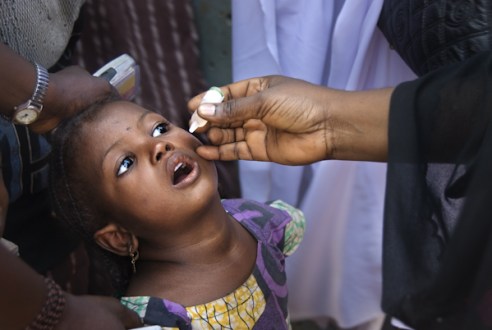
Girl receives polio vaccine in Kaduna, northern Nigeria city, during polio national immunization days (NIDs). During NIDs teams of vaccinators try to reach every child in Nigeria. Kaduna, Nigeria

 msamba