
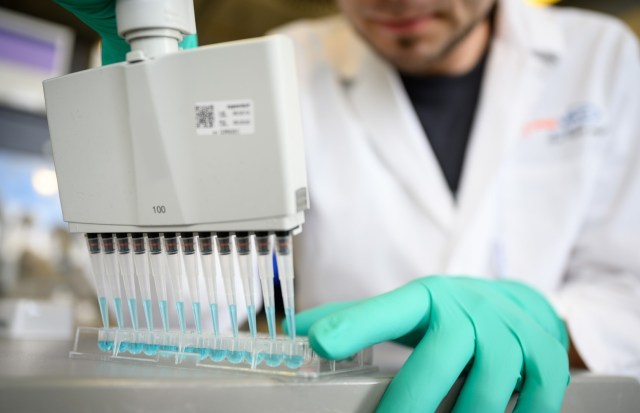
 by Annette Ekin
Dr Lidia Oostvogels is feeling the pressure.
After nearly two decades of working in vaccine development, seeing the subject of her work – coronavirus – in the news every single day is a first for her.
‘It’s very exciting and very motivational, but there is a lot of pressure,’ she said.
Dr Oostvogels is steering the human trials of a coronavirus vaccine for German biopharmaceutical firm CureVac, where she is head of their infectious diseases programme and leads its development of vaccines and therapies.
Back in January, after returning from Christmas holidays, CureVac’s infectious diseases team started to discuss the outbreak in Wuhan and whether they could work on a vaccine.
‘We had to convince our management that this was a project that was worth starting work on,’ said Dr Oostvogels, adding that they knew it wasn’t another case of MERS or SARS where people began developing vaccines and then the viruses disappeared. ‘It would, of course, have been much nicer if it would have happened this time too, but it didn’t.’
Once the SARS-CoV-2 genome sequence was published in early January, CureVac scientists started work on figuring out the best way to make a vaccine to bring forward into clinical trials, which test new vaccines and drugs in people.
They had to develop and manufacture the vaccine candidate, called CVnCoV, test it in animals and get the green light from regulatory authorities and ethics committees to begin injecting in humans, which began in mid-June.
This is where Dr Oostvogels’ clinical development team came in. Their work involves ‘putting in place and executing the clinical trials’. It means designing the trials in humans, interpreting all the trial ‘content’, which includes what to test in subjects, who to test and who to exclude and interpreting results, and making decisions based on those.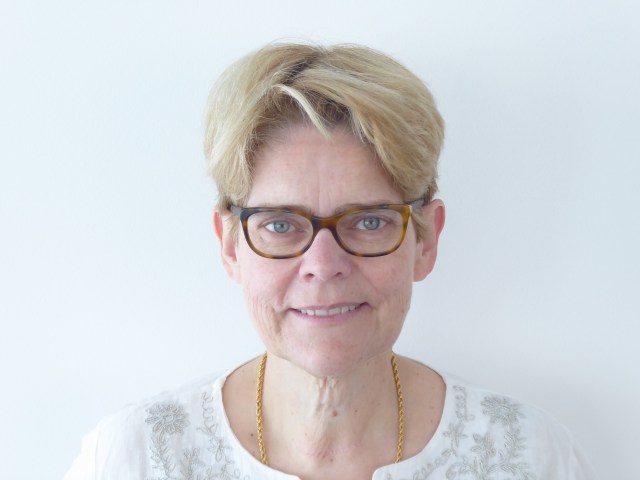
mRNA
CureVac’s vaccine is based on messenger RNA, or mRNA, technology, which is relatively new – only about 20 years old. There are currently six such vaccines for Covid-19 in human trials around the world.
mRNA translates DNA, the genetic code of living structures, into protein, the building block of most living structures, explains Dr Oostvogels. An mRNA vaccine against Covid-19 works by instructing the body’s cells to produce a specific coronavirus protein (not the virus itself), which triggers an immune system response that the body can then repeat if it encounters the real virus.
No vaccine using this technology has yet been proven safe and effective to be licensed for human use.
The trials follow what Dr Oostvogels calls the ‘bible’ – the study protocol produced by her team that describes everything about the trial, from its procedures to how the data will be analysed. CureVac also produced the investigator’s brochure that lists detailed information on the vaccine, including manufacturing process, results of previous tests and potential risks. This guides the investigators carrying out the trials, but also allows ethics committees and regulatory authorities to assess the vaccine and decide whether to allow the study to take place.
CureVac is carrying out its Phase 1 trial – which tests for side effects and to find the best dose to bring forward – in the German cities of Tübingen, where the company is based, Munich and Hanover, and in Ghent, Belgium. Where usually they’d work with participants aged 18-40, since the disease burden affects older people their participants go up to 60 years of age.
When CureVac first announced their trials, they were flooded with emails from people wanting to participate, says Dr Oostvogels. ‘That was really amazing.’
That’s not how they got participants. Investigators at four university hospitals with recognised vaccination centres run the trials to evaluate CureVac’s vaccine. These have their own databases of volunteers and are the only ones who can include subjects in the clinical trial. Later trials may include private medical practices.
The people involved had to be very healthy and were screened for underlying conditions. For this trial, smokers or people with a certain smoking history were excluded due to the lung complications of Covid-19. Pregnant women were too. In total, more than 200 people received 2 doses of the vaccine candidate a month apart, with escalating dose levels, staggered over time.
Once vaccinated at a centre, the recruits stayed four hours for observation, came back the next day and then received a phone call the following day. ‘That is only just the beginning. This is intense,’ said Dr Oostvogels.
Participants are contacted 14 times, including at least 10 visits, and are followed for about one year after the second shot.
‘People are dying as we speak because of this disease, so if you are slow or messing up things because you don’t work well enough it has … an immediate impact.’
Dr Lidia Oostvogels, Head of infectious diseases, CureVac
Dose
One of the biggest questions is how high the dose should be.
Continue reading: ‘So far, so good’: The view from inside a coronavirus vaccine trial

 msamba