
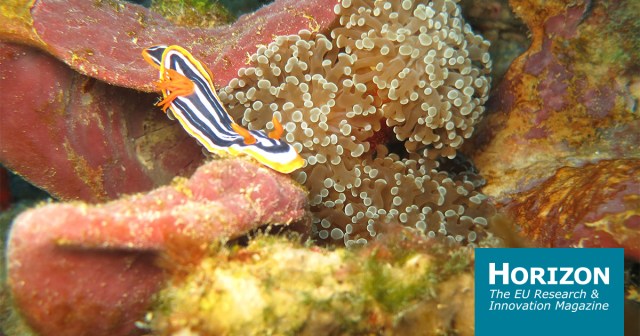
 In three decades of diving at locations including the Red Sea and Great Barrier Reef, Gal Eyal has seen coral reefs transform in front of his eyes.
‘The change is tremendous,’ said Dr Eyal, a marine ecologist at Bar-Ilan University in Israel and the University of Queensland in Australia. ‘I was at the Great Barrier Reef for the first time in 2004 … When you dive down and see this coral bleaching, it’s crazy. You see all the reef that you used to see colourful and full of fish all bleached and white … and it’s like a graveyard.’
A major environmental puzzle in recent years has been how to mitigate the devastating impact that climate change, pollution and other human effects are having on coral reefs – with huge losses already, and alarming forecasts that 70% to 90% of existing reefs may die in the next 20 years.
Rather than focusing only on traditional clear-water shallow reefs down to about 30 metres, some researchers are looking at habitats in both deeper and turbid waters – environments where corals still depend on light to support photosynthesis by the algal partners they need to sustain them, but at a lower level.
An expanding body of evidence suggests such areas could be key to reseeding degraded reefs in future, as well as being crucial ecosystems for ocean health.
Mesophotic
Reefs known as mesophotic coral ecosystems (MCEs) are found 30 to 150 metres down in tropical and subtropical regions, but have often been missed in studies between exploration of much more accessible shallow corals and the deeper sea.
This is despite these ecosystems containing massive reef structures, with some studies estimating that MCEs make up half or more of reef area worldwide. Earlier research has also suggested they bleach less than shallow corals, living in habitats with lower natural fluctuations or influence from human impacts.
The Mesophotic project, which Dr Eyal leads, is looking at these habitats to build a base for understanding not just about their immediate outlook, but their prospects for the coming hundreds or even thousands of years.
‘We know very little about these reefs, and we don’t really know what the effects of thermal stress, pollution and competition between species are on them,’ he said. ‘If people don’t look at the reef as a whole, from shallow to deep, they miss a lot.’
In an examination of almost 100 mesophotic coral species off the city of Eilat at the northern tip of the Red Sea, Dr Eyal says his team was surprised to discover just how many species lived in both habitats, with around two-thirds of the known species in the region’s shallow reefs also appearing in the mesophotic zone.[…]

Read more: Understudied deeper water reefs could teach us how to better conserve

 msamba