
Professor of English Language and Literature, University of Oxford
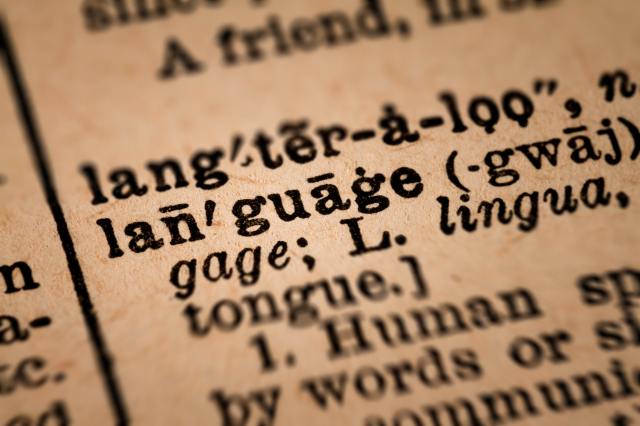 How words are used change over time and insisting that their original meaning be adhered to is pretty silly.
Articles of this kind usually assert that a word’s correct meaning lies in its earliest uses, while later developments are corruptions. Disinterested doesn’t mean “not interested” but “impartial” they complain. Decimate must refer to the destruction of precisely one-tenth of something they protest. Fulsome can only mean “insincere” rather than “very full” they cry.
While this may seem logical enough, in some cases it doesn’t quite work. Here we apply the principle of earliest meaning to five common words and we get some rather unexpected results.
1. Pretty
This word is from Old English prættig, “cunning”, from præt“trick” – unrelated to prat “idiot”, which originally referred to the buttocks (hence pratfall: a fall onto the backside).
By the 15th century, pretty described something cleverly made, artful or ingenious. This led to its use to describe someone attractive or good-looking – most commonly a woman or child, although the diarist Samuel Pepys refers to one Dr Clarke as a “very pretty man”.
Ironic uses of pretty to refer to something unpleasant are the origins of phrases like “pretty pass”, “pretty state of affairs” and “pretty kettle of fish”; the latter more often found in the phrase “different kettle of fish”. The kettle here isn’t the kind we use to make tea, but rather a large cooking vessel (from Latin catillus).
2. Tall
Tall is from an Old English word that meant “swift” or “active”. By the 15th century, it had come to mean “handsome” or “elegant”. Its use to mean “skilful” gave rise to the expressions “tall of hand”, meaning “handy” and “tall of tongue”, meaning “good at arguing”.
The 16th century saw the emergence of uses relating to height; subsequent metaphorical extensions include “large”, as in “tall order”, and “exaggerated”, from which the phrase “tall story” emerged. These changes in meaning may seem surprising, but several common adjectives that describe our physical appearances began life referring to dexterity and pliancy. Handsome, as the name suggests, originally meant “easy to handle”, “clever” meant “dexterous”, and “buxom” meant “obedient” (from “bow” meaning “to bend the neck”).
3. Silly
Someone silly in Old English was “happy” or “fortunate”, and later “pious” or “holy”. Because the innocent are easily taken advantage of, it came to signal a person deemed “weak” or “helpless”. Further negative associations are apparent from its use to mean “rustic” or “lacking sophistication”, from which our modern sense of “foolish” emerged.
This process, whereby a compliment becomes a term of abuse, is known to linguists as “pejoration” (from Latin peior “worse”). Its opposite, “amelioration” (from Latin melior “better”), can be seen in the history of “nice”, which originally meant “foolish” (from Latin nescius “ignorant”). […]
Continue reading: Five words that don’t mean what you think they do

 msamba