
MAY 26, 2023 GRACE EBERT
 All images via The Biodiversity Heritage Library
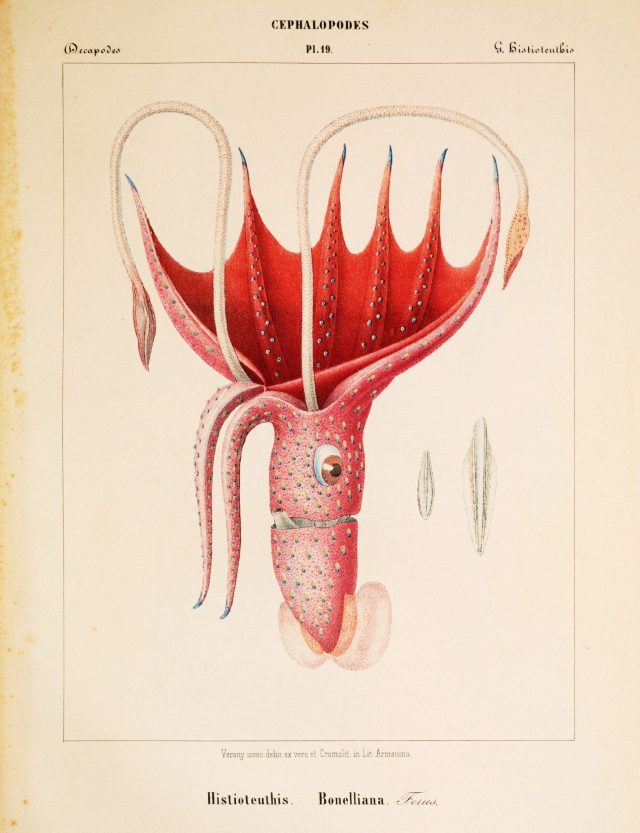
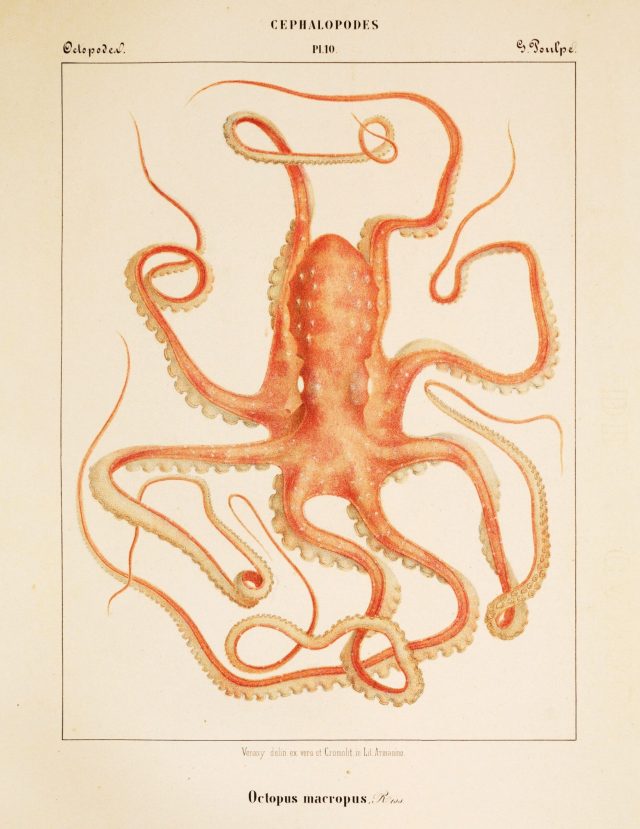
In 1851, Jean Baptiste Vérany published a collection of illustrations that captured the subtle colors and tonal variances of cephalopods.
In 1851, French pharmacist-turned-naturalist Jean Baptiste Vérany (1800–1865) published a collection of illustrations that captured the subtle colors and tonal variances of cephalopods. A class of mollusks that includes squid, octopus, cuttlefish, and nautilus, cephalopods have pronounced, often bulbous heads, symmetric bodies, and arms and tentacles known to produce ink. The marine creatures became a source of fascination for Vérany after a research expedition with Franco Andrea Bonelli, a preeminent ornithologist and entomologist, who helped usher in the young naturalist’s interest in zoology.
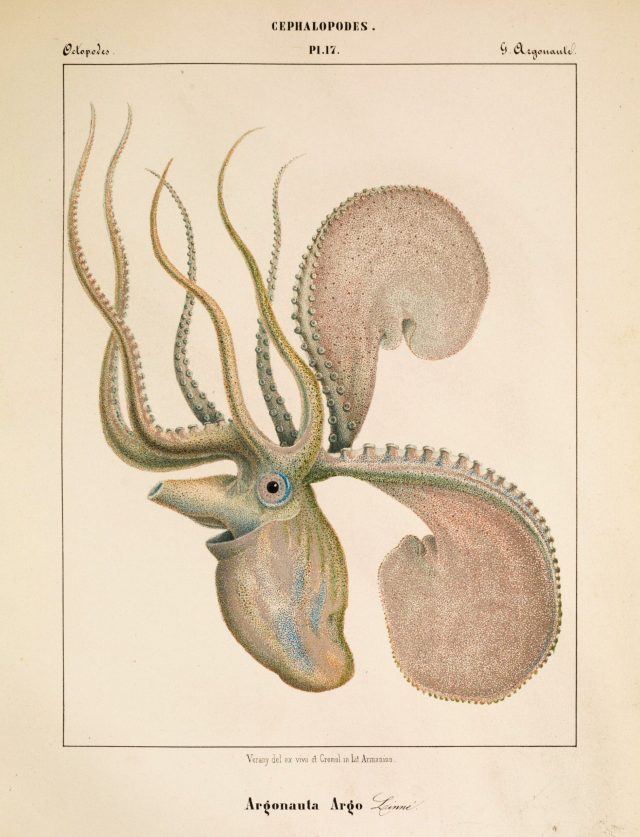
Some of Vérany’s most-recognized contributions to natural history include the chromolithographs—lithographs with several layers of color—released in his book Mollusques Méditeranéens: observès, decrits, figurès et chromolithographies d’après le vivant, or Mediterranean molluscs: observed, described, figured and chromolithographs from life. The volume includes 41 illustrations that are rendered in exacting detail and exemplify Vérany’s unparalleled understanding of color.
[…]

 msamba
The creatures are always pictured with such personalities in those 19th-century nature books 🙂
LikeLiked by 1 person