
By Madeleine Muzdakis on September 1, 2023
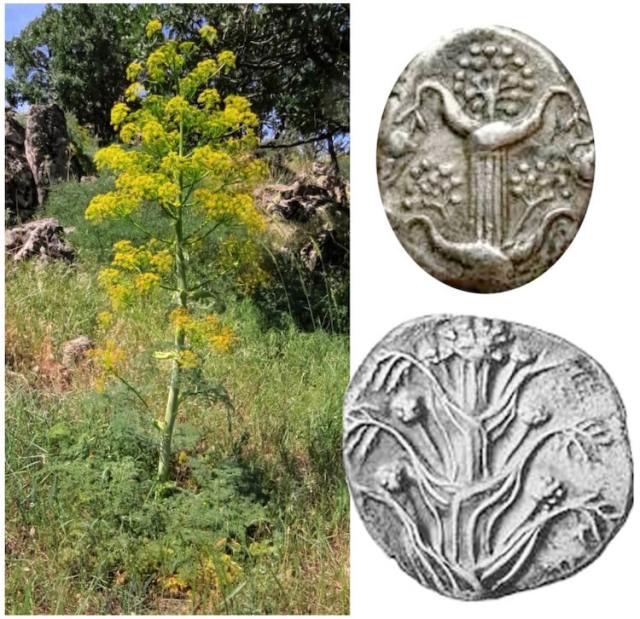 The Turkish endemic Ferula species (left) and a similar plant on Cyrenaic coins (right). (Photo: Miski, 2021)
It was as valuable as silver in ancient times.
The ancient Greeks used many natural remedies. Among them was a golden plant that grew on long thick stalks called silphium, or silphion. The plant treated coughs and fevers, functioned as a perfume, and was even used as an aphrodisiac as well as a contraceptive. Its importance was so great that it is found embossed on the reverses of ancient Cyrenaic coins from Cyrene, an ancient Greek city in modern-day Libya. Yet, for the past two millennia, the plant has been thought extinct and lost to the annals of history. However, in 2021, a Turkish researcher announced that he discovered what could possibly be the modern version of silphium, located miles away from Cyrene in Anatolia, Turkey.
The plant Silphium has been thought extinct for almost two millennia, but a researcher in Turkey believes he has found its modern analog.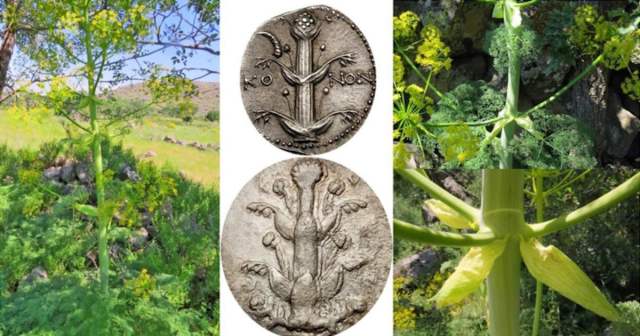
Comparing Ferula Drudeana with ancient coins. (Photo: Miski, 2021)
Silphium was as valuable as precious metals like gold and silver in ancient times. Writers from this period report that half a ton of the plant was even stockpiled in the treasury during Caesar’s reign. The medicinal uses of the plant were prized across different Mediterranean civilizations. However, despite its worth, silphium resisted attempts to cultivate it, so it had to be expensively harvested and transported from its wild habitat in Cyrene.
By the 1st century CE, the plant was already much more elusive. Pliny the Elder wrote in Natural History that “just one stalk has been found” that century, “and it has been given to Emperor Nero.” He describes the silphium’s value too: “The juice of this plant is called ‘laser’ and it is greatly in vogue for medicinal as well as other purposes, being sold at the same rate as silver. For these many years past, however, it has not been found in Cyrenaica.” The plant then vanishes from ancient texts.
While doing post-doctoral work in Turkey, Mahmut Miski of Istanbul University cataloged certain plants within the Ferula genus on Mount Hassan. This volcano in Anatolia is hundreds of miles from modern Libya where silphium was once documented. However, when Miski spotted a plant known as Ferula Drudeana, he was immediately interested. Its stalks, flowers, and leaves closely resemble the prized plant depicted on ancient coins. Meanwhile, his research showed that the modern plant brings many benefits once attributed to the ancient herb. Its compounds are cancer-fighting, contraceptive, and anti-inflammatory. Additionally, goats and sheep love to eat it, according to modern local shepherds, just like the ancient plant. […]
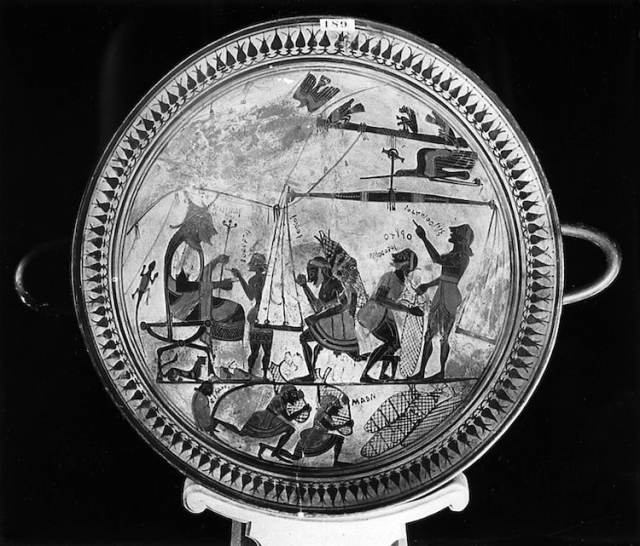 Weighing and loading of Silphium at Cyrene.
(Photo: Wellcome Library, London via Wikimedia Commons, CC BY 4.0)
More: Ancient Miracle Plant Silphium May Have Been Rediscovered in Turkey

 msamba