
August 29, 2025
Art
Nature
Kate Mothes
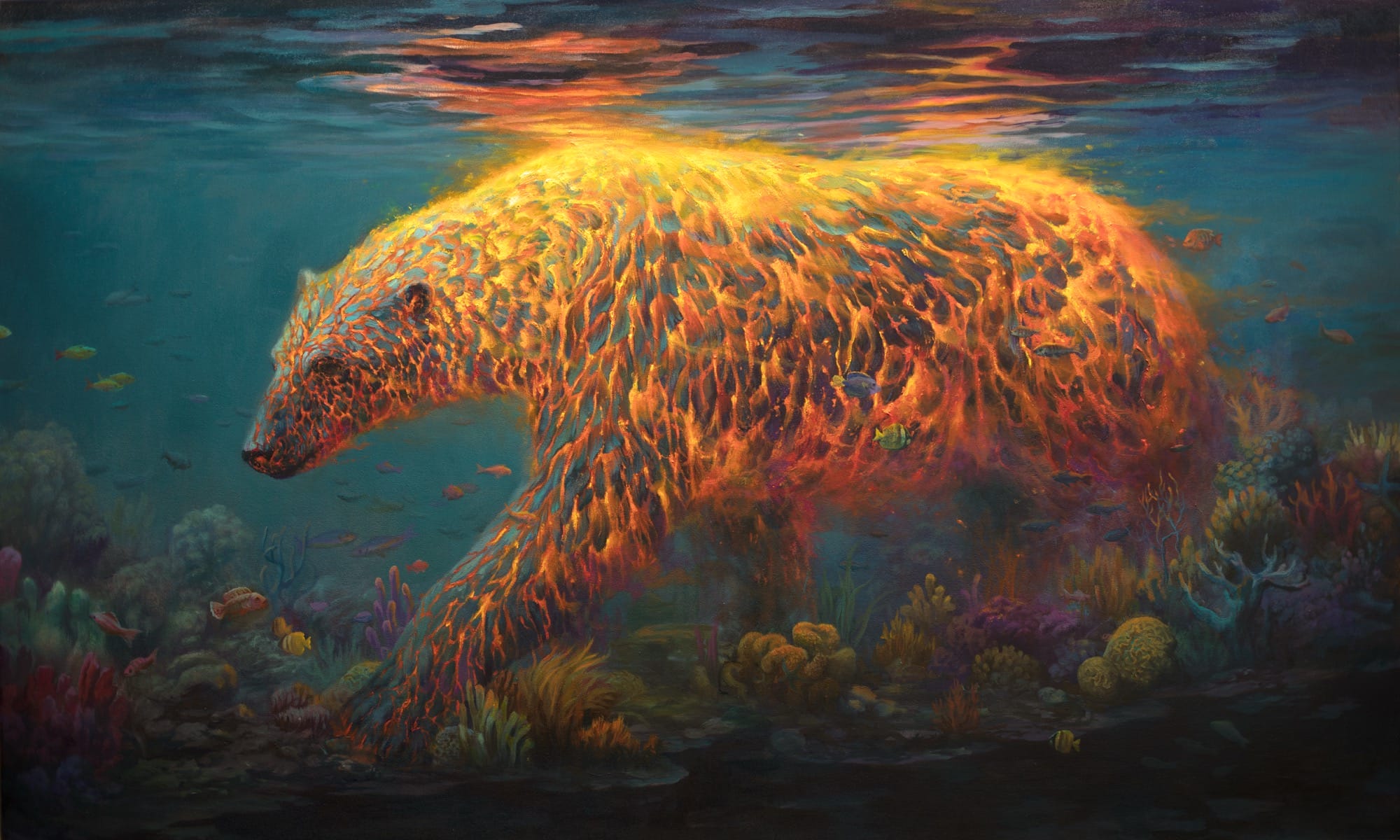 “Aspect of Summer,” oil on canvas, 36 x 60 inches. All images courtesy of the artist and Corey Helford Gallery
Wittfooth blends traditional European painting techniques with critical concerns surrounding the human impact on the environment.
n large-scale, elaborate oil paintings of powerful, glowing creatures, Martin Wittfooth explores the timeless cycles and forces of nature in a celebration of the sublime. Known for his enigmatic and atmospheric depictions of wild animals in dystopian settings, the artist blends traditional European painting techniques with critical contemporary concerns surrounding the human impact on the environment.
Wittfooth’s new solo exhibition, Deus Ex Terra at Corey Helford Gallery, features 19 new oil paintings on canvas, linen, or wood panels. Some take the form of tondos 18 to 24 inches in diameter, while others assume vast proportions, like “Duel,” a diptych that spans 12 feet wide. The stallion also appears as a regular embodiment of elemental forces, like in “Aspect of Fire” or “Aspect of Air,” in which silhouettes of powerful horses made of molten rock or clouds of steam rear up into towering positions.
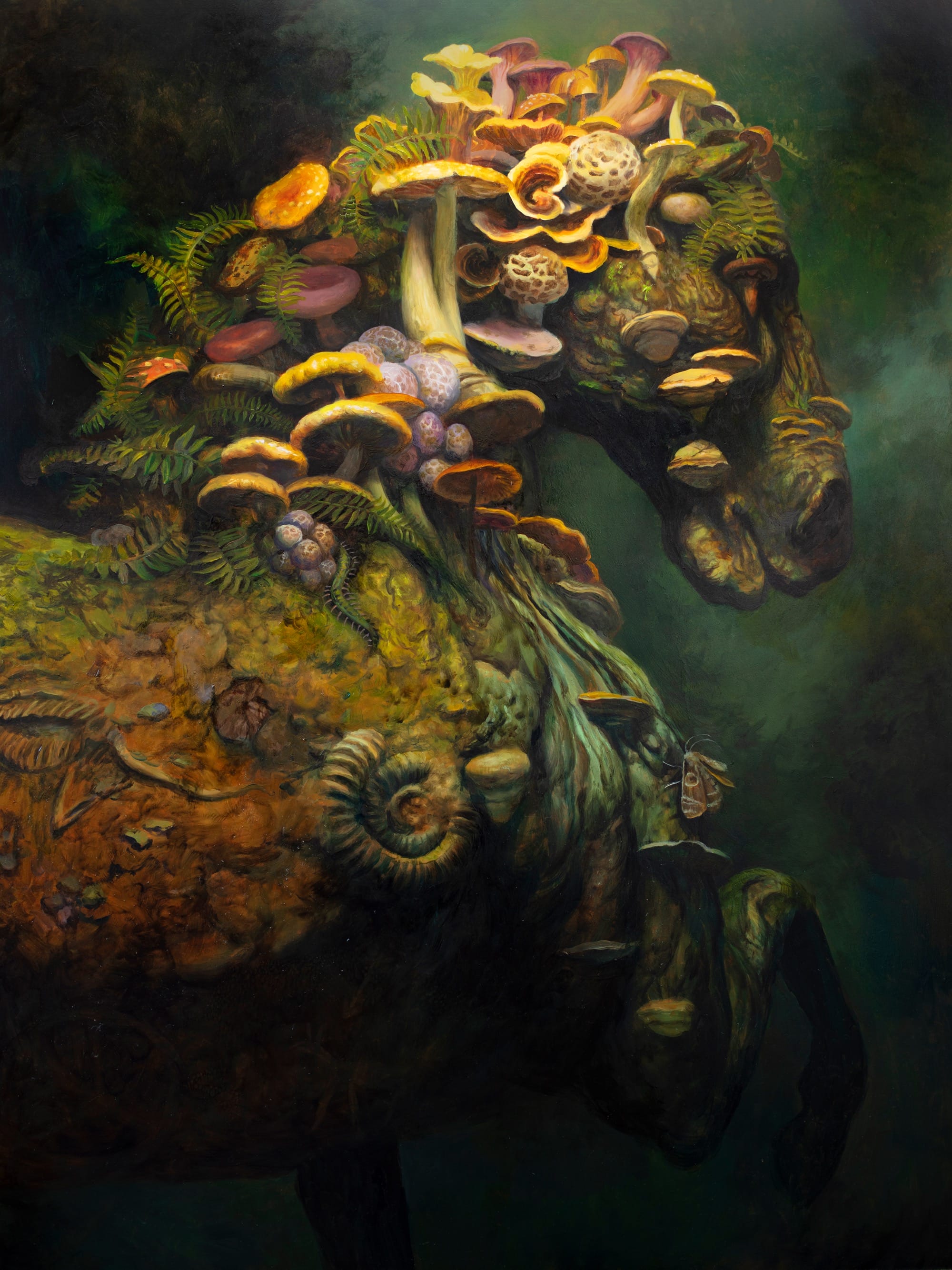 “Aspect of Earth,” oil on panel, 48 x 36 inches
The show’s title, Deux Ex Terra, loosely translates to “god out of the earth.” It’s a nod to the ancient Greek and Roman phrase deux ex machina, which describes a dramatic or literary device in which a character or a “god” is introduced into the plot to solve a seemingly insolvable conflict. During a play, the character would be introduced via a crane, hence the “machine.” Wittfooth flips this notion back to nature and the elemental forces of the earth—weather, orbits, the seasons, life, water—to explore cyclical, self-sustaining rhythms.
“The Hermetic maxim, ‘As above, so below; As within, so without,’ has echoed through centuries of philosophical, mystical, and artistic inquiry,” the gallery says. “In Deus ex Terra, this principle serves as a guiding thread, illuminating the ways nature repeats its patterns across scale and time: in the branching of rivers and the veins of leaves, in the spiral of galaxies and the coiling of shells, in the cyclical turning of seasons and the rhythms of breath and heartbeat.” […]
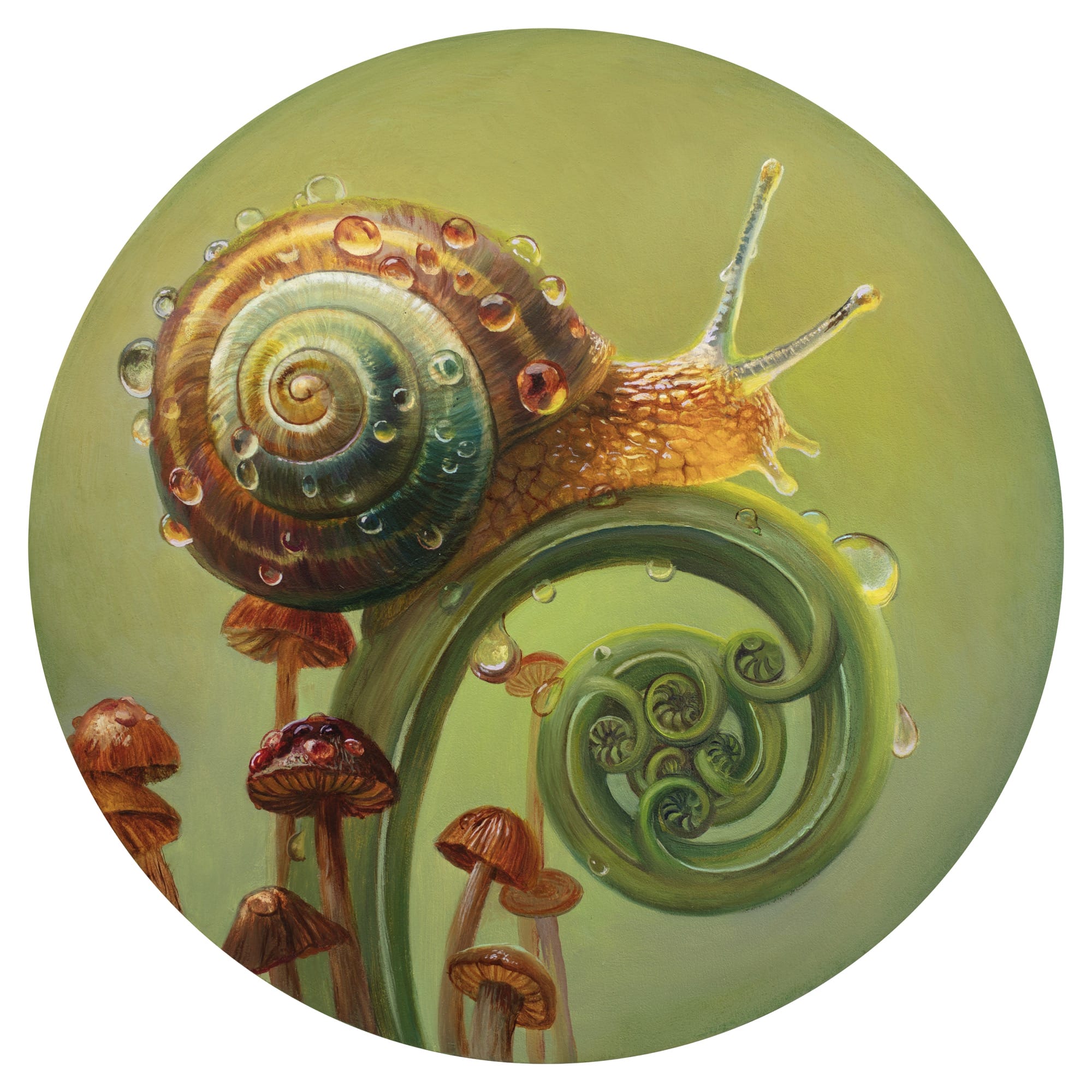 “Parallelism 4 (Snail),” oil on wood, 18 inches diameter
More: Atmospheric Oil Paintings by Martin Wittfooth Illuminate Nature’s Timeless Cycles

 msamba