
 This article is part of Nautilus’ month-long exploration of the science and art of time. Read the introduction here:
BY HEATHER BERLIN
JUNE 7, 2018
Don’t look at the clock! Now tell me: How much time has passed since you first logged on to your computer today? Time may be a property of physics, but it is also a property of the mind, which ultimately makes it a product of the brain. Time measures out and shapes our lives, and how we live our lives in turn affects how we perceive the passage of time. Your sense of time is malleable and subjective—it changes in response to changing contexts and input, and it can be distorted when the brain is damaged, or affected by drugs, disease, sleep deprivation, or naturally altered states of consciousness. However, a new set of neuroscience research findings suggests that losing track of time is also intimately bound up with creativity, beauty, and rapture.
Time is most commonly manipulated by the kinds of things we do to fill it. When our minds are under-stimulated, time often feels like it is moving in slow motion, as in the scene in The Simpsons where Bart is made to lick envelopes for Principal Skinner all afternoon and groans when the clock starts ticking backward. On the other hand, when we are fully engaged, especially in the kind of “flow state” familiar to artists, athletes, and other top performers, our sense of time appears to speed up, or even to disappear entirely.
Many people describe being “enchanted” or “transfixed” when watching a live performance or viewing their favorite work of art. For example, when exploring the European paintings section of the Metropolitan Museum of Art, I enter into a kind of dissociated, transcendent state, which many people report experiencing. All of our cares and worries disappear and time seems to stand still or fade away as we become lost in the world of the story, or work of art, or the virtuosity of the performer. This loss of time-awareness mirrors the process occurring in the brains of the performers or artists while they create.
The inner critic must be shut down, and the inner Picasso turned up.
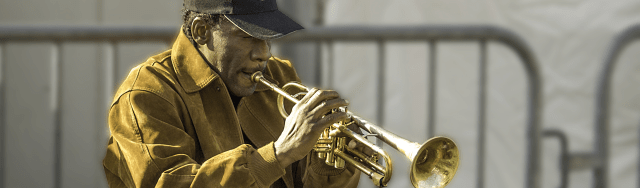
During what psychologists call “flow states,” where one is completely immersed and absorbed in a mental or physical act, people often report an altered sense of time, place, and self. It’s a transportive and pleasurable experience that people seek to achieve, and that neuroscience is now seeking to understand. A great example of flow state is found in many improvised art forms, from music to acting to comedy to poetry, also known as “spontaneous creativity.” Improvisation is a highly complex form of creative behavior that justly inspires our awe and admiration. The ability to improvise requires cognitive flexibility, divergent thinking and discipline-specific skills, and it improves with training.
Not surprisingly, the frontal regions of the brain that have been shown to be involved in time perception and impulse control are also involved in spontaneous creativity. Improvisation appears to take place in an altered state of mind/brain, and studies of the neural mechanisms of musical improvisation have identified a network of prefrontal brain regions linked to improvisation. The creative act of improvisation, at least in the musical realm, appears to be a result of changing patterns of activity in two key areas of the prefrontal cortex (PFC).[…]
Read More: What Time Feels Like When You’re Improvising

 msamba