
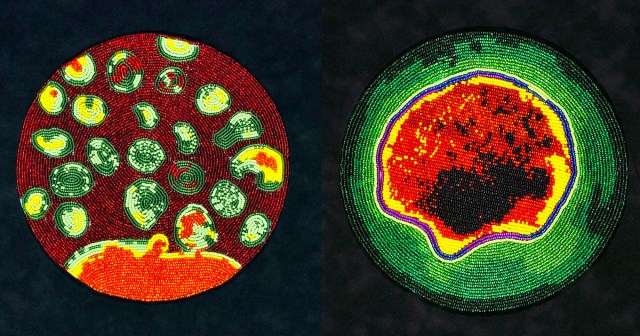
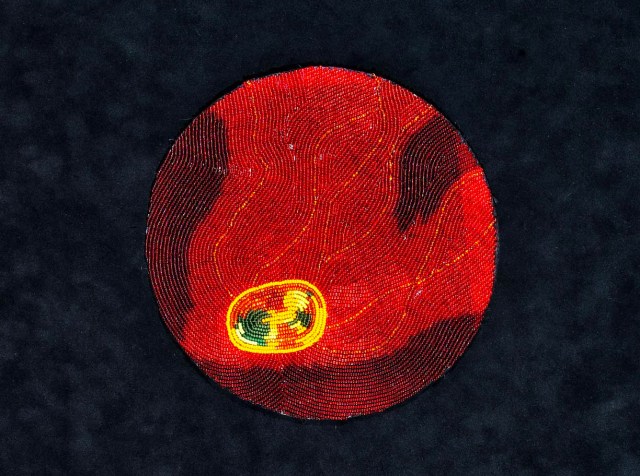
 In her series Trading, Saskatchewan-based artist Ruth Cuthand creates a visual metaphor that outlines how early settler/Native relationships influenced First Nation people’s living conditions and wellbeing in Canada. The colorful works are created from beads which were traded by European settlers for furs in the Americas. Although dazzling aesthetically, the work’s content reveals images of deadly viruses passed on by settlers as a result of this trade, such as influenza, bubonic plague, measles, smallpox, typhus, cholera, and scarlet fever.
“Beads are a visual reference to colonization; valuable furs were traded for inexpensive beads,” explains Cuthand, an artist of Plains Cree and Scottish descent, in her statement about the project. “On the plains beads were a valuable trade item, they replaced the method of using porcupine quills. Preparing the quills for decorating clothing was a long process that consisted of sorting the quills, preparing vegetal dyes and flattening the quill to sew down in patterns. Obviously beads were quicker to use, covered large areas and came in a wide variety of colors.”[…]
Source: Beaded Images of Disease Explore the Impact of Colonial Trade

 msamba