
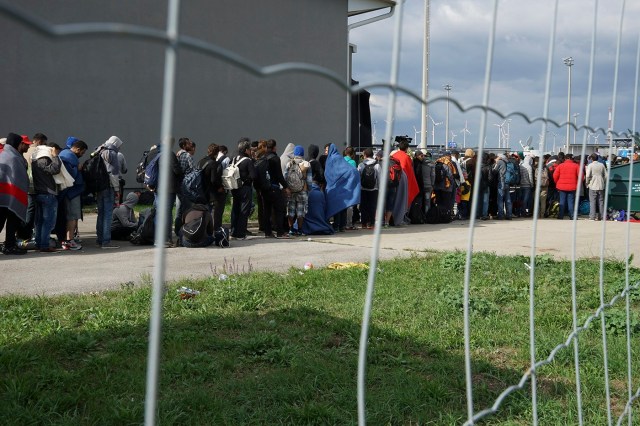
In the last few years, the integration of refugees into European societies has become an urgent issue. Since 2015, nearly 4 million people have applied for asylum in the EU and many are now beginning to make new lives here. What does it mean to become integrated into a new society? How can it be achieved? And are current policies helping or hindering? We spoke to Dr Dominik Hangartner from the Immigration Policy Lab at ETH Zurich, Switzerland, about what the evidence tells us about successful integration. Here are five takeaways.
1. It is hard to measure integration because there is no agreement on what it means
If you want to know which integration policies are successful then you need to know how well someone has integrated into their host society. The problem, says Dr Hangartner, is that there’s not much agreement on what integration looks like. ‘Integration is what some philosophers call an essentially contested concept,’ he said.
In 2018, he and his colleagues came up with a working definition of integration: ‘The degree to which immigrants have the knowledge and capacity to build a successful and fulfilling life in the host society.’
Their definition takes into account different types of integration, such as economic (having a job), linguistic, psychological, political, social and what they call navigational integration – the everyday knowledge that you need to successfully navigate a society, such as knowing the number to call if you witness a traffic accident.
Why is a definition important? ‘Because without at least having a working definition, we will not be able to measure it,’ said Dr Hangartner. ‘And without being able to measure integration, we have no way to tell government agencies and NGOs and international organisations, like UNHCR, if their programme works and which programmes don’t work.’
2. There is an ‘integration window’ which improves the chances of success
The sooner an asylum seeker can escape the legal limbo of waiting for a decision on their status and resume a ‘normal’ life, the sooner they are able to contribute to society – and the effects are dramatic, says Dr Hangartner.
In most integration areas, the first two years matter the most, he says.
‘From studies that I’ve done and my colleagues, one recurring finding is that there is an integration window. Early integration actions that are targeted and occur soon after arrival have disproportionally positive effects.’[…]

Source: Five things you need to know about: the science of refugee integration

 msamba