

Evidence suggests the coronavirus originated from bats in Asia. But some researchers say that, here in North America, bats face the opposite risk — of being infected by human carriers.
As forensic virologists search to uncover the origins of COVID-19, bats have been fingered as a likely source. Genetic analyses show the virus is very similar to one harbored by Chinese horseshoe bats, and researchers think it’s possible it jumped from those winged mammals to people.
But some bat lovers and chiropterologists — scientists who study the flying mammals — are adamant there is no proof. Instead, they’re wringing their hands about the reverse: That people with COVID-19 could spread the disease to their furry, nocturnal housemates.
They are particularly worried about already vulnerable North American bat populations, which are being wiped out by white-nose syndrome, a disease caused by a deadly fungus.
There is no evidence indicating that bats can get the coronavirus from people, said Alice Chung-MacCoubrey, a bat biologist for the National Park Service, and an affiliate faculty at South Oregon University. “But it’s something we’re concerned about.”
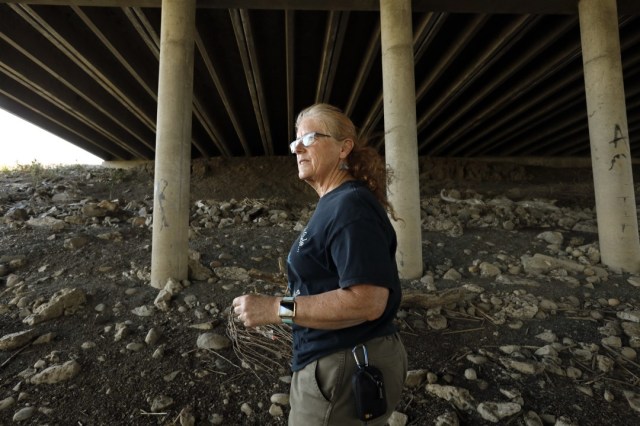
On Saturday evening, hundreds of thousands of Mexican free-tailed bats streamed out from underneath the Yolo Bypass, a bridge spanning the wetlands and flood-control channel just west of Sacramento.

As darkness approached, a half-dozen amateur photographers appeared by the bridge, hoping to get good shots of the swarm. A small debate ensued about whether it would be better to catch the bats with a wide-angle versus zoom lens.
Reports indicate that COVID-19 has the ability to jump from humans to other species, including pet cats and a Malayan tiger at the Bronx Zoo. And because people can live in close proximity to bats — the flying mammals often live in attics and crawl spaces — common sense suggests it could jump to them too.
None of the photographers seemed concerned about passing the virus to the bats. Or, for that matter, to one another. Only one of them wore a mask.
However, Corky Quirk, program coordinator for the Yolo Basin Foundation, and a bat aficionado, wore a mask and gloves while she handled a few of her “ambassador” bats — injured bats that can’t be released back into the wild, but live within the comfort of her home.[…]
Read More: Bats get blamed for the coronavirus. But bats face their own virus risk — from humans

 msamba