
by Kate McNab, 13-06-19
The Roman Conquest of Britain in AD 43 brought with it our first roads and towns, our calendar and our first nationwide currency. The sites they left behind are now some of the country’s best-loved heritage sites, some of which have remained in place for the best part of two thousand years
Dover Castle
Dover
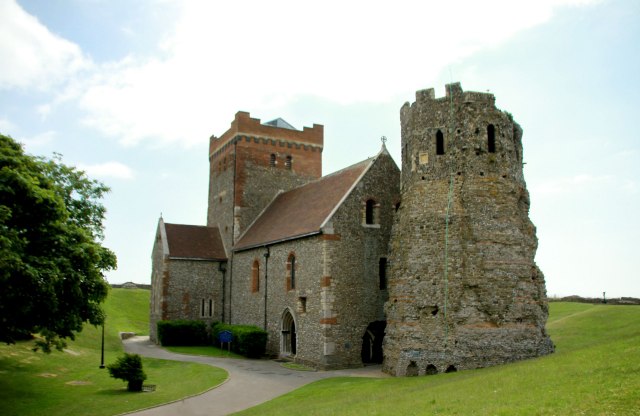
St. Mary in Castro, Dover Castle, Dover Roman lighthouse © milo bostock (CC BY-SA 2.0)
What’s a medieval castle, founded only in the 11th century, got to do with the Romans? Being the British mainland’s closest point to Continental Europe, Dover has consistently been an important base for trade, travel and defence, and it is thought that the use of the site now occupying Dover Castle may have been utilised from as early as the Iron Age. What is known about the early origins of the site was that it was used by the Romans – evidenced by a rather unique structure in its grounds, adjacent to the St Mary in Castro church.
Constructed sometime during the 2nd century AD, when Dover was known as Dubris, this stone tower is a Roman pharos, or lighthouse, and is the most complete Roman structure standing in Britain. The 8-sided tower is something really rather special, with only three examples of Roman lighthouses existing anywhere in the world (another of which is also in Dover, though only a small section remains).
Roman Baths
Bath
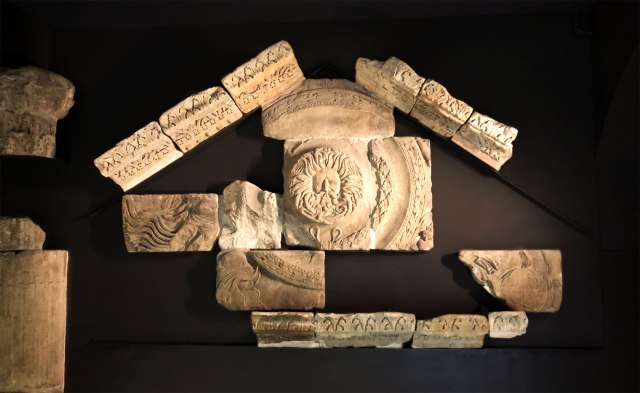
The fearsome Gorgon from the pediment at the entrance to the Temple at Aquae Sulis © Kate McNab
Up there with Hadrian’s Wall as one of Britain’s most famous Roman sites, the Roman Baths gave the picturesque city of Bath both its name and (along with its breathtaking 18th century architecture) its UNESCO World Heritage status. This spectacular site is an absolute must-see for anyone interested in Roman, or British, history. The temple at Bath, then named Aquae Sulis, was constructed around AD 60 and was developed over the following few hundred years into the extensive complex we know today.
The most iconic and well-known image of the Roman Baths is that on the great bath – the large mineral-rich pool surrounded by a reconstructed terrace, lined with Victorian statues which had been carved to celebrate the grand opening of the Roman Baths in the late 19th century. But there is a lot more to explore here; the remains of the changing rooms and saunas, the heated rooms and plunge pools – some of which are brought to life by projections demonstrating exactly how these rooms would have been used more than 2000 years ago.
As well as the surviving architecture the baths also have an extensive museum showcasing finds from Roman Bath, with gems including the glowing golden head of goddess Sulis Minerva, the remains of the bath’s pediment complete with the fascinating image of the Gorgon, and a selection of metal curses offered into the water of the Sacred Spring, which still steams and bubbles away to this day.[…]

 msamba