
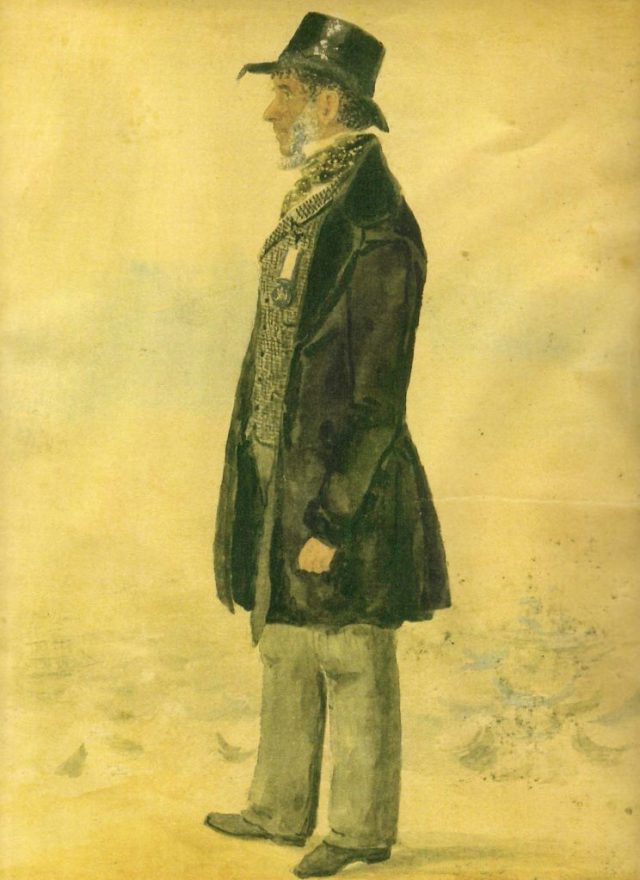
 ohn Simmonds, a veteran of the Battle of Trafalgar and Black Greenwich Pensioner, (c.1784-1858), Courtesy of the family of John Simmonds.
Museum Crush talks to author, historian and curator SI Martin about the stories of Black veterans of the Royal Navy as an important new exhibition opens at the Old Royal Naval College
Mainly due to its long maritime associations London’s Greenwich (and by association its sister area, Deptford) has long been a place of mixed classes and Black communities, which have been resident there for over 200 years.
It’s also the site of the Greenwich Hospital – The Royal Navy’s permanent home for retired seamen from 1692 to 1869 – now the Old Royal Naval College, and a new display there is using the local area as a lens to examine the social and political history of Britain’s maritime and naval past, uncovering the varied personal stories of the men who lived there.
“Some of the wealthiest people in the country who had made money off the processes of enslavement lived in Greenwich,” says author, historian and curator of the exhibition, SI Martin, “as did individuals who were actually enslaved, ordinary working class people of all backgrounds.
“In the midst of all this you have this institution, the Seamen’s Hospital, in which you find this spectrum of Black sailor – former Royal Navy personnel living there as Greenwich pensioners.”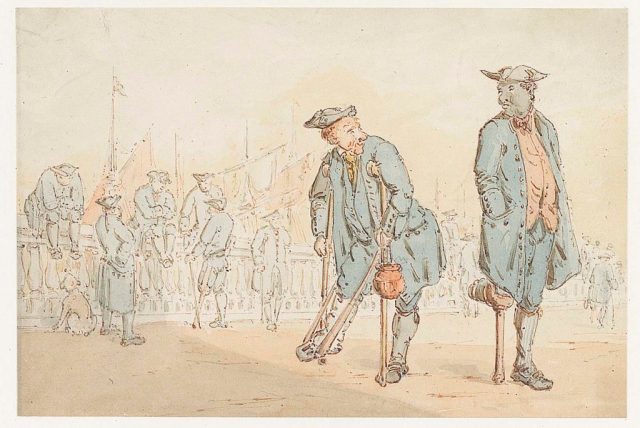 John Thurston, A caricature of Greenwich Pensioners, late 1700s, early 1800s copyright National Maritime Museum
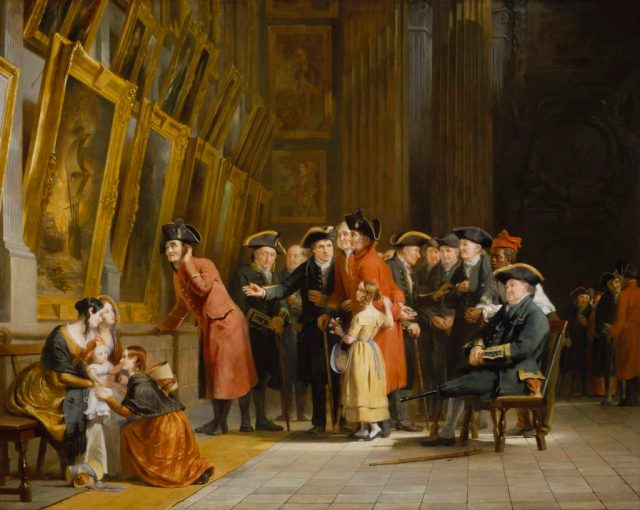 Andrew Morton, The United Service, 1845, The Black Greenwich Pensioner is John Deman who served with Nelson in the Caribbean
In the eighteenth and nineteenth centuries Greenwich pensioners were very public figures, and very much part of the public conception of Greenwich. They would be seen walking around in their distinctive blue jackets, helping tourists, and the Black pensioners would have been part of that.
These men ran the full gamut of backgrounds – from people like John Thomas who had run away from enslavement in Barbados to join the Royal Navy, to Frederick Ziegler who was a former Mayfair publican and people like Richard Baker and John Simmonds who were both Trafalgar veterans.
Reflecting the reach and influence of the Royal Navy and the burgeoning tendrils of the British Empire, the men came from a wide variety of places; Baker was from Philadelphia, Simmonds was from Jamaica and Ziegler was from Suriname.
“Frederick Ziegler is an extraordinary character,” says Martin, “we know about him because as well as a publican in 1808 (the Landlord of the Cock and Lion on Wigmore street, which is still there in the same place, with the same name), he was also a Freemason.
“The fact of him joining the Freemasons caused some consternation and the conditions of his freemasonry were investigated by his fellow masons, but he remained a mason until he went to sea. After his service in the Royal Navy he became an inpatient – actually residing at the Hospital.”
Documenting the contribution of these men to Royal Navy, to their local Greenwich community, and even the British abolitionist movement, Martin has amassed an impressive haul of archive records, paintings, prints and photographs and a small selection of objects from which we can discover more about their lives.
“when Britain was the largest trafficker of human lives on the planet – the Royal Navy was the largest employer of Black labour”
One of those objects is the service pistol of Jamaican veteran John Simmonds, which he brandished on the deck of HMS Conqueror at Trafalgar. Conqueror was the vessel which took the French surrender and Simmonds’ descendants still live in the UK and lent the iconic family heirloom to the exhibition.
But as well as providing us with the biographies of Black men who were there at the most iconic moments of British history, the exhibition also reminds of the surprising role the Royal Navy played in Black radicalism.
“It is the ultimate paradox really,” says Martin, “at a time when Britain was the largest trafficker of human lives on the planet – it was the Royal Navy that was the largest employer of Black labour, and it was on a Royal Naval vessel that Black workers could find – for want of a better phrase – some sort of career trajectory and also become politicised.”
Out of this milieu came the first generation of Black writers in English, men like Briton Hammonwho was also at the seaman’s hospital in 1759 and was the author of the first slave narrative; Olaudah Equiano; Robert Wedderburn and William Davidson – a whole generation of fascinating writers and radicals who had that common experience of having been to sea with the Royal Navy, which was the catalyst that made them engage politically with their situation.[…]
Continue reading: Celebrating the lives of Black sailors at The Old Royal Naval College

 msamba