
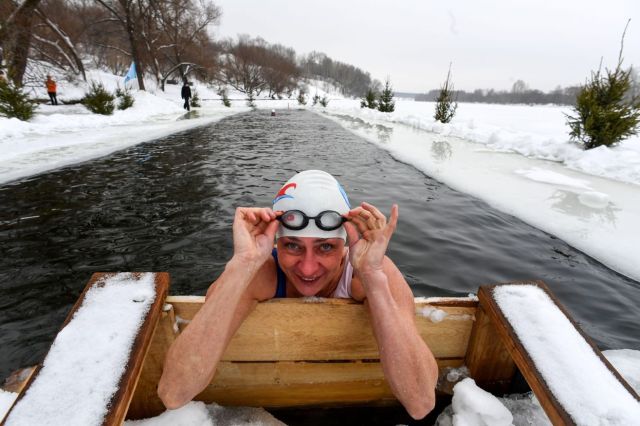
 New research shows that a genetic variant in the skeletal muscle gene, ACTN3, makes people more resilient to cold temperatures.
Some people just aren’t bothered by the cold, no matter how low the temperature dips. And the reason for this may be in a person’s genes.
Our new research shows that a common genetic variant in the skeletal muscle gene, ACTN3, makes people more resilient to cold temperatures.
Around one in five people lack a muscle protein called alpha-actinin-3 due to a single genetic change in the ACTN3 gene. The absence of alpha-actinin-3 became more common as some modern humans migrated out of Africa and into the colder climates of Europe and Asia. The reasons for this increase have remained unknown until now.
Our recent study, conducted alongside researchers from Lithuania, Sweden and Australia, suggests that if you’re alpha-actinin-3 deficient, then your body can maintain a higher core temperature and you shiver less when exposed to cold, compared with those who have alpha-actinin-3.
We looked at 42 men aged 18 to 40 years from Kaunas in southern Lithuania and exposed them to cold water (14℃) for a maximum of 120 minutes, or until their core body temperature reached 35.5℃. We broke their exposure up into 20-minute periods in the cold with ten-minute breaks at room temperature. We then separated participants into two groups based on their ACTN3 genotype (whether or not they had the alpha-actinin-3 protein).
While only 30% of participants with the alpha-actinin-3 protein reached the full 120 minutes of cold exposure, 69% of those that were alpha-actinin-3 deficient completed the full cold-water exposure time. We also assessed the amount of shivering during cold exposure periods, which told us that those without alpha-actinin-3 shiver less than those who have alpha-actinin-3.
Our study suggests that genetic changes caused by the loss of alpha-actinin-3 in our skeletal muscle affect how well we can tolerate cold temperatures, with those that are alpha-actinin-3 deficient better able to maintain their body temperature and conserve their energy by shivering less during cold exposure. However, future research will need to investigate whether similar results would be seen in women.
ACTN3’s role
Skeletal muscles are made up of two types of muscle fibres: fast and slow. Alpha-actinin-3 is predominantly found in fast muscle fibres. These fibres are responsible for the rapid and forceful contractions used during sprinting, but typically fatigue quickly and are prone to injury. Slow muscle fibres on the other hand generate less force but are resistant to fatigue. These are primarily the muscle you’d use during endurance events, like marathon running. […]

 msamba