
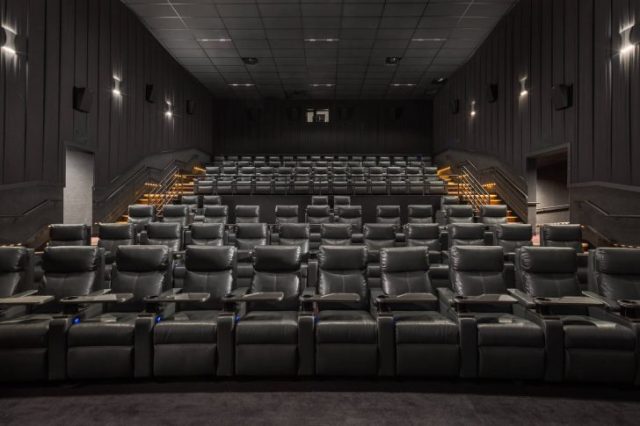
Back in the early 1990s, movie theaters weren’t that great. The auditoriums were cramped and narrow, and the screen was dim. But in 1995, the AMC Grand 24 in Dallas changed everything. It was the very first movie megaplex in the United States. This is the gigantic, neon, big-box store of moviegoing that we’re all used to today, and it’s easy to dismiss as a tacky ‘90s invention. But the megaplex—specifically this first megaplex in Dallas—upended the entire theater business and changed the kinds of movies that got made in ways you might not imagine.
The Big Picture
The rise of the megaplex is pretty recent, but it’s actually part of a long pattern of movie-viewing. The kinds of movies that we watch have always been tied up with how and where we watch them. The peak of moviegoing in this country was the 1940s when the average American went to the movies at least once a week. And then, television came along.[…]
Listen: The Megaplex! – 99% Invisible

 msamba
In Hamburg we had one very old movie theatre, which was kept in the old style and also showed special and old (I mean sometimes really old, silent movies like Nosferatu with original and live piano accompaniment and similar), and the rows went slightly down from the front to the back, completely opposite to now. One was looking up instead of straight ahead or down. In Denmark we had a comeback of the movie theatres as something so socialize around.
LikeLiked by 1 person
I like both approaches, and the latter are marketed as “luxury experiences” here in Manchester.
Watching Nosferatu with a live piano accompaniment must have been fab!
LikeLiked by 1 person
It was a special place, driven like a kind of cooperative. They bought theses old movies and rented them out to other cinemas. They were also the first ones in Hamburg, apart from the university cinema, that showed movies from other countries without subtitles. They showed all the first Spike Lee movies. I am not sure that it still exists though.
LikeLiked by 1 person