
 Monarchs aren’t the only butterflies with migratory muscle, a new study confirms.
After a 21-year study, an international team of researchers has presented strong evidence to suggest the Painted Lady butterfly — previously suspected to cross the Sahara desert and oceans to reach Europe — can definitely make the migratory journey of many thousands of miles.
Researchers from Spain, China, the United Kingdom and the Netherlands found not only that the fliers make the trip, but that they do so in greater numbers when wetter conditions in the desert help grow the plants they lay eggs on. The findings increase our understanding of how insects, including pollinators and disease-carrying pests, could spread between continents in the future amid climate change.
“It demonstrates how the wildlife we see in the UK can transcend national boundaries, and protecting such species requires strong international cooperation,” said Tom Oliver, an ecologist at the University of Reading and co-author of a new study on the butterflies that appears in the journal Proceedings of the National Academy of Sciences.
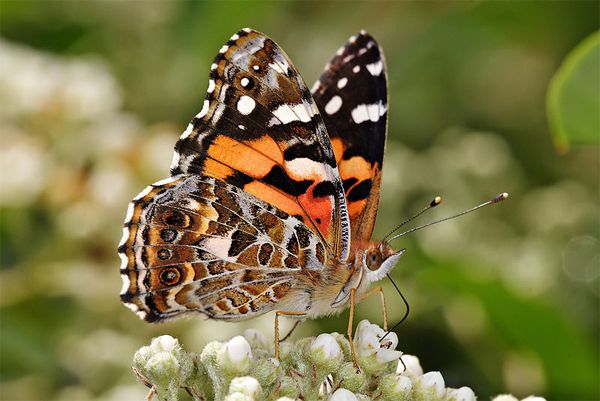
As its name suggests, the Painted Lady is a colorful creature. Its orange, black and white-patterned wings can be spotted throughout North America, Central America, Africa, Europe and Asia. (The butterfly is the most widely distributed in the world, according to Colorado State University). It’s part of the Brush-footed butterfly family, Nymphalidae, which owes its name to its members’ often hairy forelegs.
Painted Ladies are highly migratory butterflies, and the distance traveled during their annual migration has been known to surpass that of successive generations of Monarch butterflies, according to The Washington Post.
The study found that the Painted Ladies’ migratory round trip spans roughly 7,450 to 8,700 miles (12,000 to 14,000 kilometers). The massive migration takes multiple generations of butterflies to achieve. To cross the Sahara, the butterflies must fly non-stop during the day and rest during the night, making stops to feed on nectar, according to the study.
The researchers identified three main factors driving the number of butterflies that migrate to Europe: increased vegetation in the African Savanna during the winter and in North Africa in the spring, and favorable tail winds. To take advantage of winds, the insects must also fly up to 2 miles above sea level.[…]
Continue reading: Painted Lady butterflies make an extreme migration across the scorching Sahara desert

 msamba