
By UNIVERSITY OF TEXAS AT EL PASO NOVEMBER 20, 2023
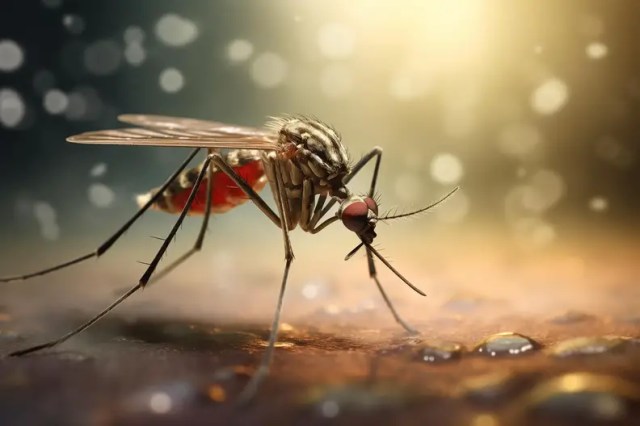 Researchers at The University of Texas at El Paso have discovered that adding liquid soap to certain pesticides can significantly enhance their effectiveness against malaria-carrying mosquitoes. This breakthrough offers a promising approach to combat the rising resistance of mosquitoes to current insecticides. The research aims to develop a soap-insecticide formulation for indoor use in malaria-prevalent regions, potentially impacting millions affected by this deadly disease.
Could the solution to the long-standing battle against malaria be as straightforward as using soap? This intriguing possibility was presented in a recent study published in PLOS Neglected Tropical Diseases by scientists from The University of Texas at El Paso.
The team has found that adding small quantities of liquid soap to some classes of pesticides can boost their potency by more than ten-fold.
The discovery is promising news as malaria-carrying mosquitoes display an increasing resistance to current insecticides, said Colince Kamdem, Ph.D., lead author of the study and assistant professor in UTEP’s Department of Biological Sciences.
“Over the past two decades, mosquitoes have become strongly resistant to most insecticides,” Kamdem said. “It’s a race now to develop alternative compounds with new modes of action.”
Alternative Insecticides and Field Trials
Both laboratory tests and field trials have shown that neonicotinoids, a special class of insecticide, are a promising alternative to target populations showing resistance to existing insecticides, said UTEP Research Assistant Professor Caroline Fouet, Ph.D., second author of the study. Neonicotinoids, however, do not kill some mosquito speciesunless their potency is boosted. In this case, Fouet said, soap is the boosting substance. [,,,]
More: Scientists Uncover Surprisingly Simple Potential Solution to Malaria

 msamba
They might want to try soap only as well, but I guess that won’t be popular with the insecticide industry.
LikeLiked by 2 people