

A new type of use-by label for milk bottles that decomposes as the liquid inside goes sour could appear on UK supermarket shelves later this year. Labels such as these, capable of telling consumers exactly when fresh produce has gone bad, are being developed by scientists who want to stop food from being prematurely discarded. If successful, these indicators have the potential to reduce the millions of tonnes of valuable food thrown away each year.
According to a study conducted in 2016, an estimated 88 million tonnes of food waste is produced in the European Union annually – equivalent to about 173kg per person. An estimated 60% of the food thrown away in households is edible while in the wholesale and retail sector that figure increases to 83%.
One key reason for this waste is the concern that surrounds use-by dates on the packaging, which were introduced as an important safety measure to prevent customers being sold and eating food that might be unsafe to eat. But more than a fifth of still-edible food is unnecessarily discarded due to date inaccuracies or confusion about what the dates actually mean. For instance, many Europeans confuse best-before dates – a recommended consumption time frame for when a product is freshest – with expiry dates.
Food labels don’t reflect the different conditions of how a product is stored as it is transported to a shop and ultimately to a consumer’s home, according to Solveiga Pakštaitė, founder of Mimica, a company based in London, UK, that is leading a project to produce more accurate food spoilage indicators.
‘Suppliers tend to build in a margin of error to mitigate the risk of the cold storage chain being broken,’ she said. ‘It means that if the supply chain works perfectly, perishable products are going out of date and being thrown away before they have actually spoiled.’
Pakštaitė and her team want to tackle food waste with a new type of label. They have produced a tactile indicator that changes with the freshness of the food.
‘As I researched expiry dates, I realised that we are all sort of blind to food when it goes off. We rely on the expiry date that often tells us little about what is happening to the food inside the packaging.’
Solveiga Pakštaitė, founder of Mimica
The label contains a thin layer of gelatine containing biologically active ingredients that mimic what happens to the food it is attached to. As the food decomposes the gelatine breaks down, revealing a bottom layer that is bumpy to the touch.
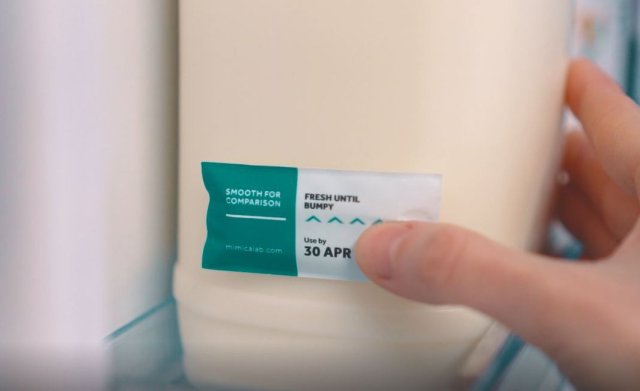
Bumpy labels
‘The idea initially came from thinking about how visually impaired people cope with expiry dates on food,’ Pakštaitė said […]
Source: To reduce food waste, scientists are making labels that track produce as it spoils

 msamba