
Decorative, functional and beautiful: ceramics from the last 400 years are on display in this celebration of Somerset slipware at Somerset Rural Life Museum in Glastonbury until November 9
The magic mixture of coloured clay and water, called ‘slip’, has for centuries been used to decorate pottery. Ancient potters used the technique to decorate their pots before firing – and of course the studio potters of the nineteenth and twentieth centuries revived it to produce layered decorative qualities that can be as beautiful as painted or glazed ceramics.
To some slipware ceramics may seem rustic, but their creation requires great skill and today the form is highly collectable and persists in the work of contemporary potters.
In North Devon and Somerset there is a great tradition of slipware dating back centuries and at the Somerset Museum of Rural Life they are celebrating its appeal by opening up a fine collection that charts its rise, fall and resurrection.
‘Somerset Slipware: The Art of the Potter’ explores how slipware ceramics developed in the county from the late 1600s onward with early production of slipware focusing on Donyatt in south Somerset and on pottery produced in the main for everyday use.
“There is evidence for slipware production in Donyatt from the 13th century,” says Curator Bethan Murray who oversees a collection dating back to the 1600s. “Traditional techniques were passed from generation to generation. Between 1662 and 1910 more than 70 potters are recorded.”
Among the more unusual ceramics produced by this thriving cottage industry and displayed here is a bacon toaster from 1761 and an 18th-century urinal, both of them exuding an aesthetic charm that belies their function. Many of the ceramics from Donyatt have a distinctive yellowish-brown colour, mottled with black or green. Some of them include imagery or inscriptions that place them in the social and religious milieu of their times. And this being cider country, drinking vessels feature quite heavily, too.
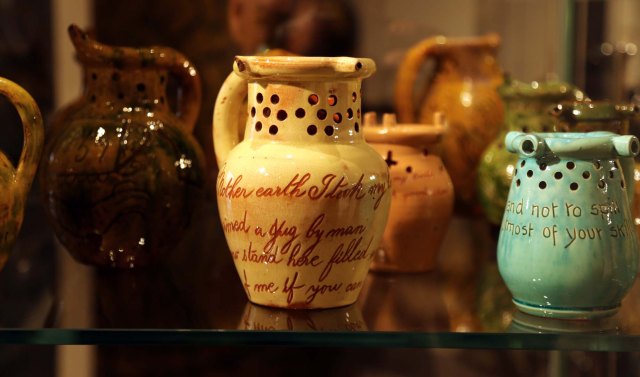
“They created quite a lot of everyday ware that was very functional but also objects that were slightly more fun,” adds Murray, “like the puzzle jugs that made cider drinking a bit of a puzzle by inviting the drinker to close off various holes and channels to get to the good stuff.
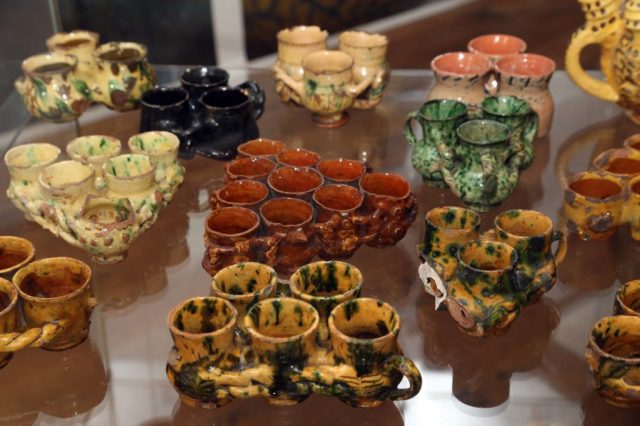
“Then there’s the Fuddling Cups, which look like several cups joined together – generally in a sort of triangular shape. They’re conjoined with an internal channel, if you’re really clever then you can drink all of the cups in one.”[…]
More: https://museumcrush.org/400-years-of-slipware-ceramics-at-somerset-museum-of-rural-life/

 msamba