
By Anna Holligan
BBC News, The Hague
 For more than three centuries the Dutch shipped more than half a million Africans across the Atlantic
Descendants of African slaves have told the BBC they will change their surnames, after a Dutch city decided to make the procedure free of charge.
Utrecht council has decided to remove the €835 (£715) cost and bureaucracy to help people shake off their “slave names” and have the option to adopt one that recognises their African ancestry.
Under existing Dutch rules, if you have a surname considered ridiculous such as Anus, Garlic or Naked-born, there is no requirement to prove it is undesirable. However, if your name has its origins in the Dutch colonial legacy, an expensive psychological examination is often required on top of the fee.
“It’s not right to then ask for money to turn back the procedure,” says Linda Nooitmeer, chair of the national institute for Dutch slavery history.
Her own name translates as Never Again. Even though she’s relatively happy as it was chosen by her ancestors, she is thinking of changing it. She sees Utrecht’s move as “part of the healing process, to give people the freedom and identity back”.
Three centuries of slavery
Between 1596 and 1829 the Dutch shipped more than half a million Africans across the Atlantic Ocean to work on plantations.
They were treated as objects and possessions and their names were erased, part of what Linda Nooitmeer describes as the “dehumanising” process.
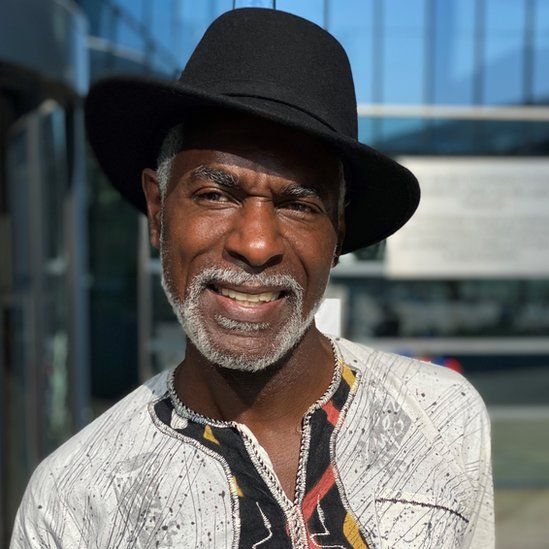
Guno Mac Intosch welcomes the chance to change his name officially to Yaw
“Everything is stripped. You were part of the cargo, like cattle. It’s not only the name, but rituals, language, your identity, all evidence that you were African was taken away.”
The Netherlands was one of the last countries to abolish slavery in 1863, 30 years after British abolition. Even then slaves in Suriname, on the north-east coast of South America, had to wait 10 years to be fully free. […]
“From the 600,000 enslaved who came from Africa and went to Curaçao, Suriname, and all the other islands, after slavery, there were 60,000 left.”
Linda Nooitmeer

 msamba