
By BERNAT ARMANGUÉ
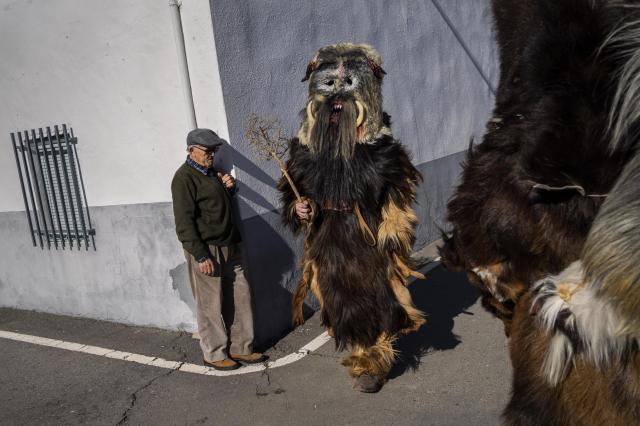
ACEHUCHE, Spain (AP) — It’s hours before dawn in Acehuche, a small town in Spain’s western Extremadura region, and a group of youngsters is ending a parade by setting off fireworks and beating drums.
The noise awakes residents for some of the biggest dates in the local calendar: the three-day celebration of the fur-covered characters known as “Carantoñas” that resemble wild beasts.
With roots in pagan traditions of fertility that were incorporated into religious symbolism, the ancient festival currently marks Acehuche’s patron, St. Sebastian, whom the Catholic tradition considers a martyr of the early anti-Christian Romans.
After the 2021 edition was canceled amid a strong surge in coronavirus cases, the festival went ahead in late January this year. It was held under strict mask-wearing rules due to record numbers of infections across Spain fueled by the highly contagious omicron variant. […]
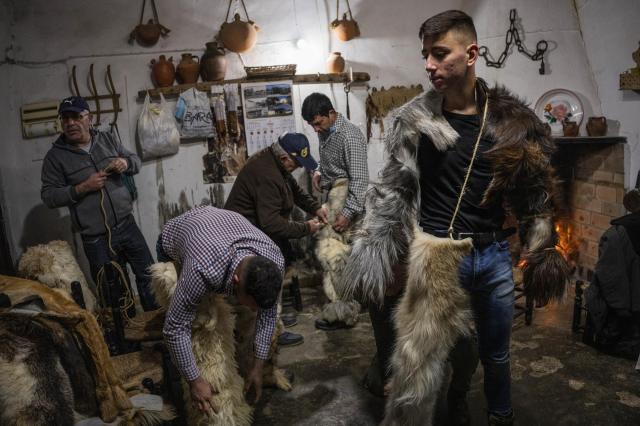 Men prepare themselves before taking part in “Las Carantonas” festival in Acehuche, southeast Spain, Thursday, Jan. 20, 2022. Looking like wild beasts, the “Carantonas” costumes are handmade from goats and usually are handover from one generation to the next one. The catholic religious festivity honours Saint Sebastian, the town’s patron saint. (AP Photo/Bernat Armangue)
 A woman dressed in traditional attire known as “regaora” poses for a portrait during the “Las Carantonas” festival in Acehuche, southeast Spain, Friday, Jan. 21, 2022. (AP Photo/Bernat Armangue)
 Jaime Garrido plays the flute and the drum during “Las Carantonas” festival in Acehuche, southeast Spain, Thursday, Jan. 20, 2022. With roots in pagan traditions of fertility that were incorporated into religious symbolism, the ancient festival currently marks Acehuche’s patron, Saint Sebastian, whom the Catholic tradition considers a martyr of the early anti-Christian Romans. (AP Photo/Bernat Armangue)
More: AP PHOTOS: Beast-like ‘Carantoñas’ return to Spanish town

 msamba