
By Jessica Stewart on August 29, 2024
 “Deadly Bite” © Ian Ford, Wildlife Photographer of the Year. Highly Commended, Behavior: Mammals
“Ian Ford documents the moment a jaguar delivers a fatal bite to a caiman in the Pantanal. A call over the radio alerted Ian that a jaguar had been spotted prowling the banks of a São Lourenço River tributary. Kneeling in the boat, he was perfectly placed when the cat delivered the skull-crushing bite to the unsuspecting yacare caiman. The South American Pantanal wetland supports the highest density of jaguars anywhere in the world. With prey being so abundant, there is no need to compete for food, and the usually solitary big cats have been seen fishing, traveling, and playing together.” Location: Pantanal, Mato Grosso, Brazil Technical details: Sony α1 + 400mm f2.8 lens; 1/800 at f4 (-1 e/v); ISO 400
Take a look at the animal kingdom seen from all corners of the world through the lens of keen-eyed photographers.
The Wildlife Photographer of the Year competition has released some of this year’s extraordinary, highly commended photos ahead of its October winner’s announcement. From a jaguar preying on a caiman to a close-up look at a David Bowie spider, the photographs show off the marvels of the natural world.
The 60th competition, organized by London’s Natural History Museum, attracted a record-breaking 59,228 entries from photographers of all ages and experience levels from 117 countries and territories. An international panel of industry experts judged entries on their creativity, originality, and technical excellence.
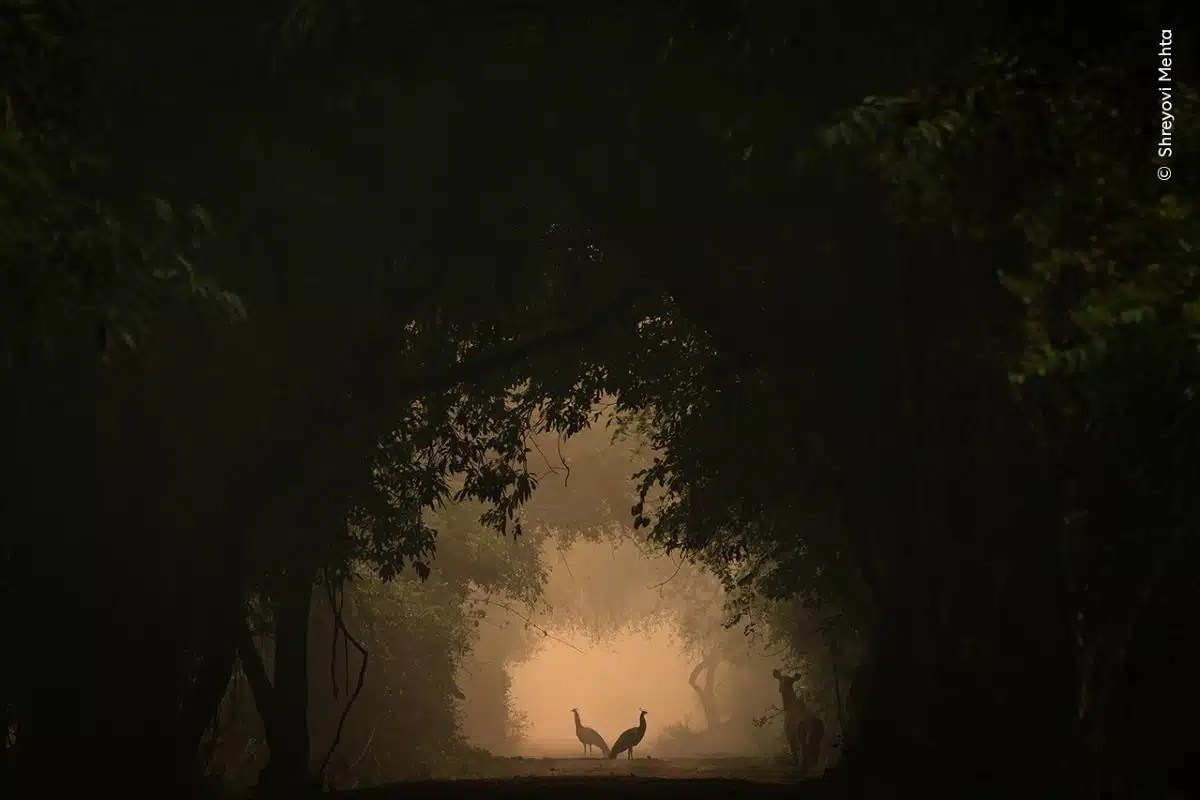 “In the Spotlight” © Shreyovi Mehta, Wildlife Photographer of the Year. Runner-Up, 10 Years and Under
“Shreyovi Mehta finds two Indian peafowl ‘looking perfect for a picture’. Shreyovi was walking in the forest with her parents when she spotted this scene. She ran back to her dad, who was carrying the cameras, then got down on the ground to take her photograph from a low angle. Renowned for its birdlife, Keoladeo attracts large numbers of water birds in winter. Peafowl are year-round residents that roost in large trees. They rest in the shade during the day and are more active in open areas at dawn and dusk.”
Location: Keoladeo National Park, Rajasthan, India
Technical details: Canon EOS R5 + 100–500mm f4.5–7.1 lens; 1/800 at f10; ISO 1600
These photographs are just a taste of the 100 images that will be on display during the forthcoming Wildlife Photographer of the Year exhibition. The selection includes Randy Robbins’ haunting photo of a deceased doe covered in frost, the first smartphone photo to be honored in the competition. In fact, the circle of life is on display in many images, including William Fortescue’s evocative black-and-white image of mating lions and Tommy Trenchard’s image of a shark struggling as it was hauled aboard a Spanish longliner.
“In this selection, you see species diversity, a range of behavior, and conservation issues,” shares Kathy Moran, chair of the judging panel. “These images represent the evolution of the competition through the years, from pure natural history to photography that fully embraces representation of the natural world—the beauty and the challenges. It is a powerful selection with which to kickstart a milestone anniversary.” […]
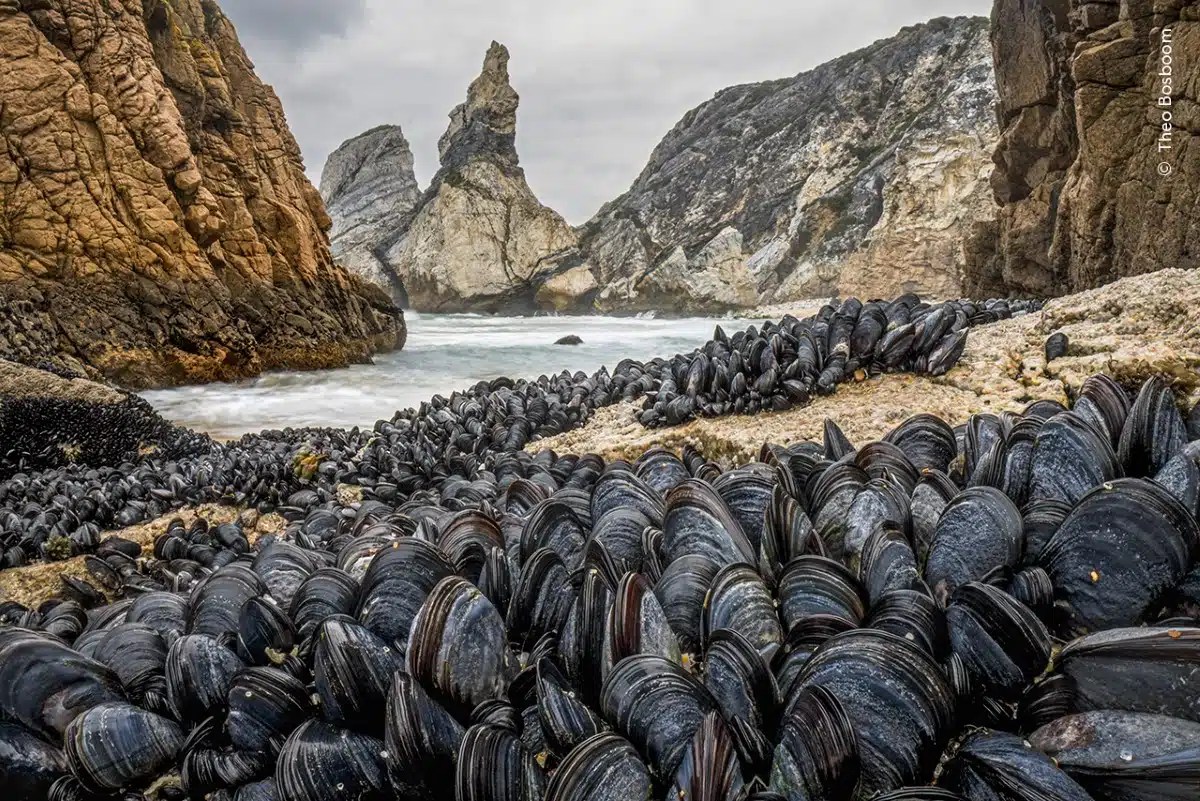 “Strength in Numbers” © Theo Bosboom, Wildlife Photographer of the Year. Highly Commended, Animals in their Environment
“Theo Bosboom shows how mussels bind together to avoid being washed away from the shoreline. Theo likes to take images of species that aren’t usually considered beautiful or important, to highlight their unappreciated significance. He took this image from above with a probe lens – a long, thin, macro wide-angle lens. Mussels play an important role in creating dynamic ecosystems for other marine invertebrates such as crustaceans, worms and even small fish. They improve the water quality by filter-feeding, extracting plankton as well as bacteria and toxins, which prevents them from building up to dangerous levels.”
Location: Praia da Ursa, Sintra, Portugal
Technical details: Canon EOS R5 + Laowa 24mm Periprobe lens; 0.6 sec at f32; ISO 200; focus stack of 9 images
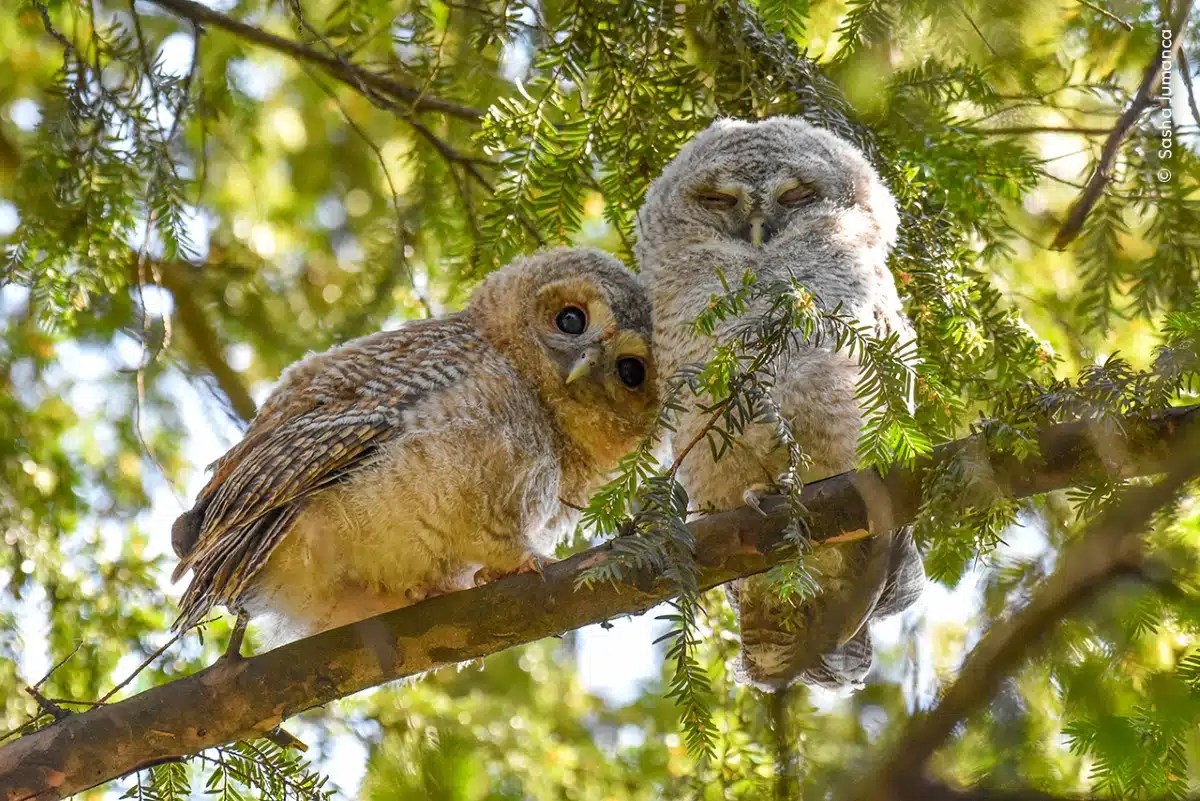 “Leaving the Nest” © Sasha Jumanca, Wildlife Photographer of the Year. Highly Commended, 10 Years and Under
“Sasha Jumanca finds two tawny owlets curiously watching people walking by. Sasha had been watching these tawny owlets for several days in a park near his home. He had seen tawny owls in the neighborhood before but was surprised to discover these so close to the heart of the city. Owlets leave the nest before they can fly, in a phase known as ‘branching’. They will jump, flutter and climb around branches of nearby trees for several weeks while begging for food from their parents, before they eventually fledge and fly away.”
Location: Maximiliansanlagen, Munich, Germany
Technical details: Nikon D7200 + 200–500mm f5.6 lens at 270mm; 1/500 at f6.3; ISO 2200
More: Photos From the 2024 Wildlife Photographer of the Year Contest

 msamba