
January 2, 2025
Art
History
Social Issues
Kate Mothes
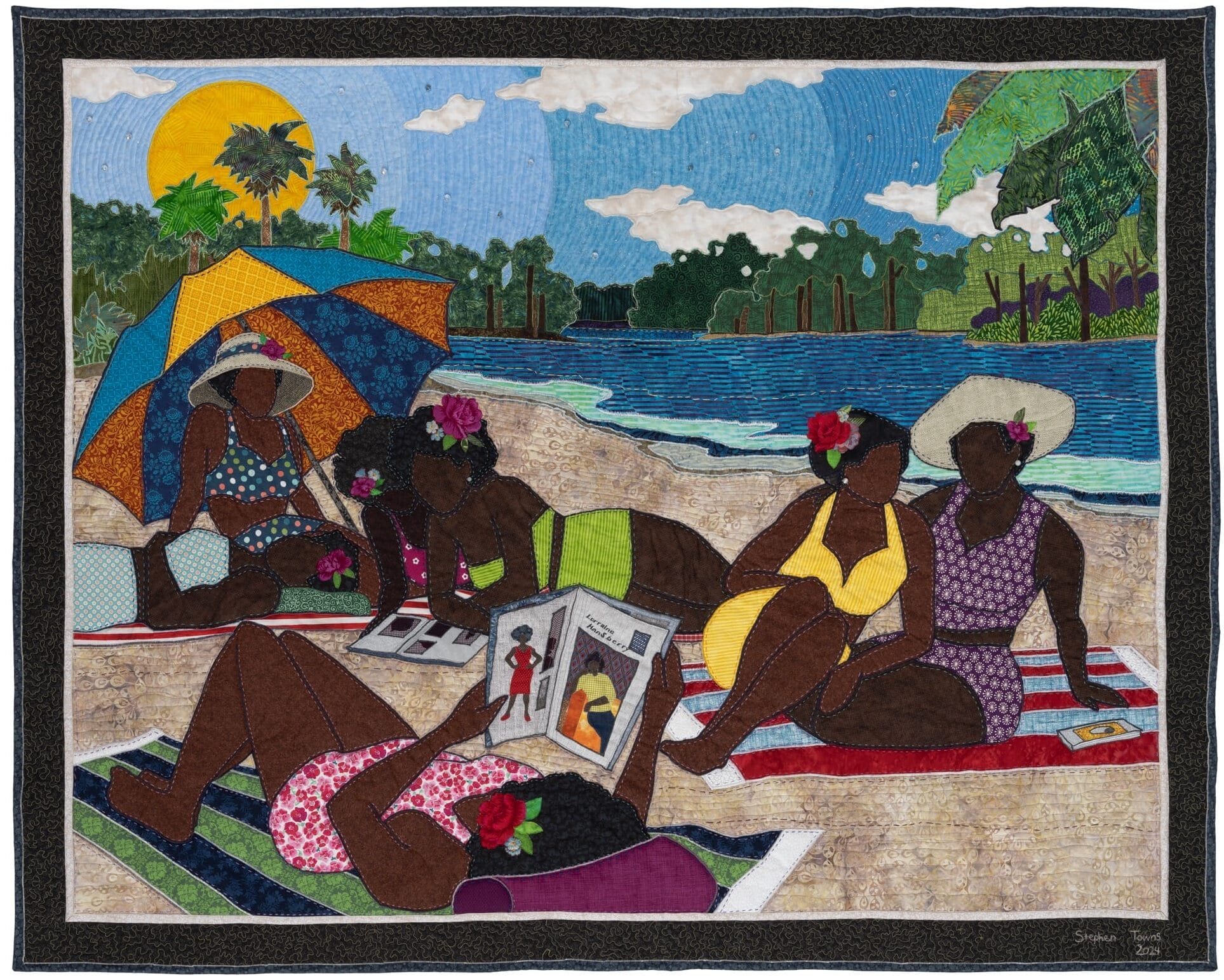 “Looking for Lorraine” (2024), natural and synthetic fabric, polyester and cotton thread, and acrylic and crystal glass beads, 55.5 x 68 inches. All images courtesy of the artist and Rockwell Museum
For artist Stephen Towns, Mozert’s photographs and the history of Paradise Park provide the foundation for ‘Private Paradise.’
In central Florida, Ocala National Forest is dotted with more than 600 lakes and rivers. A nearby recreation hub, Silver Springs, has capitalized on the tourism potential of these glistening, clear bodies of water for decades, offering sandy riverside beaches and taking visitors on jaunts in glass-bottom boats.
Until 1968 and the passing of the Civil Rights Act, Silver Springs—similar to many other places in Florida and the South more broadly—was racially segregated and only open to white patrons. In 1949, the owners of Silver Springs opened Paradise Park a mile down the road as a destination “for colored people,” as the welcome sign read, who were prohibited from the other resort.
 I Will Follow You My Dear” (2024), natural and synthetic fabric, polyester and cotton thread, and acrylic and crystal glass beads, and shells, 55 x 72 inches
Paradise Park was one of three beaches in Florida open to Black visitors during this time and also offered sandy beaches, rides in glass-bottom boats, a petting zoo, a dance pavilion with a jukebox, performances, games, and a softball field. It remained in operation until 1969, shortly after desegregation, and became a subject of fascination for photographer Bruce Mozert (1916-2015), who documented happenings at both recreation areas.
For artist Stephen Towns, Mozert’s images and the history of Paradise Park provide the foundation for Private Paradise: A Figurative Exploration of Black Rest and Recreation, now on view at the Rockwell Museum. Through paintings and quilted compositions, the artist explores how certain parks could be places of refuge and leisure for Black Americans during the Jim Crow era.
“Black people had to set up their own spaces in order to find recreation and to find peace,” Towns says in a video accompanying the exhibition. “This show is a way of illuminating that. It gives people a sort of way into history that’s not as scary as it can be in other forms.” […]
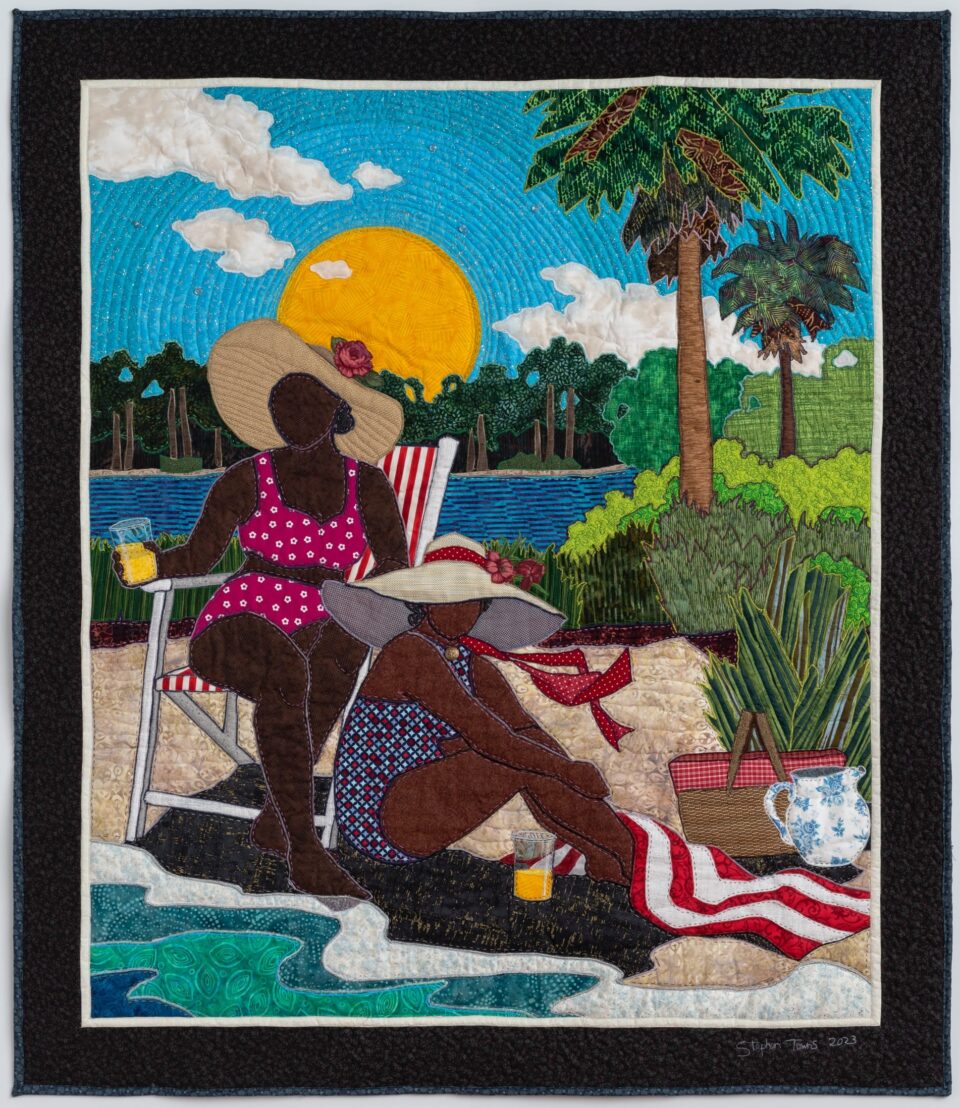 “A Taste of Lemonade” (2024), natural and synthetic fabric, polyester and cotton thread, crystal glass beads, metal and resin buttons, 55.5 x 68 inches
More: In Paintings and Quilts, Stephen Towns Spotlights Black Leisure in the Jim Crow South

 msamba
thanks for writing about this!
LikeLike