
Jessica Eastois a freelance editor and writer. She works as a contributing editor at Agate Publishing Inc and an adjunct lecturer at DePaul University in Chicago. She is the author of Craft Coffee: A Manual (2017).
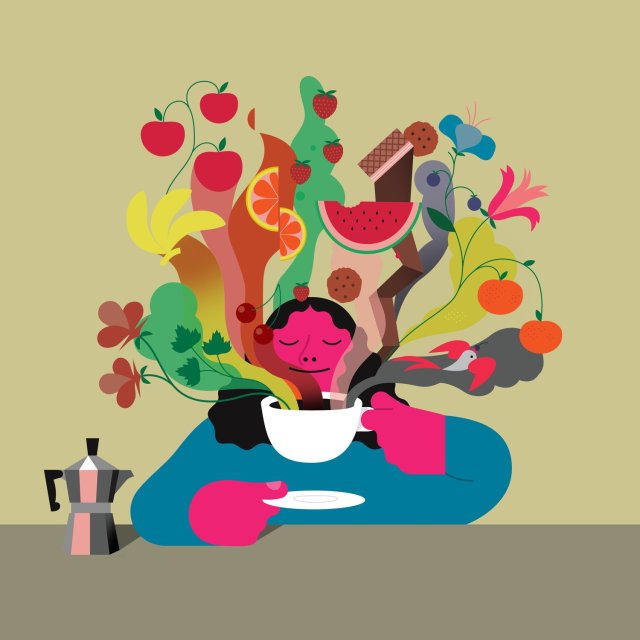 Smooth like chocolate or fruity like a berry, coffee has as many tastes as wine or beer – you just need to know your beans
Need to know
Coffee hasn’t always received the attention it deserves. In many Western countries especially, the beans were low quality. Drinkers didn’t know or care about how coffee was produced, bought or brewed. A lot of coffee was cheap and tasted bitter, and its purpose was practical: medicine or fuel.
But over the past few decades, things have started to change around the world. A global band of intrepid producers, buyers, roasters, baristas and scientists have been elevating coffee to the craft level, like fine wine and beer. You might think that you know what coffee tastes like – roasted, toasty and bitter – but that’s only a sliver of the variety available to you now.
Coffee – what’s called ‘drip’ or ‘filter’ coffee, not espresso – can taste smooth and sweet like chocolate, or provide a zip on your tongue like a bright Champagne, or taste fruity, just like a blueberry. And when I say ‘chocolate’ or ‘blueberry’, I mean the coffee itself literally tastes like those things, without any added syrups or flavourings. The first time you drink coffee that tastes like more than coffee, you’ll never forget it.
This expansion of flavours is partly down to a global trend towards new roasting techniques. All coffee roasters create a roast profile – a manipulation of time and temperature – to achieve flavour in the beans. Historically, coffee has been roasted for relatively long periods of time at relatively high temperatures (think of traditional Italian coffee culture or the giant coffee chains in the United States). This profile tends to emphasise roast character, the flavours imparted by the roasting process – akin to how the process of ageing bourbon in oak barrels imparts a distinct flavour to the spirit. But more recently, distinct coffee cultures – including those of North America, Australia, Britain, Scandinavia and Japan – have been pushing other roasting techniques forward, ones that focus on the qualities of the bean. For example, roasting at relatively low temperatures for a shorter amount of time tends to accentuate what I call coffee character, the unique flavours inherent in the bean itself and where it was grown – or its terroir, to borrow a term from wine.
At the same time, producers all across the ‘Bean Belt’ – the band of coffee-growing countries that fall between the tropics of Cancer and Capricorn – are refining their growing and processing techniques, supplying the speciality coffee market with unique, delectable coffee beans. All this has opened the door to a world of possibility for consumers. Coffee has never had more variety or more potential to taste great than it does right now.
Whether you’re a regular coffee drinker or just starting out, the best way to enjoy a cup is by honouring all the craftspeople – the producers, green-coffee buyers, roasters, baristas and more – who made your brew possible. Today’s speciality coffee offers as much range and variety as wine and craft beer, yet it’s mostly still not appreciated and savoured in the same way. Whether you see coffee as an occasional treat or as a daily essential, there is so much more you can learn and enjoy.
What to do
Select high-quality beans. Say goodbye to the large canisters and bags of preground coffee that line the grocery store shelves. You won’t find quality there. I recommend seeking out independent local roasteries, or looking online if there isn’t one nearby. If you can, try to talk to the roasters personally about their coffee, either at their café or over email. In my experience, the more information they’re able to give you about the beans, the more likely that their business values quality and transparency.
A craft roaster (or the barista who is slinging their coffee) should be able to tell you what country the beans come from, the variety of coffee it is, the name of the producer, how the coffee was processed, and even what elevation it was grown at. Knowing this information indicates that care was taken during the production process and that the roaster values their ingredient, both of which are marks of quality. (If the roaster can’t or won’t share this information, then run away fast.) Many craft roasters even take trips to origin – where the beans are grown – to taste and select coffees for their clientele.
Craft roasters often carry both single-origin coffee (meaning the beans come from only one country) and blends (a mix of beans from more than one country). Both of these can be great, but single-origin beans tend to be of a higher quality – they have more potential to be distinct and interesting, with flavours that vary greatly depending on the variety of bean, where they were grown, how they were processed and sorted, and more. In contrast, blends tend to be developed to have a more consistent taste, no matter the season, but are cut with lower quality (but still good) beans for the distinct purpose of making them affordable.
It’s always worth spending a bit more money, if you can. This is partly because of taste – high-quality coffee is more expensive – but it also means your coffee is more likely to be ethically produced. Coffee producers have historically been exploited, and even ‘fair trade’ prices – designed to protect farmers – often aren’t enough; they have barely increased in recent decades. That’s why some speciality coffee roasters make a point to buy above fair-trade prices, which inevitably costs more for consumers.[…]
Continue reading: How to enjoy coffee | Psyche Guides

 msamba
Our coffee is one of our few luxuries. We buy if from a German fairtrade company, which has a shop in a town near the Danish border. Luckily they also have an Internet-shop! We prefer mountain coffee of Ethiopean and Peruvian origin, which we then blend. Délicieux!
They roast slowly, so that also the inside of the bean is roasted. They told us that the coffee loses a lot ot its bitterness that way.
We actually also buy our tea there …
LikeLiked by 1 person
You lucky people! I buy Fairtrade from local supermarkets, but have no idea of the roasting conditions.
LikeLiked by 1 person
Fairtrade is good in any case, when there is no middleman between the producer and the retail shop.
Contigo, the shop where we buy, is a bit special. They are organized like a cooperative, and the personnel in the shop are all volunteers. So one day one is served by somebody looking like a hippie, and the next day by somebody in a suit and necktie. This fairtrade idea is bringing people together.
LikeLiked by 1 person