
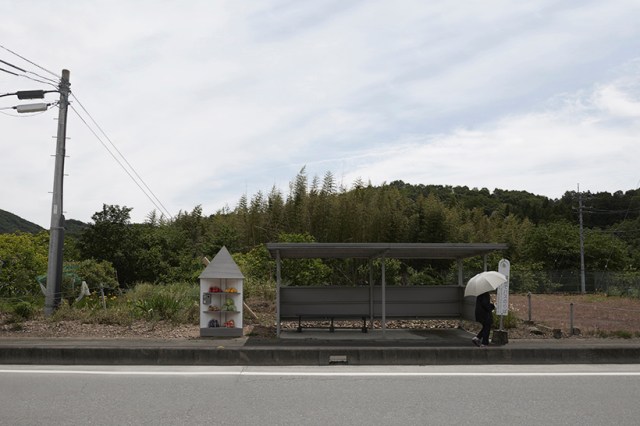
 all photos by Akihiro Yoshida
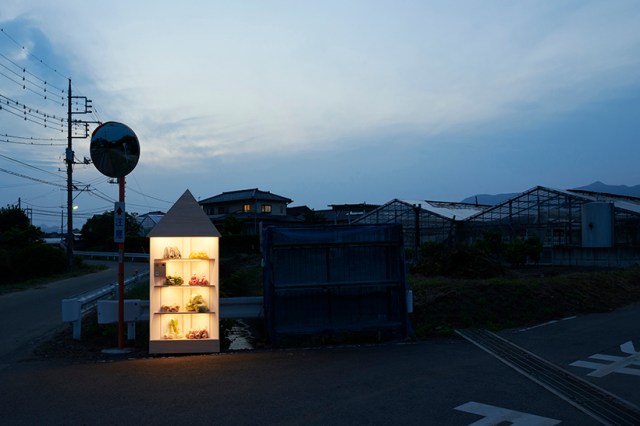
Exploring the Japanese countryside, and even suburban areas of major cities, you might come across produce stands stocked with fruits, vegetables and fresh-cut flowers. With a price list and just a small box to drop money, these stands are literally built on trust and are a symbol of tight-knit community. And as Japan’s distribution systems become more and more advanced, these stands, known as mujin hanbaijo, are being increasingly seen as a solution to cutting food loss, as well as means of delivering fresh and local produce to the community.
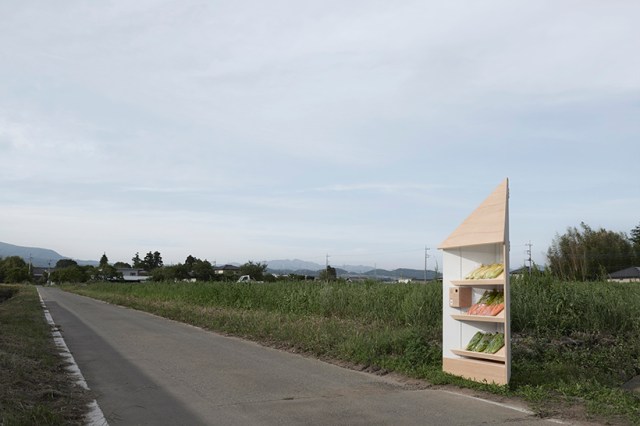 The steep slope of the roof keeps snow and fallen leaves from accumulating and in the summer months serves as a sort of chimney, allowing the heat inside to be vented out
“Japan’s distribution system today does not distribute agricultural produce that fail to meet shipping standards, like size or shape,” says Tokyo-based design agency Nendo. This results in large amounts of food loss all around the country. But now, a confluence of ideas around sustainability, fresh foods and local produce have created a renewed interest in roadside vegetable stands,[…]
More: The Petite Market Makes it Easier for Farmers to Run Unmanned Produce Stands

 msamba
In Denmark we also have a tradition to set things (anything really) out at the roadside and trust that people will pay. About 20 years ago they even had money boxes that only had a simple lid. Now they have cash boxes with a lock on. During my first years in Denmark I watched a little boy on a bicycle emptying one box after the other … and then I am sure the tourists were blamed … 😉 😀
LikeLike
That’s why I liked the use of QR codes in this Japanese example… We have communal book swap boxes in some communities here.
LikeLiked by 1 person
Those we have here too, I left a lot of books at the one at Rødvig harbour at a wooden hut made as meeting place for locals and sailors,, and then the whole shed burnt down … luckily nobody was harmed.
LikeLike
Tragic, I hope thy rebuild?
LikeLike