
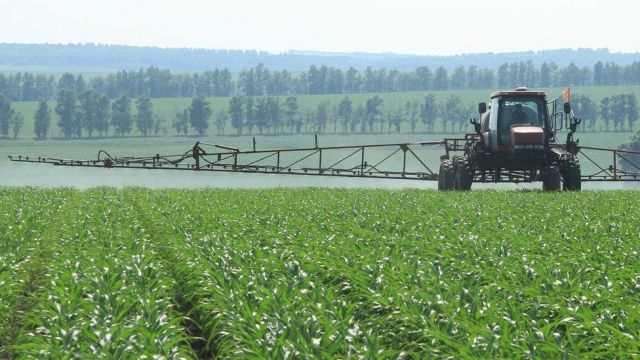
It would be impossible to feed the world’s population without fertiliser
In the 19th Century, Europeans realised what the Inca had known long before. Bird droppings, or guano, made a fantastic fertiliser.
And so sprang up a gigantic industry dedicated to the harvesting of guano from Latin American bird colonies, where there were huge piles of the stuff.
It was so rich in ammonia, the key ingredient, that a mere whiff could induce coughing and sneezing. Not exactly a pleasant cargo to ferry across the world.
As demand for fertiliser rose in the early 1900s, someone began to think, “Perhaps there’s another way?” That someone was Fritz Haber, a German chemist who, along with Carl Bosch, developed the Haber-Bosch process for synthesising ammonia.
We have relied on that technology for more than 100 years. Without it, the world’s population might be just half of what it is today – so vital is ammonia fertiliser for growing food.
But yet again, someone is asking whether we should do things differently because the Haber-Bosch process, when powered by fossil fuels, is notoriously polluting.
Ammonia production currently accounts for nearly 2% of global CO2 emissions. Now, a string of companies aim to prove that they can make green ammonia, or alternatives, without wrecking the climate. […]
Continue reading: Why firms are racing to produce green ammonia


