
By Sage Helene on August 23, 2026
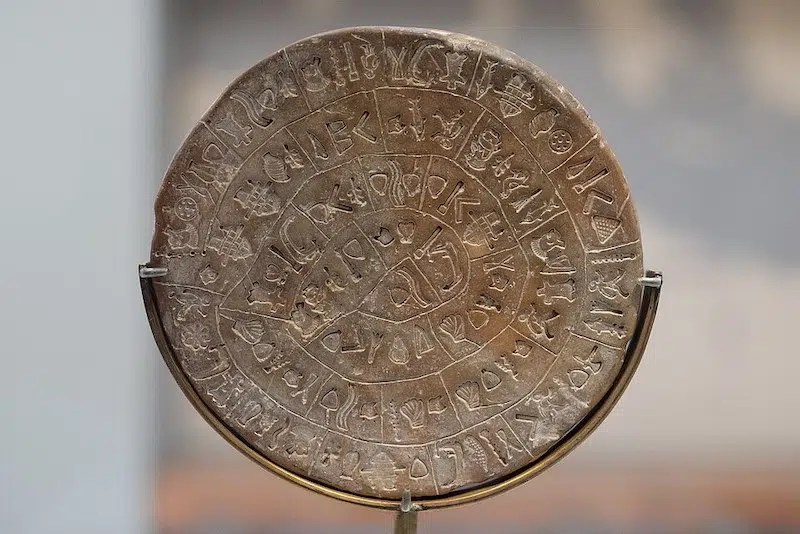 Phaistos Disc — Side B. (Photo: Wikimedia Commons, CC BY 1.0)
About 7,500 spoken and signed languages exist today. But that number may represent only a fraction of the languages humans once used. A new study suggests that linguistic diversity reached a remarkable peak between 1,000 and 3,000 years ago, when tens of thousands of languages may have coexisted around the world.
Yale University historical linguist Claire Bowern and evolutionary anthropologist Damián Blasi of the Catalan Institution for Research and Advanced Studies led the research with colleagues from the United States, Spain, and Germany. Because written records cover only a small portion of human history, the team used demographic data and computer modeling to estimate how many languages people may have spoken across the Holocene.
The researchers began with ethnographic data from 171 present-day hunter-gatherer and fishing societies. They used the typical population sizes of these groups to estimate the number of ethnolinguistic communities that may have existed around 12,000 years ago, when the global human population numbered roughly 4.4 million to 7 million.
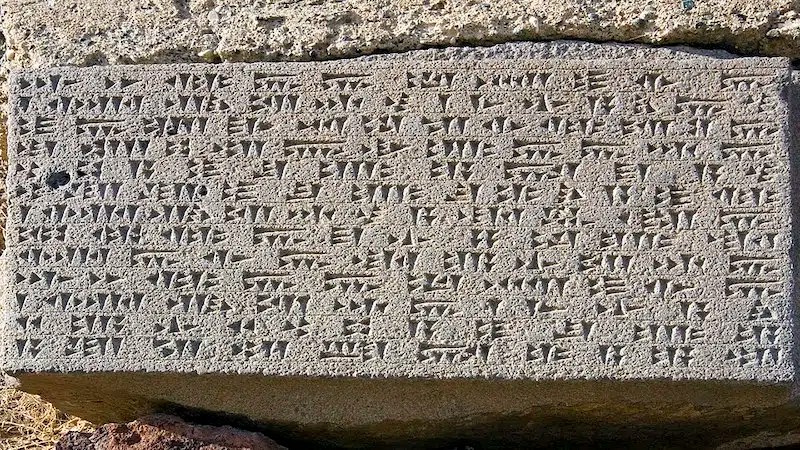 Urartian cuniform. Old tablet. Erebuni, Armenia. (Photo: Wikimedia Commons, Public domain)
The model estimated that humans spoke about 4,500 to 6,200 languages at the beginning of the Holocene. That figure falls below today’s roughly 7,500 spoken and signed languages, challenging the idea that humanity has steadily lost linguistic diversity since the end of the last Ice Age.
As populations expanded and agriculture reshaped communities, language diversity grew. Smaller groups could split from one another, develop distinct identities, and gradually form new languages.
The researchers ran their model thousands of times to trace these changes. Each simulation produced a similar pattern: linguistic diversity climbed for most of the Holocene before reaching a short-lived peak between 1,000 and 3,000 years ago. At that point, tens of thousands of languages may have existed across the globe.
 This script was found on the temple walls of the Thanjavur Thanjavur Brihadeeshwarar temple. This is very different from the present Tamil script. (Photo: Wikimedia Commons, CC BY 2.0)
Source: https://mymodernmet.com/tens-of-thousands-of-languages-human-history/


