
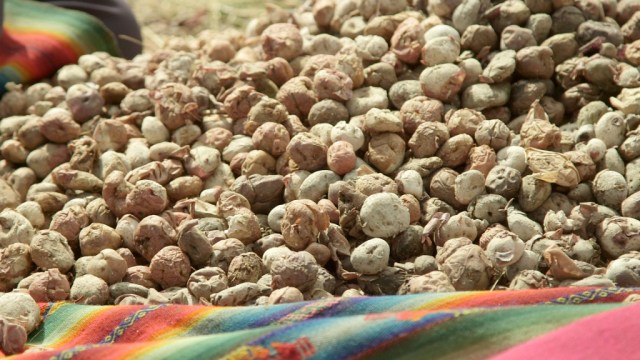
 Bolivia’s Aymara people have for centuries depended on a potato-based product called the chuño as a staple. Now, the chuño’s days might be numbered.
For centuries, Humberto Limachi’s ancestors have cultivated potatoes and turned them into a freeze-dried product called the chuño. It’s a staple food for Bolivia’s Aymara indigenous community. Limachi teaches his young children how the chuño is prepared. “The potato is our symbol,” he says. But climate change is disrupting this tradition and threatening to deny poor Bolivians of what is often their most reliable source of calories in the bitter cold of the Andean highlands.
To prepare the chuño, potatoes — preferably smaller ones — are laid out on the ground and left to freeze and dehydrate through the night, when temperatures often drop below the frost point. The potatoes are left like that for a few nights, then placed on a straw bed. Families then trample on the potatoes by foot to remove what little moisture remains. The process also helps to peel the potatoes. Finally, the potatoes are left to bake in the sun.[…]

 msamba