By Regina Sienra on November 14, 2024
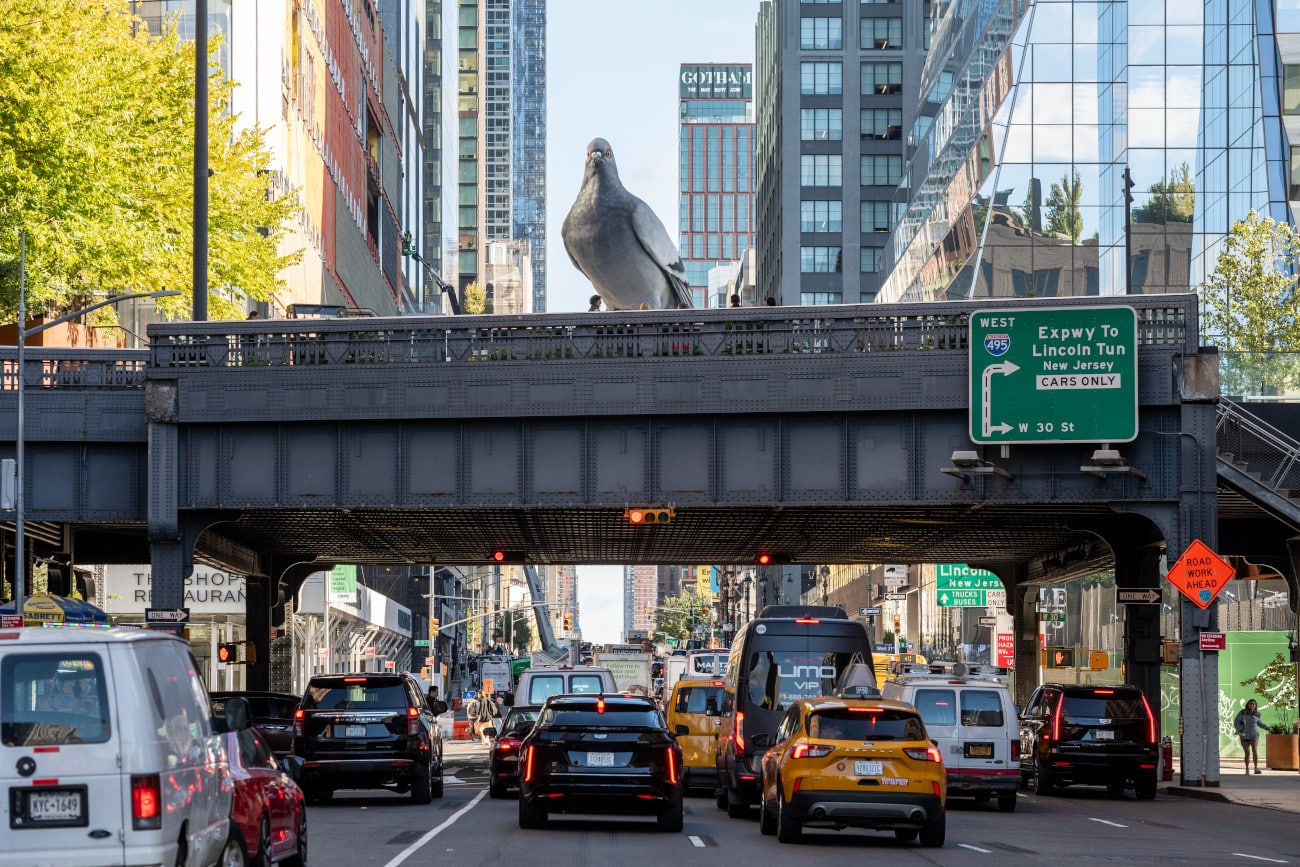 Iván Argote, “Dinosaur,” 2024. A High Line Plinth commission. On view October 2024 – Spring 2026. (Photo: Timothy Schenck. Courtesy of the High Line.)
Da boids rule dis town now.
At 30th Street and 10th Avenue, in New York City, a new monumental beast has taken over. This imposing creature is none other than an oversized pigeon, but one with an insightful message about legacy, perception, and future worlds. Created by artist Iván Argote, the 16-foot sculpture titled Dinosaur imposingly looks over the city’s busy streets atop the High Line.
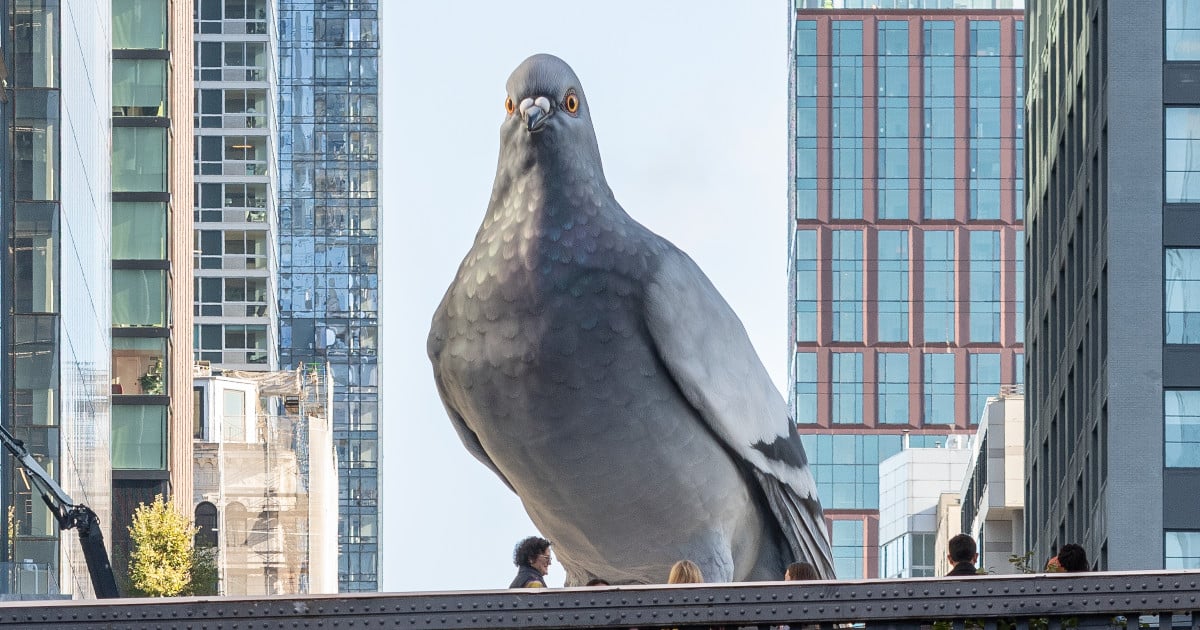
 Iván Argote, “Dinosaur,” 2024. A High Line Plinth commission. On view October 2024 – Spring 2026. (Photo: Timothy Schenck. Courtesy of the High Line.)
“For almost 20 years, I have worked about different dynamics in public spaces, exploring how we relate to others and our connection with the city,” Argote tell My Modern Met.”I’ve also spent a lot of time questioning the meaning and symbolism of the monuments we have. Throughout this journey, pigeons have been an omnipresent figure. I created several videos featuring them and explored their unique attitude and our strange relationship with them.”
That’s why, when the artist was thinking about a proposal for the High Line Plinth, he thought it would be interesting to make a pigeon the star of the show. “Through this, I wanted to raise questions about our relationship with other species in the city, with marginality, and what an iconic monument for New York in the 21st century might look like,” Argote says. “Pigeons are intelligent; they have a humorous attitude and incredible capabilities. They can navigate almost as if they have GPS, are very loyal, and are highly adaptive. You can find dozens of videos online showing pigeons doing amazing things. It’s easy to be inspired by them.”
To him, naming the piece Dinosaur has the goal of expanding the meaning and opening up new interpretations. “Like them, one day we won’t be around anymore, but perhaps a remnant of humanity will live on—as pigeons do—in the dark corners and gaps of future worlds. I feel this sculpture could generate an uncanny feeling of attraction, seduction, and fear among the inhabitants of New York.”
Argote explains that in art history, many sculptures play with scale, altering our relationship with a subject. “I wanted to connect pigeons with their ancestors—pigeons, like all birds, are what remain of the dinosaurs. There’s also this idea that dinosaurs once dominated the world, which I wanted to parody,” he admits. “This notion of a single species ‘dominating’ the world is a very human perspective. By enlarging the pigeon, I wanted to invert the scale relationship, so now it’s the pigeon looking down at us.”
Making this piece a reality took Argote several years of research, not only about pigeons themselves but also about sculpting techniques. “It’s very complex to produce a sculpture of this size and with such detail!” Argote confesses. Ultimately, he worked on the project for almost five years, while producing the sculpture took a year and a half.
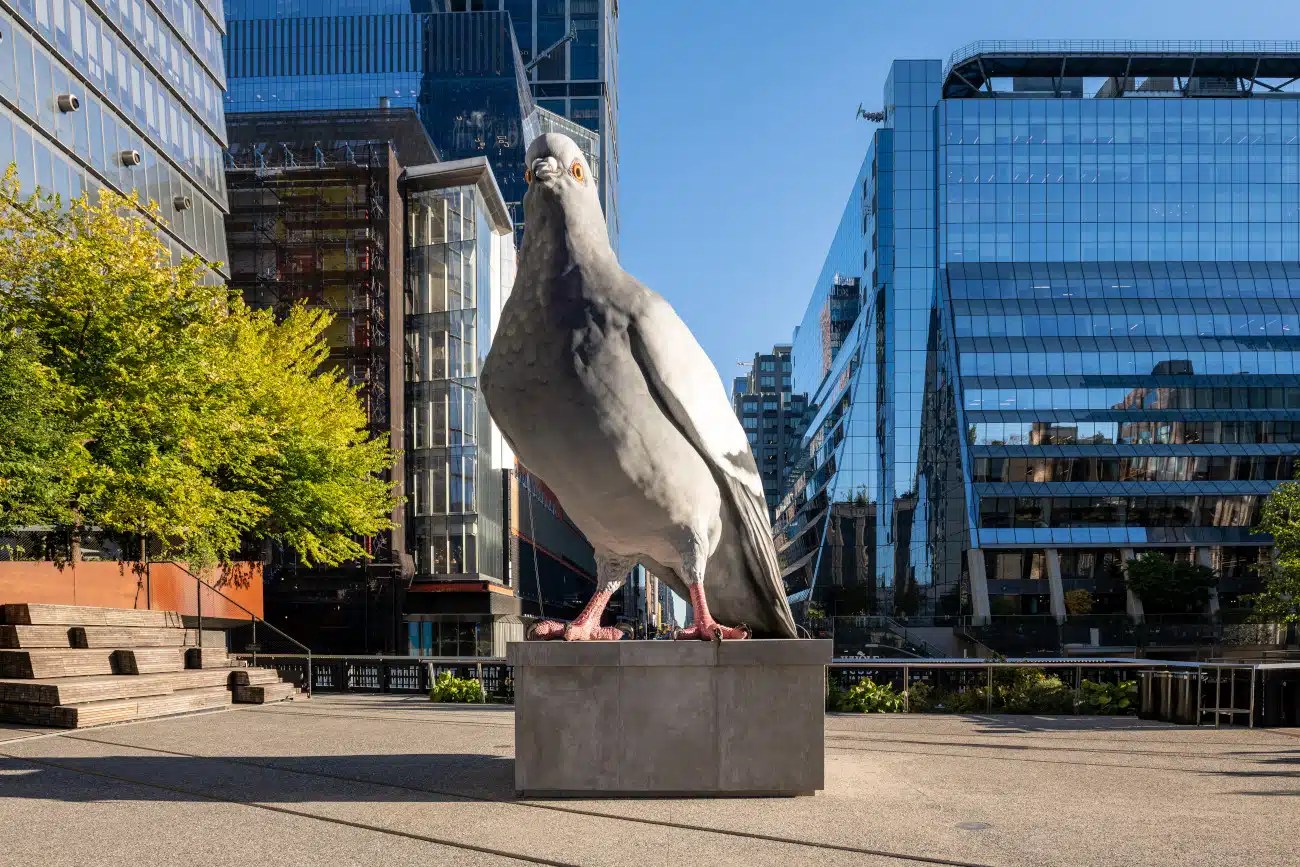
Iván Argote, “Dinosaur,” 2024. A High Line Plinth commission. On view October 2024 – Spring 2026. (Photo: Timothy Schenck. Courtesy of the High Line.)
In the end, he just hopes some of the ideas around Dinosaur resonate with people. “It’s also a joyful piece, and I hope it brings people joy as well. I feel that’s especially important right now.” The sculpture will be in view on the High Line through spring 2026.
To stay up to date with the artist, you can follow Iván Argote on Instagram. […]
More: Massive Pigeon Sculpture Perched on the High Line Overlooks NYC