Forrest Gander, Laurie Bolger, SJ Fowler and Rachel Segal Hamilton.
Pulitzer prize-winning poet Forrest Gander discusses the Academy of American Poets Laureate Fellowships. An initiative which awards $50,000 to poets of literary merit appointed to serve in civic positions to enable them to create projects that enrich the lives of their neighbours, through responsive and interactive poetry activities.
In awarding Laurie Bolger The Moth Poetry prize, Nobel Laureate Louise Glück said, “I respond to poems that surprise me”. Laurie reflects on the impact of this assessment of her poetry, and explains why her first full poetry collection, Lady, is like a romcom blockbuster.
Marking the arrival of this year’s European Poetry Festival, its founder and director, SJ Fowler, joins The Verb to share his approach to bringing poets together to create new work. With a little help from Ian, he performs one of the poems – Levels of Care – that he co-wrote for the festival with Latvian poet Krišjānis Zeļģis.
Writer and editor Rachel Segal Hamilton who specialises in photography, assesses the marriage of photography and poetry with two new examples of the form – A Difficulty Is A Light by Rebecca Norris Webb, and The Dereliction by Liz Berry and Tom Hicks.
Presented by Ian McMillan
Produced by Ekene Akalawu
🧶 A poor girl. An impossible task… and a terrible bargain. In the end, only a name can save her.
We think of Rumpelstiltskin as a simple children’s tale. But what if I told you this story is older than the Brothers Grimm? Older than castles, kings—even older than writing itself?
🔔 Subscribe to The Resurrectionists → / @theresurrectionists
🕯️ In this episode of The Resurrectionists, we peel back the golden threads of Rumpelstiltskin to reveal a mythic pattern stretching back 4,000 years—through Bronze Age metalworkers, biblical demons, and the ancient belief that names hold power.
📜 What if the little man wasn’t just a trickster—but a memory of something divine? Something dangerous? A story so old, it remembers when fire and metal changed the world.
⏱️ Chapters:
03:38 – The Grimm Version (But Older Than You Think)
05:59 – Spinning, Fate, and Alchemy
07:07 – The First Metalworkers: Gods or Something Else?
09:02 – The Ultimate Price
10:27 – The Power of the Secret Name
13:10 – A Divine Language of Creation
📚 Sources & Further Reading:
– Durham & Lisbon Folklore Study (BBC Summary): https://www.bbc.com/news/uk-35358487
– Comparative phylogenetic analyses uncover the ancient roots of Indo-European folktales — ResearchGate: https://www.researchgate.net/publicat…
– No Fairy Tale: Origins of Some Famous Stories Go Back Thousands of Years — Science News: https://www.sciencenews.org/article/n…
– Rumpelstilzchen: The Name of the Supernatural Helper and the Language of the Gods — Academia.edu: https://www.academia.edu/5428826/Rump…
– Tehrani, J.J. (2016) The Phylogeny of Little Red Riding Hood – Royal Society B
– The Name of the Supernatural Helper – Aarne-Thompson-Uther Index (ATU 500)
– The Testament of Solomon – translated by F.C. Conybeare, 1898
– Alchemy and Mysticism – Alexander Roob (Taschen)
– Solomon and the Construction of the Temple – Jewish Virtual Library
– The Watchers in the Book of Enoch – Oxford Biblical Studies
👁️ Watch Next:
– “The 5,000-Year-Old Secret Behind Jack and the Beanstalk” → • The 5,000-Year-Old Secret Behind Jack and …
– “Rapunzel Was Real?” → • Was This Woman the Real Rapunzel?
– Explore more Fairy Tale Origins → • Fairy Tale Origins
You may have noticed these test tubes on lamp posts all over the UK recently. What do they do? And where did they come from?
They’re part of a clean air scheme and they’re used to collect samples of Nitrogen Dioxide or NO2 in the air by diffusion.
They are sent to a lab and analysed to see what levels of NO2 are in the air as part of the effort in your area to target high levels of pollution and make the air cleaner.
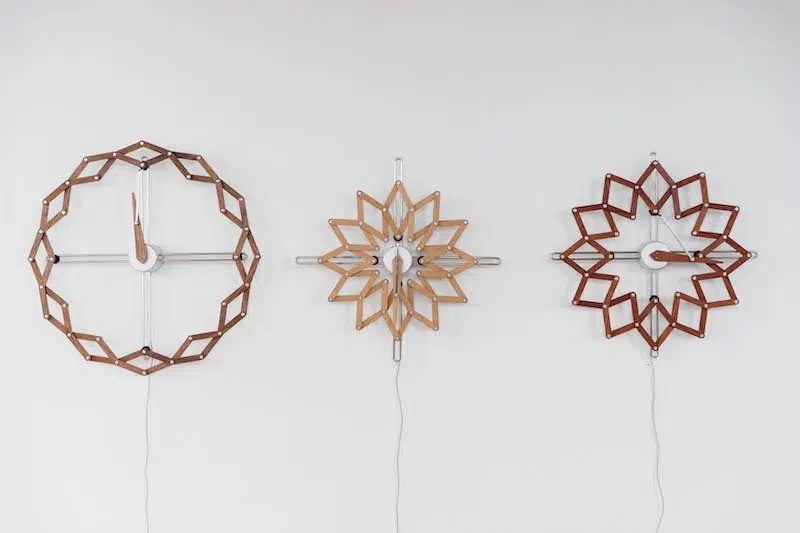
“When designing the Solstice timepiece, I wanted its movement to represent the passing of time in a way that was beautiful and peaceful, taking inspiration from flowers opening in response to light.”
Whether you’re constantly running late or you feel like there aren’t enough hours in the day, our relationship with time can often be a source of stress. London-based designer Matt Gilbert of studio Animaro seeks to change that with Solstice 2.0—a kinetic clock designed to transform how we experience time, encouraging a calmer and more mindful perspective.
The meditative, sculptural timepiece transforms with the passage of time like a kinetic work of art. Over a 12-hour cycle, it gently changes shape, gracefully expanding until midday, when the sun reaches its peak, then gradually contracting by 6 p.m. The clock is designed to reconnect us with the way we once told time through nature, using shape and pattern, much like a modern sundial.
For many, time and a need for absolute accuracy has become a source of stress,” says Gilbert. “When designing the Solstice timepiece, I wanted its movement to represent the passing of time in a way that was beautiful and peaceful, taking inspiration from flowers opening in response to light.”
In Clock Mode, the single hour hand makes a full rotation every 12 hours, just like a traditional clock. It moves so gradually you won’t notice it shifting, but its shape subtly evolves throughout the day. Switch to Demo Mode, and the hand completes a full rotation every 60 seconds, turning the clock into a mesmerizing piece of kinetic art. Tapping the metal bar—equipped with a touch sensor—lets you toggle between modes. When you switch from Demo Mode to Clock Mode, the Solstice 2.0 automatically syncs to the correct time.
Recently launched on Kickstarter, Solstice 2.0 is Animaro’s second campaign, showcasing a more refined and thoughtfully updated design. While the original Solstice saw 200 units shipped around the world, this new edition is limited to just 80 units, allowing Animaro to prioritize craftsmanship and quality.
For many, time and a need for absolute accuracy has become a source of stress,” says Gilbert. “When designing the Solstice timepiece, I wanted its movement to represent the passing of time in a way that was beautiful and peaceful, taking inspiration from flowers opening in response to light.”
In Clock Mode, the single hour hand makes a full rotation every 12 hours, just like a traditional clock. It moves so gradually you won’t notice it shifting, but its shape subtly evolves throughout the day. Switch to Demo Mode, and the hand completes a full rotation every 60 seconds, turning the clock into a mesmerizing piece of kinetic art. Tapping the metal bar—equipped with a touch sensor—lets you toggle between modes. When you switch from Demo Mode to Clock Mode, the Solstice 2.0 automatically syncs to the correct time.
Recently launched on Kickstarter, Solstice 2.0 is Animaro’s second campaign, showcasing a more refined and thoughtfully updated design. While the original Solstice saw 200 units shipped around the world, this new edition is limited to just 80 units, allowing Animaro to prioritize craftsmanship and quality.[…]
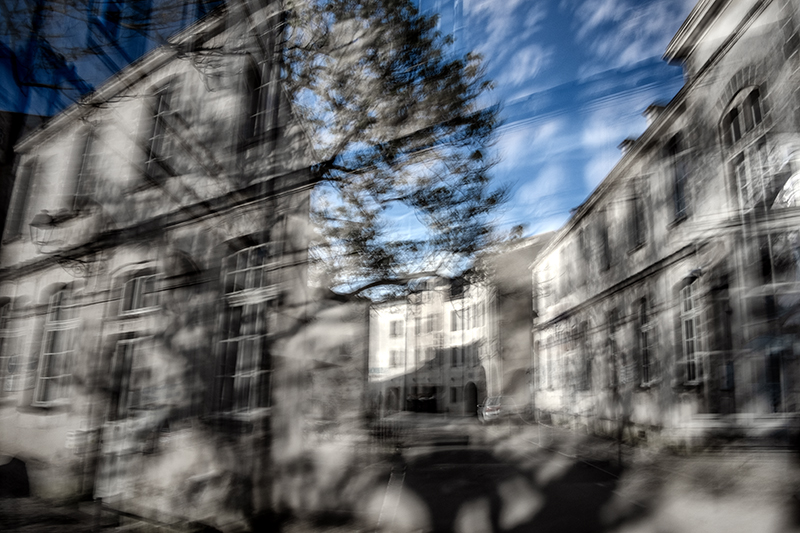
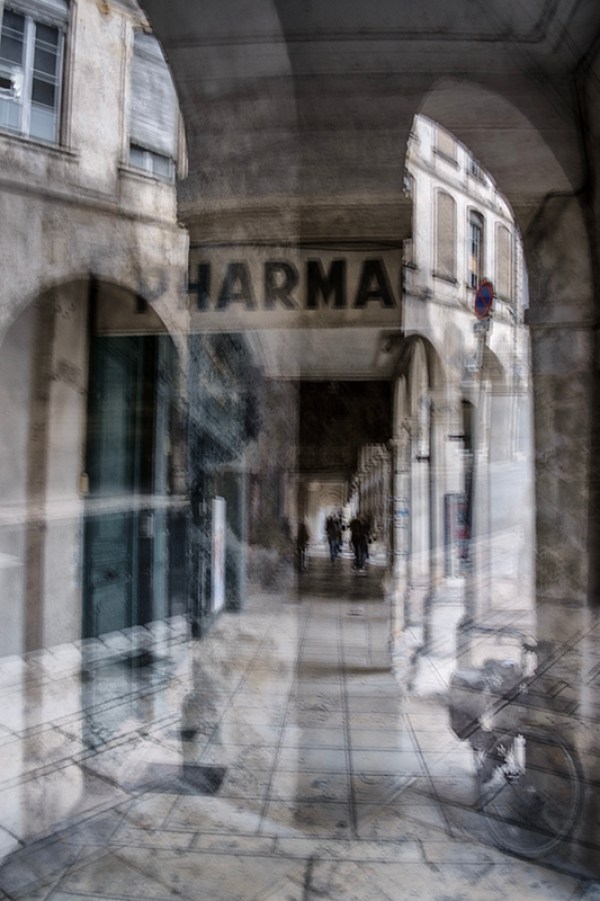
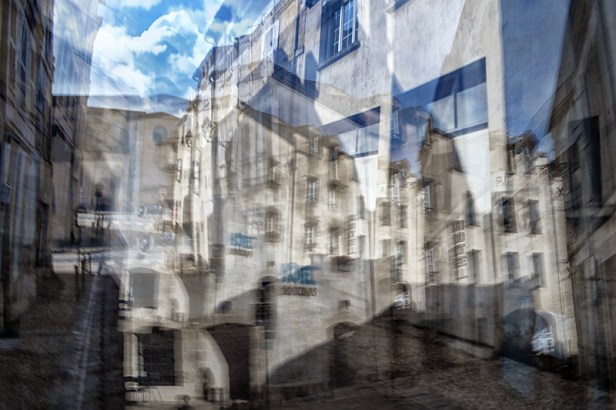
Photographer Drew Reese is the Edge of Humanity Magazine contributor of these images. From the project ‘France Countryside’. […]
Pharma
Intersection
[…]
Vibrant Harbor
Bio
Drew Reese was born in Annapolis Md. but spent his formative years in the San Francisco Bay Area. In 2000, he and his wife moved to Joshua Tree where they opened an Inn that catered to the hikers that came to Joshua Tree National Park. Here he turned his focus on the Desert Landscape and participated in shows at Joshua Tree Art Gallery, the ACE show at the Palm Springs Museum and other local venues. He is now retired in Santa Fe, NM where he continues to explore the local landscape. He has been featured online with ICM Photography Magazine, Spectaculum Magazine and participates in the Santa Fe Studio Tours.
Drew learned the technical aspects of Photography at San Francisco State University but is primarily self-taught. His real education came from taking pictures and studying the work of great photographers and painters. Everything from Classical to Modern Art has informed his work. He enjoys looking at a wide range of Art, visiting galleries and museums on a regular basis.
Artist Statement
My work is about seeing the movement and natural chaos in things. I take a painterly approach to my work, I use double exposure, slow shutter speeds and intentional camera movement to create images that are unique to my vision. Intuition and chance play a great part in my process. Whether I’m focusing on trees in nature, or wandering the streets of a foreign city, I see beauty everywhere. With this style of shooting, I’m never sure of what I have until I’m in front of the computer. There are many misses, but when you get it right, it’s very exciting.
An Art Nouveau style Peacock on top of a building on Buchanan Street in Glasgow. Cont./#glasgow #buchananstreet #peacock #artnouveau #princessquare #sculpture #publicart
There are Roman ruins in London. And they are located… underground.
And this is not the only amazing attraction hiding under London.
Today we will descend step by step into the underground depths of this amazing city and find out: What is under London?
RYV Team:
Voice Over: Kent Bleazard
Thanks for the footage:
Kathryn and Edward, “The Wright Life” – @TheWrightLifeTravelChannel






 msamba