Has JWST found potential alien worlds? Neil deGrasse Tyson and comedian Matt Kirshen learn about exoplanet discovery on the frontier, how higher oxygen gave us dinosaurs, and what type of life could evolve on alien worlds with astrophysicist and astrobiologist Lisa Kaltenegger.
Lisa tells us about breaking down the chemical signature of newfound rocky planets. When will we have telescopes that will see the surface of these exoplanets? If an alien on a different planet pointed a telescope at us, what signs of life would they see? Is there anything they could mistake us for? We explore how geology creates complicated atmospheres and of course the question: what is life?
Could life have landed here on a meteorite and blended in with other life on Earth? We discuss the universality of biology: do the rules of biology apply everywhere? How hard is life to get rid of once it’s started? How fast could life evolve on another world? Plus, learn how Earth’s oxygen levels contributed to the Jurassic period. We explore extremophiles and whether life could live on asteroids, icy moons, and large rocky planets: Super-Earths. What conditions trigger complex life?
Did human life come from panspermia? Find out about chirality and why we think that all Earth life started from the same source. Why do people really want to think we came from space? We talk about dimethyl sulfur as a biomarker and why its discovery on a Super-Earth may be both promising and potentially misleading. Can we figure out if we are alone or not?
Timestamps:
00:00 – Introduction: Lisa Kaltenegger
4:10 – Hunting Alien Earths
12:05 – What Would Aliens See If They Looked at Us?
18:13 – Is Every Animal on Earth From Earth?
23:03 – How Fast Could Evolution Go?
27:03 – Could Life Exist Outside of Planets?
32:36 – Life on a Super-Earth
38:04 – The Panspermia Question
41:44 – Biomarkers & Dymethyl Sulfide
47:40 – A Cosmic Perspective
Watch Mary Helen Immordino-Yang’s next interview ► • What well-being is (and isn’t), accor…
Are our current school systems stifling learning that matters? Mary Helen Immordino-Yang, a professor of education, psychology, and neuroscience at the University of Southern California, says yes.
According to Immordino-Yang, our education system focuses too much on memorizing facts and procedures, neglecting autobiographical memory—the personal story we tell ourselves about who we are and what we stand for. This type of memory is crucial for growth, development, and well-being.
Immordino-Yang tested this theory with a 5-year study that analyzed how young people’s brains are affected by deep thinking and reflection. She found that when teens were exposed to real-life stories and were asked to respond critically to how they made them feel, it had significant positive impacts on identity development and brain structure.
Instead of teaching students to memorize and reiterate learned facts and figures, Immordino-Yang encourages us to focus on this type of “transcendent thinking,” as it can help young people give more context to their knowledge. By fostering this deeper level of understanding, we can better prepare students to navigate and contribute to the complex, constantly developing world we live in.
Mary Helen Immordino-Yang, EdD, is an expert on the psychological and neurobiological foundations of social emotion, self-awareness, and culture, and how they impact learning, development, and education.
She is a Professor of Education at the USC Rossier School of Education, a Professor of Psychology at the Brain and Creativity Institute, a faculty member in the Neuroscience Graduate Program at the University of Southern California, and the Director of the USC Center for Affective Neuroscience, Development, Learning, and Education (CANDLE).
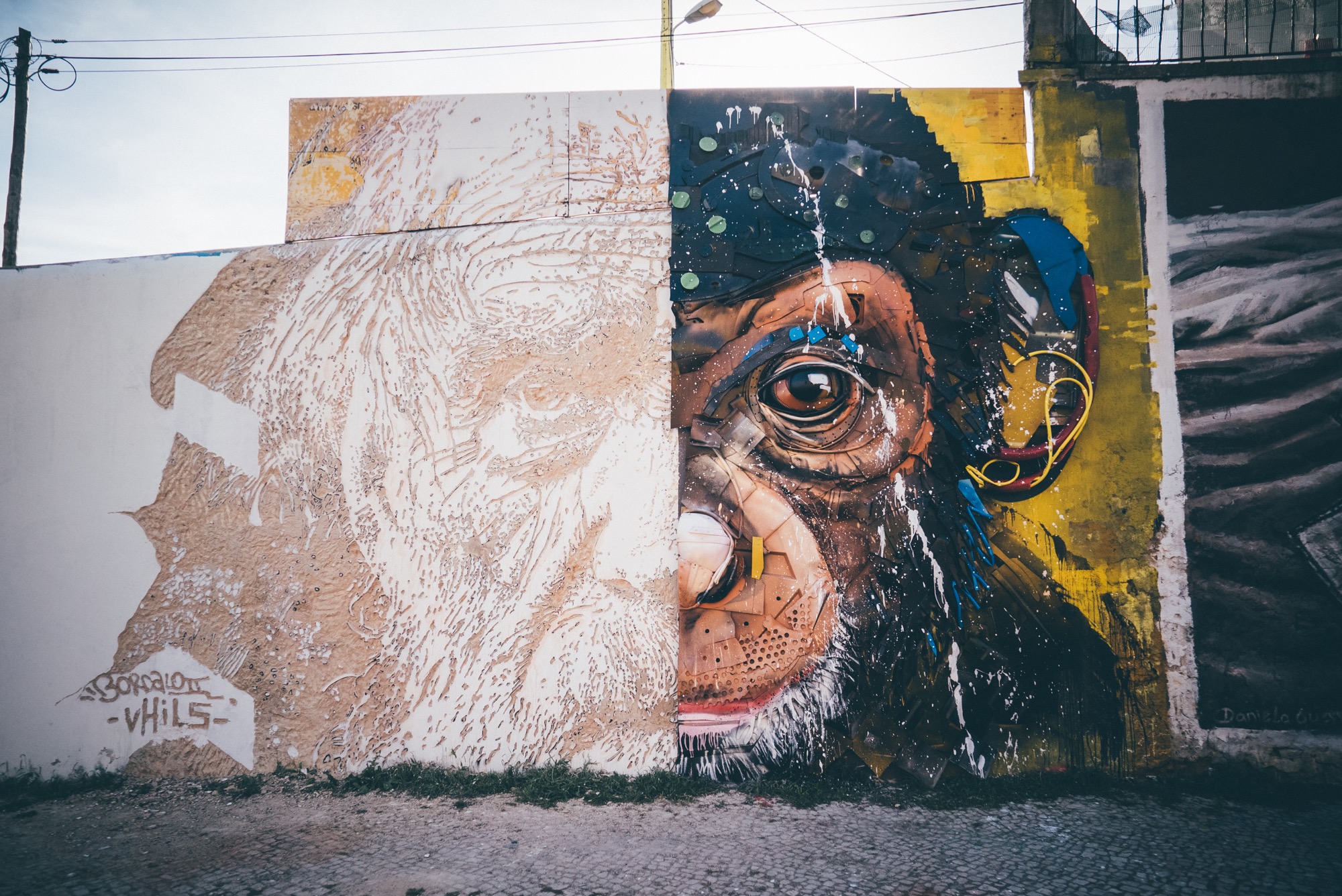
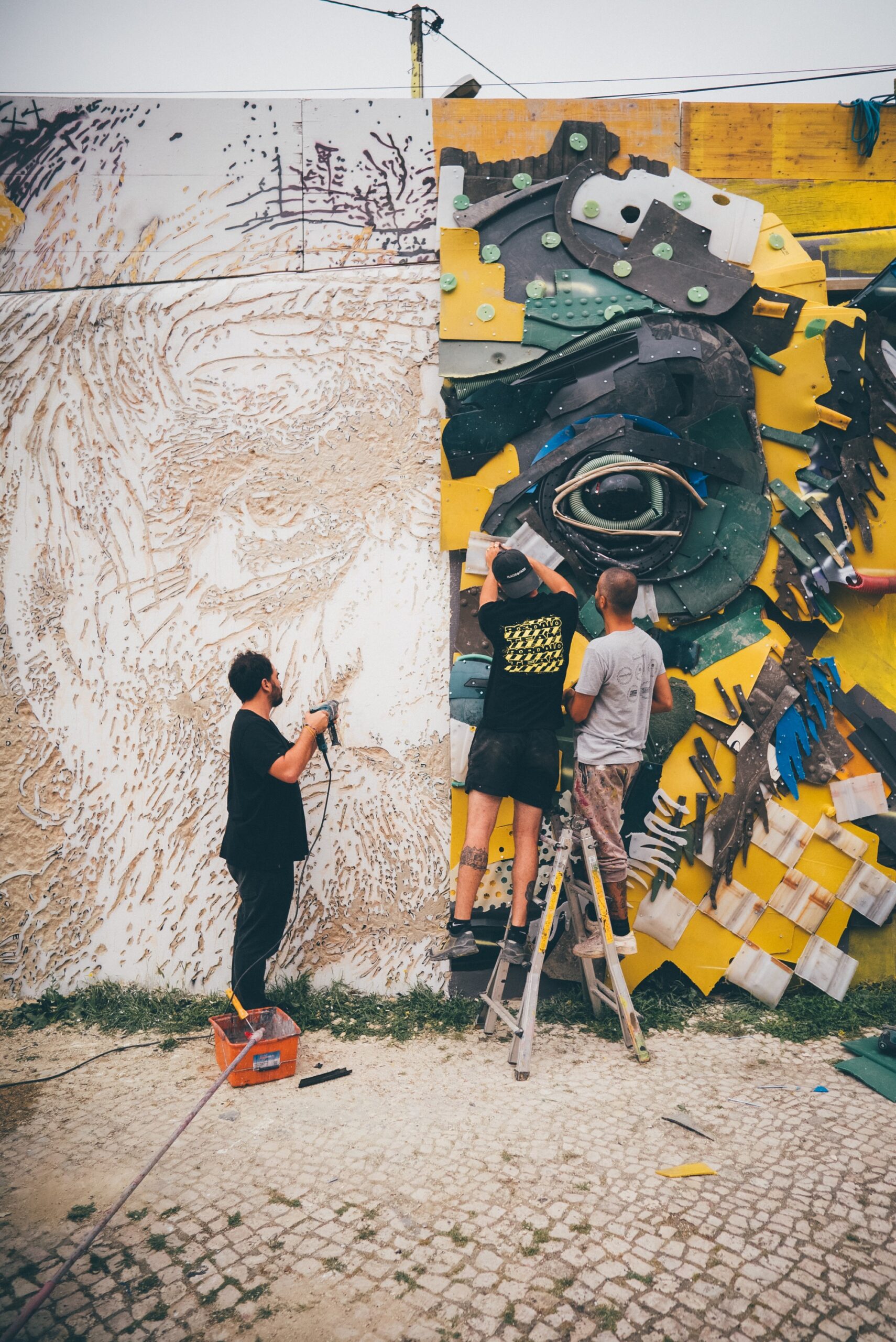
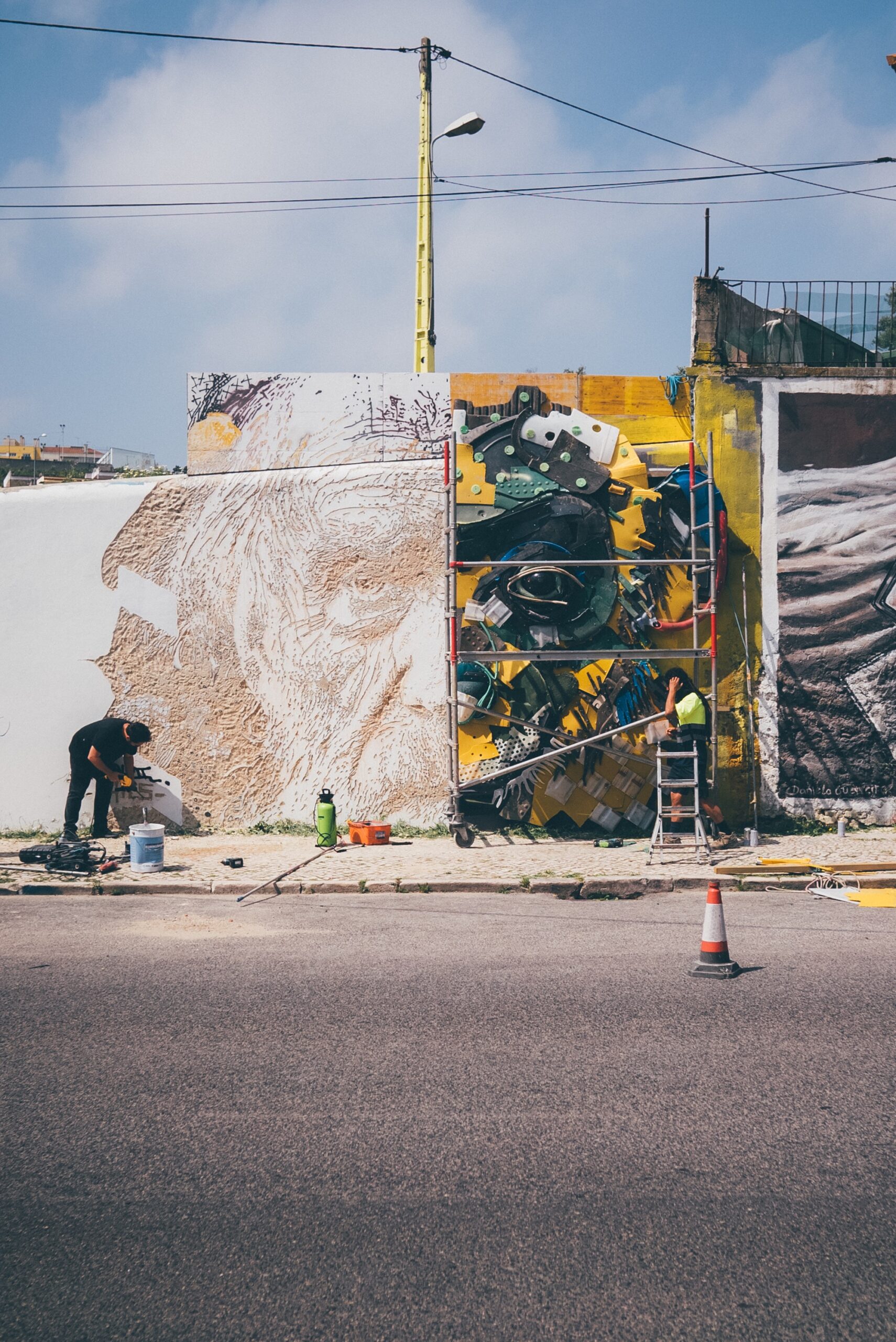
Street artists Vhils and Bordalo II recently teamed up for a collaborative mural celebrating Charles Darwin in a mural titled “Origin.”
Published 165 years ago, Charles Darwin’s seminal On the Origin of Species founded our modern understanding of evolutionary biology. He keenly observed wildlife in its native habitats and the similarities between animals around the world—including humans—describing how, through natural selection, populations evolve through a branching pattern over time.
Darwin is often misquoted as saying humans evolved from apes, but he actually acknowledged that humans and primates descended from a common ancestor that lived millions of years ago. With the advent of DNA testing in the late 20th century, scientists have determined that humans and chimpanzees share a staggering 98.8 percent sequence identity. Yet with a single human cell containing roughly three billion bits of information called base pairs, a 1.2 percent difference means there are about 35 million ways we can still be different.
Artists Vhils (previously) and Bordalo II (previously) recently teamed up for a collaborative mural titled “Origin,” celebrating the renowned 19th-century scientist as part of Cor de Chelas Festival in Lisbon. On the left side, Vhils carved Darwin’s likeness from the material of the wall itself, while Bordalo II constructed the face of a chimpanzee from found scraps of plastic, rubber, and other materials fastened with screws. Together, the man and our close relative align in a single, unified presence as a reminder that we are inextricably linked.[…]
The story of water supply in Los Angeles is more than a little murky.
Head to https://brilliant.org/TheB1M/ for a 30-day free trial and get 20% off an annual premium subscription.
Additional footage and images courtesy of Paramount Pictures, Library of Congress, Frank Seltzer Productions, Window Productions, RKO Radio Pictures, Mercury Productions, Universal, ABC7, Fox 11, LA This Week
Here’s the Baroque guitar. This would have been what your instrument was like if you were a guitar player in the 1600’s. 9 strings, tuned fairly similarly and with way more gut then you’re used to.