I told myself I wouldn’t make a story about China. When I was invited to a conference at the last minute, I would just enjoy it, let it all wash over me.
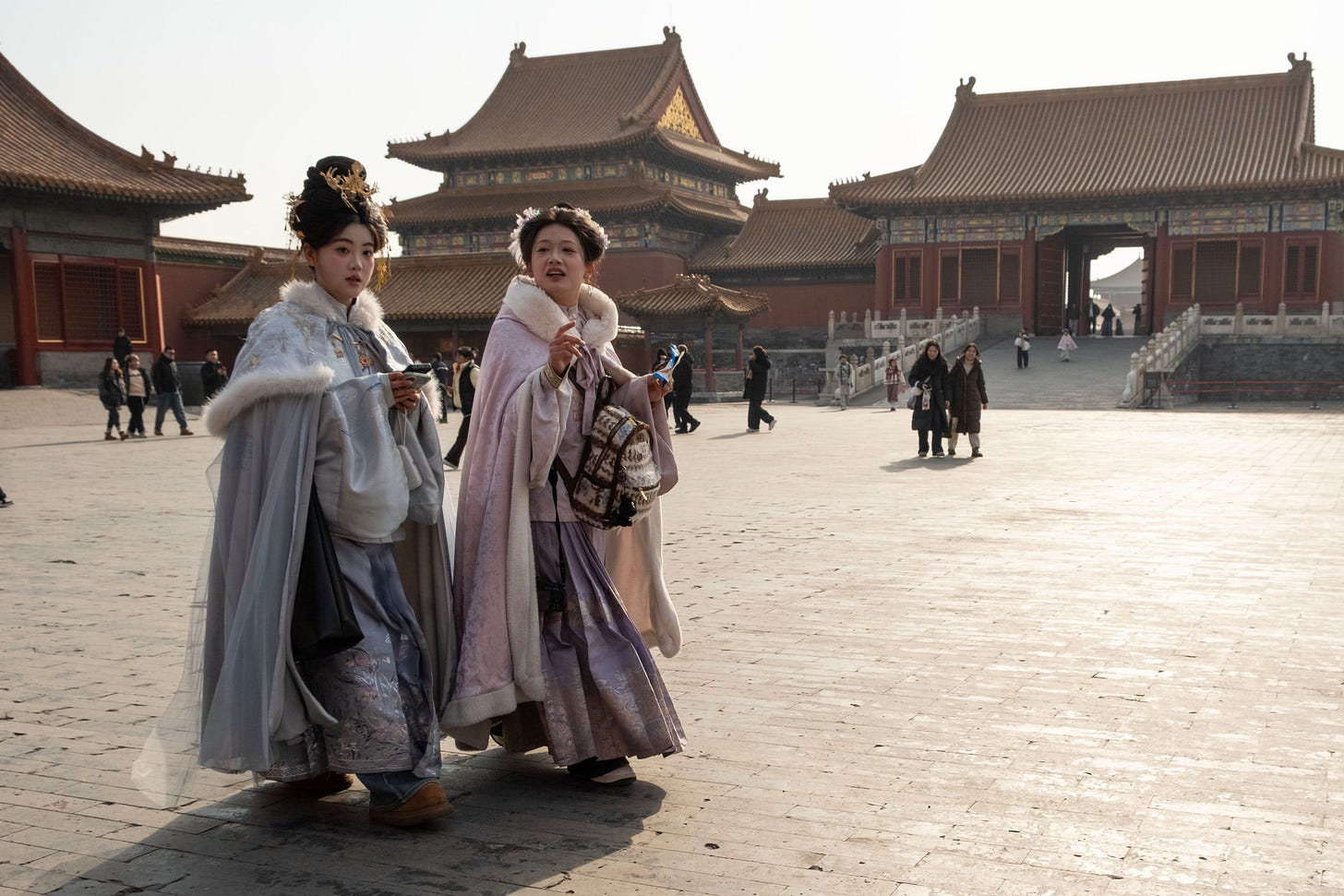
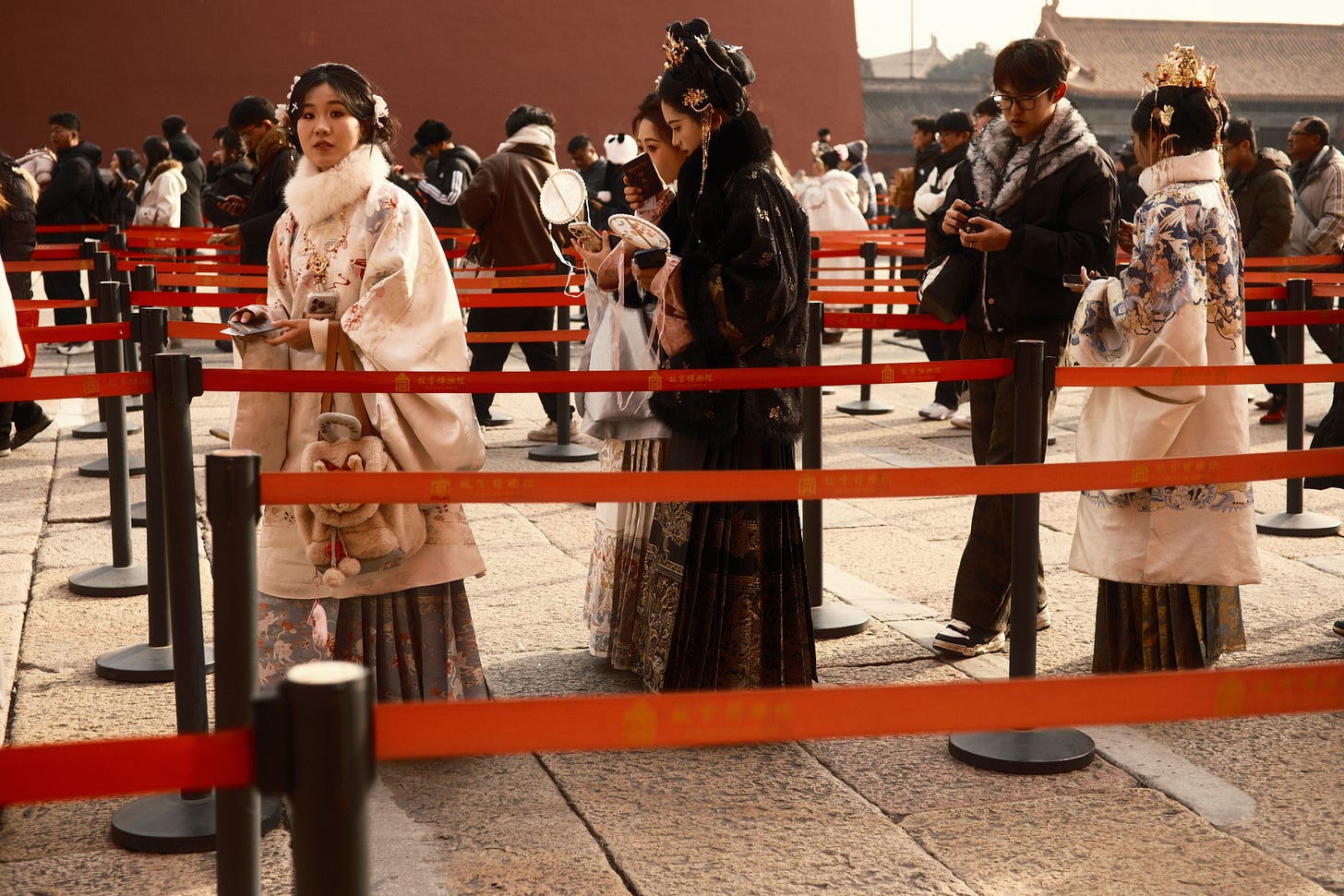
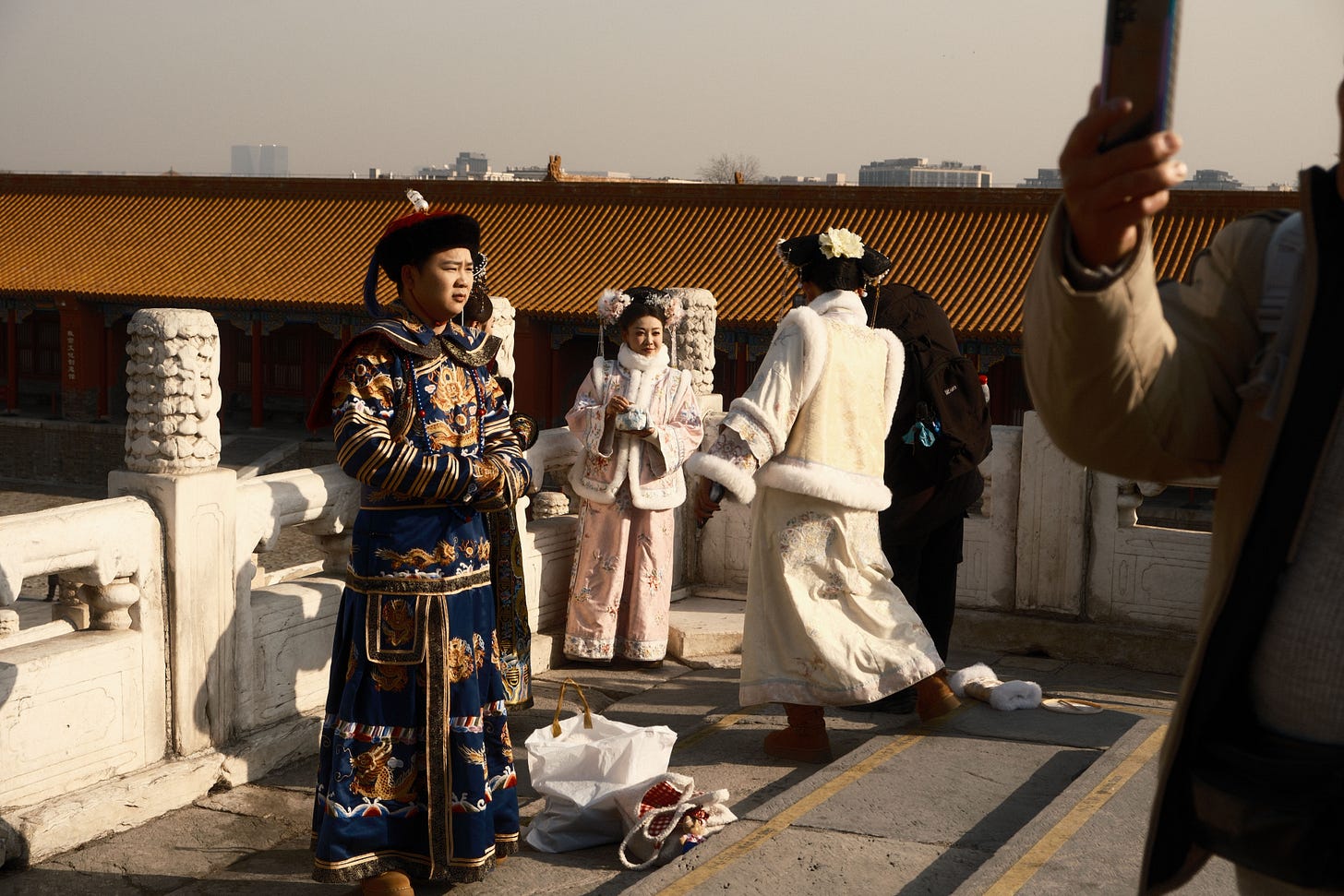
The girls who like to dress like imperial princesses. They are swarming every Chinese tourist site. Especially the Forbidden City, the palace that was seat of the Ming Dynasty.
The line to get into The Forbidden City. Photo by Drew Houpt
They are mostly women, although you sometimes see some boyfriends who have been cajoled into it.
okay king!
It makes sense to me that this would be fun social media fodder. Who doesn’t love to dress up and take pictures of themselves?
But this is specifically a movement called Hanfu. Which translates to Han clothing or Han dress. Han is the ethnic majority of China- like over 90% of China is Han. And there were moments (lol, centuries) when they have been “in control” of the monarchy, and times when they weren’t. […]
12 Jul 2026
The Most Impossible Rise of a City Ever: Manchester, England
In the mid-1700s, Manchester was nothing more than a damp, unremarkable market town in the north of England, the kind of place history books wouldn’t bother mentioning. Then, within the span of a single human lifetime, something happened that had never occurred anywhere on Earth before. Fields and hamlets gave way to smokestacks and mills, rivers were harnessed to power the first mechanized textile mills in human history, and a quiet backwater exploded into “Cottonopolis,” the world’s first truly industrialized city. This wasn’t gradual growth, it was an explosion, a rewriting of what a city could become, and it happened so fast that the rest of the world simply couldn’t keep up.
The scale of what Manchester achieved is almost impossible to comprehend even now. This rainy northern town began dictating the terms of global trade, its cotton mills consuming raw materials shipped from continents away and its finished goods clothing the entire world. The wealth generated was so staggering, so relentless, that when Manchester’s merchants grew tired of paying Liverpool’s punishing port taxes, they didn’t simply complain, they carved an entirely new waterway through the English countryside, building the Manchester Ship Canal to turn a landlocked city into one of the busiest ports in the world. This was a city that didn’t ask for power, it simply took it.
This is the story of the most improbable urban transformation in human history, of how a forgotten market town became the beating engine room of the British Empire and the blueprint for every industrial city that followed. It is a story of ambition without limits, of engineering that defied the impossible, and of a rise so rapid and so total that Manchester didn’t just join the modern world, it invented it.
Located in the East Village, this artwork was created by street artist Doug Groupp, known as "Clown Soldier". It was created in late 2025 and early 2026 to raise funds for the New York Immigration Coalition's emergency justice fund. photographer unknown #streetart #art #mural

 msamba