Hidden for Centuries, Rare 17th-Century Miniature Papercuts Have Been Discovered Under Floorboards in Hackney | Colossal

AUGUST 1, 2024 GRACE EBERT

All photos by James Dobson, courtesy of National Trust

Volunteers discovered a collection of papercuts at Sutton House, a Tudor home built in 1535 that served as a school in the 17th century.

For middle and upper-class girls, 17th-century education included lessons in core subjects like reading and writing, along with embroidery, housekeeping, and paper-cutting. The latter craft typically involved using minuscule pairs of scissors, knives, and pins to carve a design from themed books. Girls would then paint the tiny cuttings with watercolor or embroider within their lines before affixing the images to boxes or other decorations, a sign of the maker’s taste and skill.

Volunteers discovered a collection of these miniature artworks at Sutton House, a Tudor home built in 1535 in Hackney that served as a girls’ school in the 17th century. During renovations in the 1980s, construction workers pulled hundreds of textiles, papers, bones, and other objects from the floorboards that were then stored until recently. The findings include a series of delicate papercuts thought to have slipped through the cracks during lessons.
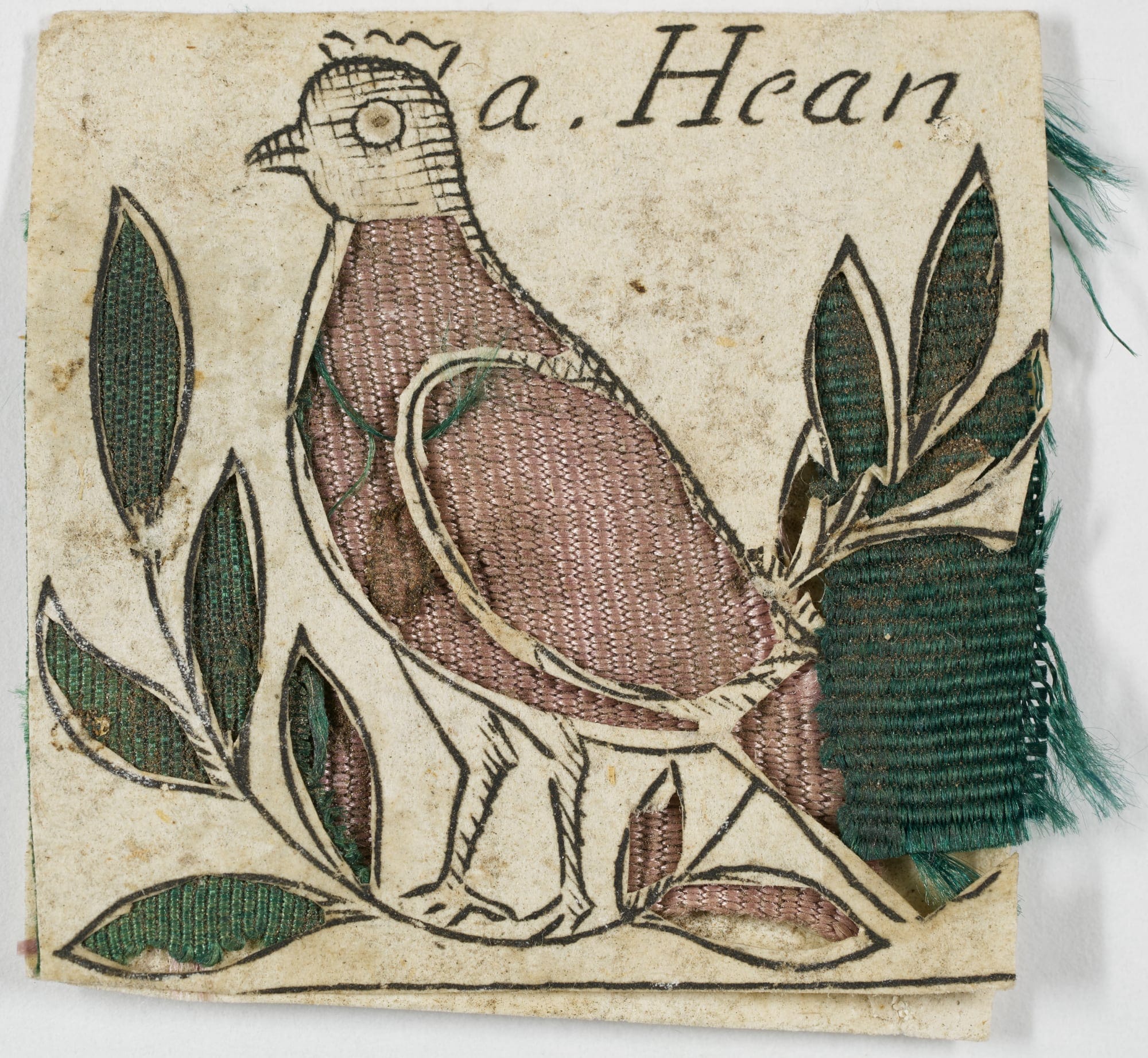
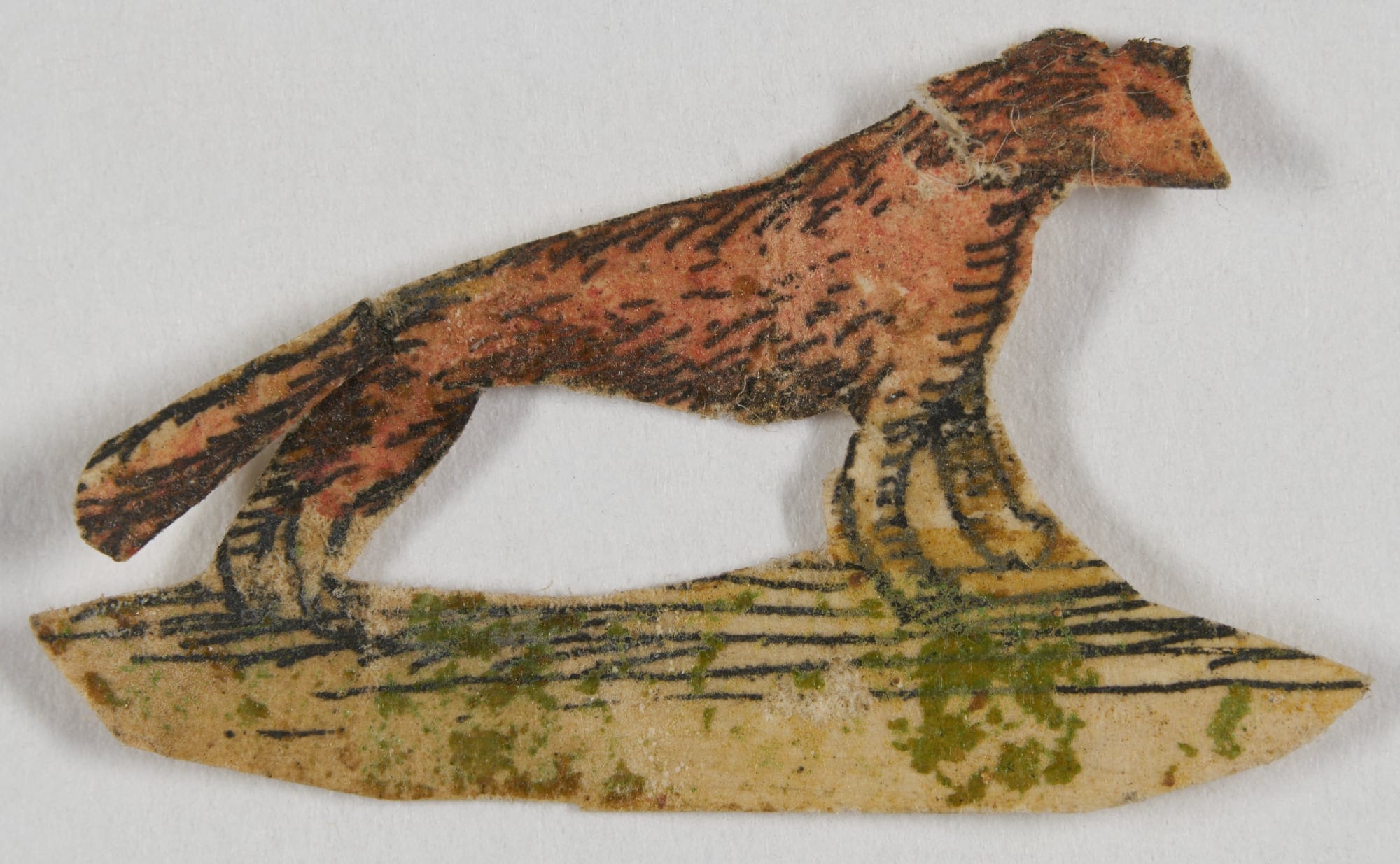
Less than an inch wide in most cases, the works depict a hen stitched with pink and green silk thread, a fox, an elaborately folded star, and a couple donning clothing typical of the period. According to Dr. Isabella Rosner, the papercuts are exceedingly rare given that the craft was just emerging in the U.K. at the time and the material’s delicacy means it rarely survives centuries without intentional preservation.

“We have long known about the role of Sutton House as a girls’ school over its lifetime but with few details about the classes, the pupils, or teaching,” said Kate Simpson, National Trust Senior Collections and House Officer, told artnet. “This discovery brings to vivid life one of the skills that pupils were taught and the painstaking process of handling, cutting, and coloring such tiny pieces of paper.”
If you’re in London, you can see eight of the papercuts at Sutton House through December.


More: Hidden for Centuries, Rare 17th-Century Miniature Papercuts Have Been Discovered Under Floorboards in Hackney — Colossal

Posted in Art | Tagged , , , | Leave a comment

The Most Satisfying Anime Cooking Sounds

Posted in Art | Tagged , , | Leave a comment

Thread of places that don’t look real

Posted in Photography | Tagged , , | Leave a comment

A Star Is About to Explode (And You’ll Be Able to See It)

Have you ever wondered what happens when a star explodes? In this episode, Neil deGrasse Tyson dives into the fascinating phenomenon of a star explosion in the constellation Corona Borealis, specifically focusing on the recurrent nova T Corona Borealis.

Learn about the intriguing mechanics behind these stellar events, the historical significance, and what makes this particular nova so special. Stay tuned as we also explore the differences between novas and supernovas, and what this means for our understanding of the cosmos.

[…]

Posted in Astronomy | Tagged , , , | Leave a comment

@after_cooking | 11 May ​@ Badehaus Berlin🔹

Posted in Music | Tagged , , , , | Leave a comment

In ‘Old Growth,’ Mitch Epstein Travels the U.S. to Capture Monumental Ancient Relics | Colossal

JULY 31, 2024 KATE MOTHES

“Patriarch Grove, Ancient Bristlecone Pine Forest, California” (2021), from the series ‘Old Growth,’ archival pigment print, 45 x 36 inches. All images © Mitch Epstein, courtesy of the artist and Yancey Richardson, New York

Sometime around the end of the last ice age—around 20,000 years ago—a single aspen seed rooted, sprouted, and began cloning itself in what is now central Utah. Known as Pando, which comes from the Latin “I spread,” the world’s largest known organism continues to grow today, comprising more than 40,000 individual trees. Every trunk emerged as a shoot from the same root system, and scientists estimate Pando weighs about 13 million pounds. That’s one massive plant.

For photographer Mitch Epstein, the phenomenal resilience, scale, and lengthy lifespans of trees forms the basis of his ongoing series Old Growth. From the world’s most voluminous sequoias to the most ancient weathered and gnarled bristlecone pines that can live more than 4,000 years, he captures remarkable stalwarts around the U.S.

“Sitka Spruce (Tree of Life), Olympic National Park, Washington” (2021), from the series ‘Old Growth,’ archival pigment print, 58 x 72 inches

Starting in 2017, Epstein traveled the country in search of the oldest known trees, like bigleaf maples, eastern white pines, cedars, and bald cypresses. Sequoias and bristlecones, for example, are known as relict species, or relics, have survived from an earlier period when they were much more widespread. Epstein creates a crucial record of the trees as their ever-shrinking habitats are increasingly threatened amid the climate crisis.

“Congress Trail, Sequoia National Park, California” (2021), from the series ‘Old Growth,’ archival pigment print, 45 x 36 inches

Both new and mature forests play a significant role in capturing carbon, which helps to keep greenhouse gases out of the earth’s atmosphere. The older trees just store much more of it. Estimates vary depending on definitions of “old growth,” “original,” or “frontier” forests, but in the U.S., humans are estimated to have destroyed as much as 96 percent of these areas for logging, agriculture, and development.

Through photography, Epstein focuses on the inherent tension of time. […]

“Coastal Redwood (Boy Scout Tree), Jedediah Smith Redwoods State Park, California” (2022), from the series ‘Old Growth,’ archival pigment print, 45 x 36 inches

More: In ‘Old Growth,’ Mitch Epstein Travels the U.S. to Capture Monumental Ancient Relics — Colossal

Posted in Photography | Tagged , , , , | Leave a comment

The STEM Naming Double Standard is kinda unfortunate…

Posted in History | Tagged , , | Leave a comment

Rev. Richard Coles | Dined with my pal Eva tonight…

Posted in Architecture | Tagged , , | Leave a comment

Do “vegetables” technically exist? | FOOD WORDS

n this episode of Words Unravelled, Rob and Jess explore the delicious origins of our words for foods. They delve into the etymology of “dinner”, “lunch” and all manner of mealtime, and ask whether “vegetables” technically even exist. As usual, there are one or two saucy stories to be told too (wait ’til you hear what “vanilla” actually means…).

👂LISTEN: https://podfollow.com/words-unravelle…
or search for “Words Unravelled” wherever you get your podcasts.

==LINKS==
Rob’s YouTube channel: / robwords
Jess’ Useless Etymology blog: https://uselessetymology.com/
Rob on X: x.com/robwordsyt
Jess on TikTok: tiktok.com/@jesszafarris

#etymology #wordfacts #English

[…]

Posted in English | Tagged , , | Leave a comment

Dust-to-Digital (@dusttodigital) | Here are some recent highlights featuring young artists.

Posted in Music | Tagged , , , | Leave a comment