The “NON-PROCESS Process” – works every time!

Posted in Art | Tagged , , | Leave a comment

Polymeter Challenge #rhythm

Posted in Art | Tagged , , | 1 Comment

【阿波踊り2024】徳島の夏がスタート!小松島港まつり | Awaodori in Tokushima Japan

This video showcases the Komatsushima Port Festival held on July 13, 2024, in Komatsushima City, Tokushima Prefecture. The event featured performances by dance groups based in Komatsushima. Although there was a chance of rain, I decided to film the outdoor dances to capture the festival atmosphere. The outdoor venues were on Nijo-dori and Sanjo-dori, with performances of both flowing and structured dances. Since I didn’t have the performance schedule, I had to dash to the sound of zomeki (Awaodori music) to catch the dances on film. Unfortunately, I missed capturing the Kuroshio-ren due to timing issues, which I deeply regret. I hope to get another chance next year.

The dance groups featured in this video, in order of appearance, are Kincho-ren, Komatsushima City-ren, Yumesaku-ren, Musaku-ren, Kizuna, Yachiyo-ren, Asuka-ren, Takumi, Yakko-ren, Tobahei, and the joint group of the Tokushima Prefecture Awaodori Association Komatsushima Branch.

Awaodori (Awa Dance) is one of the most famous traditional performing arts in Japan, with its history of more than 430 years. “Awa” is the old feudal administration name for Tokushima Prefecture, and “odori” means “dance”. Awaodori Festival in Tokushima City is held from August 12 to 15, attracting over 1.3 million tourists every year.

Thank your for tuning in! Please subscribe to my channel!
/ awaodorifools

Join our members and support the Awaodori dance!
/ @awaodorifools

⭐️Awaodori Music⭐️
The sound of Awaodori👉https://linkco.re/91xtdQ17
AWAODORI MUSIC👉https://linkco.re/pE8TEZmu
More info👉https://www.awanavi.jp/archives/topic…

[…]

Posted in Japan | Tagged , , , | Leave a comment

In Pictures – Waste Pickers: Brazil’s Unsung Recycling Heroes | Earth.Org

BY MARCOS RAMOSAMERICAS JUL 12TH 2024. 3 MINS
EARTH.ORG IS POWERED BY OVER 150 CONTRIBUTING WRITER

PHOTOGRAPH BY MARCOS RAMOS

In the bustling cities of Brazil, a force of unsung heroes silently toil day and night, braving all weather conditions to collect, sort, and sell recyclable materials. They are the waste pickers, an army of around 800,000 individuals who play an indispensable role in waste management, recycling over 90% of Brazil’s recyclable waste each year. Through powerful shots Rio de Janeiro-born photographer Marcos Ramos shines a light on these resilient individuals and their crucial impact on Brazil’s circular economy and environmental preservation.

—

Waste pickers play a crucial role in waste management in Brazil, significantly contributing to recycling and urban cleanliness. According to data from the Institute for Applied Economic Research (IPEA), there are currently about 800,000 waste pickers in the country, many of whom work autonomously and in precarious conditions. These professionals remove approximately 90% of all recyclable material collected in Brazil, which amounts to more than 800,000 tons of waste per year. They work tirelessly, morning, afternoon, and night, through rain or shine, in both cold and hot weather.

Often seen as informal workers, waste pickers are responsible for collecting, sorting, and selling recyclable materials such as paper, plastic, glass, and metal. This activity not only generates income for thousands of families but also plays a crucial role in environmental preservation. According to the Brazilian Association of Public Cleaning and Special Waste Companies (ABRELPE), recycling prevents tons of waste from being improperly discarded, reducing pollution and the need for new landfills. […]

José gets up early every day and takes to the streets of Rio de Janeiro in search of recyclable materials. Photo: Marcos Ramos (2021).
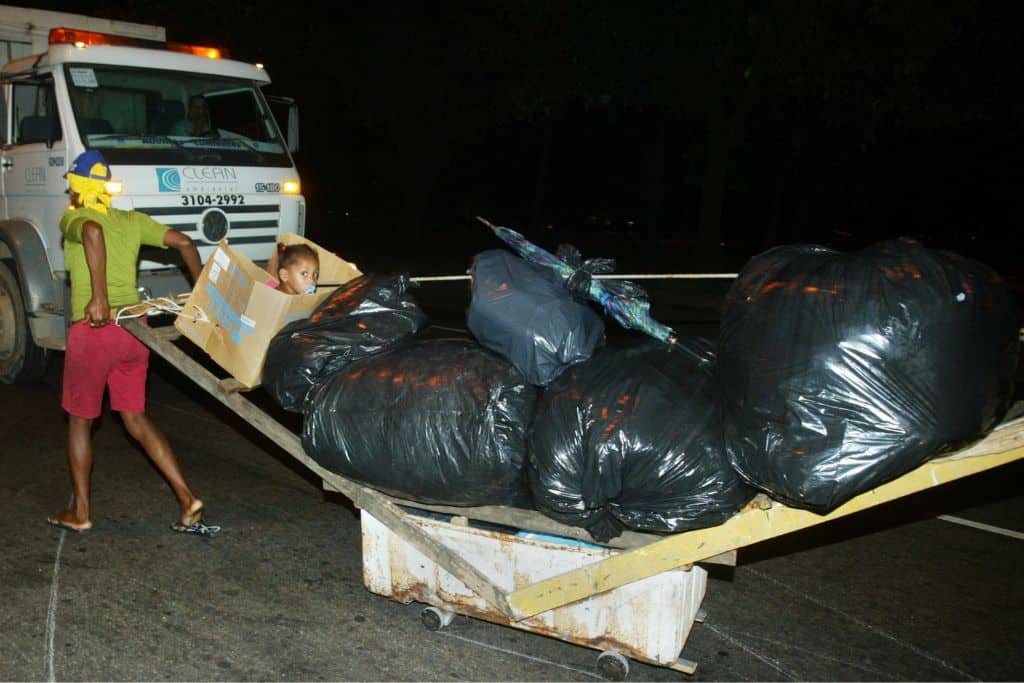
Carla pushes her makeshift cart made of wood, full of black bags filled with plastic bottles and cardboard. Inside one of the boxes is her 5-year-old daughter Isabel, accompanying her around Rio de Janeiro in her hard daily and nightly work. Photo: Marcos Ramos (2020).

More: In Pictures – Waste Pickers: Brazil’s Unsung Recycling Heroes

Posted in Brazil | Tagged , , , , | Leave a comment

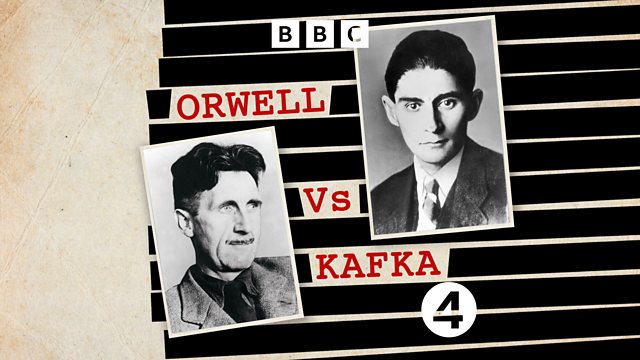
BBC Radio 4 – Orwell vs Kafka, Ep 2: Telescreens

Big Brother Is Watching You

Helen Lewis and Ian Hislop refine their focus in this second episode of Orwell Vs Kafka to examine what the warnings and insights in the novel’s of both men tell us about Surveillance and the human response to it.

We’re often told that as a nation we’re subject to more camera surveillance than most, and Helen speaks to Gavin Saul of Verrimus, a Newcastle based company specialising in technical surveillance counter measures, to measure the truth of that. He describes the extent of modern surveillance and the acceptance of it through what he refers to as normalcy bias, the shrugged shoulder reaction to the reality of smart phone dependence.

Helen and Ian are also joined by Silkie Carlo of Big Brother Watch, an organisation that took it’s name from Orwell’s dystopian vision of a people permanently under surveillance. She talks about the extent to which Orwell’s warning was prescient, as was Kafka’s awareness that surveillance often becomes internalised, with the subjects effectively policing themselves.

And they lighten the tone somewhat in a conversation with Anna Nolan, the runner up on the first UK TV production of Big Brother House. Anna recalls what it felt like to be under surveillance for the sake of entertainment, and why there was an inevitable air of religiosity about accepting the presence of an all-seeing eye, something that hovers in the background of both Kafka and Orwell’s writing.

Producer: Tom Alban

More: BBC Radio 4 – Orwell vs Kafka, Ep 2: Telescreens

Posted in Literature | Tagged , , | Leave a comment

How did the Victorians waterproof wooden ships?

Posted in Craft | Tagged , , , | Leave a comment

Tracing English as far back as possible

[…]

In this episode, we’ll trace English back to its oldest known ancestor: an ancestor it shares with almost all of Europe’s languages, as well as some Asian languages. That ancestor is called Proto-Indo-European.

I also talk about the controversial Nostratic language family and ask whether there could really be a “Proto-Earth” language.

📚LINKS📚
Quellant reading P-I-E: • “The King and the God” – Proto-Indo-E…
Britannica on Nostratic: https://www.britannica.com/topic/Nost…
Proto-Indo-European vocabulary: https://en.wikipedia.org/wiki/Indo-Eu…
Simon Pulleyn’s “Secret Life of Language” is also an enjoyable read

[…]

Posted in English | Tagged , , | Leave a comment

Where IS all the oxygen?

Posted in Science | Tagged , , | Leave a comment

Aloe Vera Production 🔪👌

Posted in infrastructure | Tagged , , , | Leave a comment

Ice Age With Just Sound Effects = Satisfying

Posted in Art | Tagged , , , | Leave a comment