Artist’s Incredible Spontaneous Drawings Capture the Feeling of the Moment | My Modern Met

By Regina Sienra on May 27, 2024
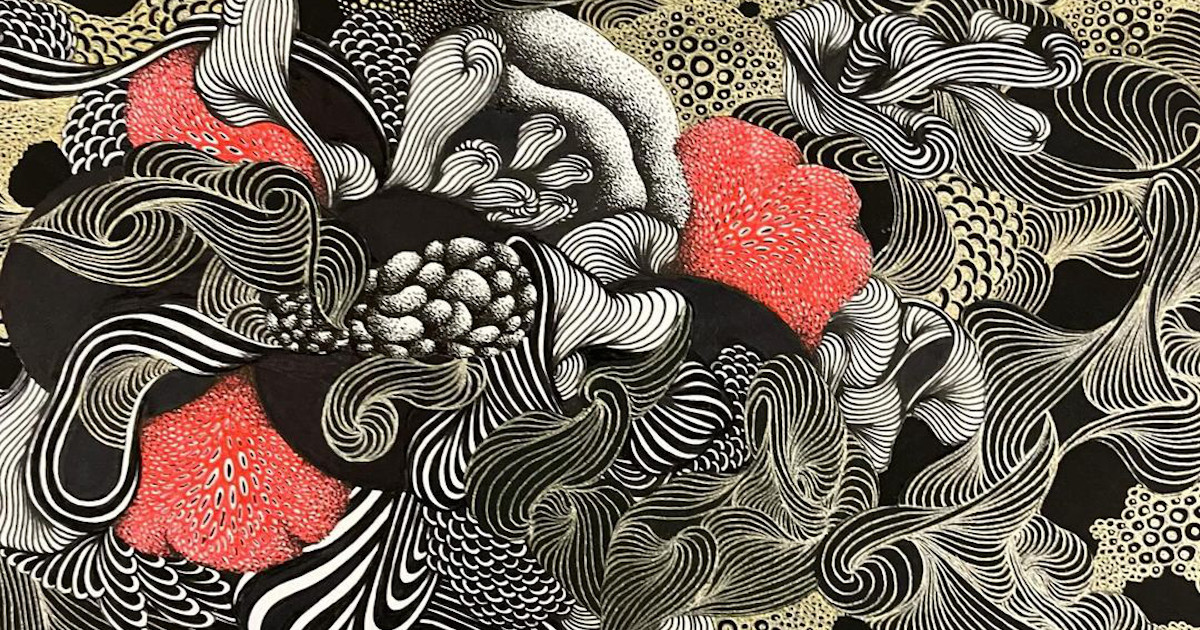
“I leave it to the movement of my hands, letting my heart and soul hit the canvas at that moment.”

Most drawings you see as finished pieces have a lot of planning behind them. Before adding color and details, many draw a preliminary sketch. This offers creatives structure and works as a foundational layer for the piece. But for a Japan-based artist known as Sanagi, this limits the creative possibilities of the work. Instead, he ditches these general guides in favor of portraying whatever crosses his mind at the time of creation.

“I can’t imagine how it will turn out because I leave it to the movement of my hands, letting my heart and soul hit the canvas at that moment,” Sanagi writes. “Therefore, each time, I run my pen through a mixture of anticipation and anxiety. I would be happy if you could feel the excitement of looking through a microscope into a small piece of paper.”

This spontaneity doesn’t lessen the quality of his work. On the contrary, Sanagi’s expansive imagination makes way for detailed, oneiric compositions. Working with pen and paint on paper, Sanagi explores the depths of his brain. “In order to express ‘something complicated’ parasitic in my brain, I drew elaborately with fine lines and dots using a ballpoint pen to create shadows,” he explains about one of his most recent drawings, Brain parasitism. “I expressed my feelings, which repeatedly bubble up and burst like ‘bubbles’ every minute and second, by freely pouring my soul into the dots and lines.”[…]

But spontaneity doesn’t lessen the quality of his work. On the contrary, his expansive imagination makes way for detailed, oneiric compositions.

More: Artist’s Incredible Spontaneous Drawings Capture the Feeling of the Moment
Posted in Art | Tagged , , , | Leave a comment

10/8/05 Richard Prum – The Evolution of Birds: Why Birds are Dinosaurs

Science Saturdays is a special lecture series designed for families that brings the excitement of research and the passion of scientists to school-age children and adults. Each event involves a lecture by a Yale professor and engaging science demonstrations run by Yale college students. The lectures are free and open to the public and the topics explored are for kids in 7th grade and above. On October 8, 2005 the presentation was “The Evolution of Birds: Why Birds are Dinosaurs” by Richard Prum, Biologist.

[…]

Posted in Birds | Tagged , , , | Leave a comment

The 20th Century Fox Theme….And A Bow!

Posted in Music | Tagged , , | Leave a comment

Mission Impossible : use the whole damn guitar

Posted in Art | Tagged , , | Leave a comment

The lake in Richmond Park, London UK.

Posted in Photography | Tagged , , | Leave a comment

From Hellzapoppin’ – The Most Iconic “Lindy Hop” Dance Footage Of All Time (1941)

Posted in Dance | Tagged , , | 1 Comment

The scale of James Webb’s first deep field image

Posted in Astronomy | Tagged , , | Leave a comment

Moctezuma’s Penacho

Posted in Costume | Tagged , , | Leave a comment

The weirdest things about English

njoy this whistlestop tour of the weirdness of English. And start speaking a new languages in 3 weeks with Babbel 🎉. Get up to 60% OFF your subscription ➡️ Here: https://go.babbel.com/t?bsc=usa-influ…

English is special. It’s unique. It’s weird.

In this video, I run through 10 aspects of English that make it bizarre in comparison with other languages. These include its “meaningless do”, dreadful spellings, odd use of tenses, missing pronouns and the strange array of sounds in English.

[…]

Posted in English | Tagged , , | Leave a comment

BBC World Service – CrowdScience, What does prayer do to my brain?

Can science explain the effects of prayer on our brains and wellbeing?

Prayer and meditation are key features of religious and spiritual practices around the world, suggesting they’re intimately linked to the human condition. But what is going on in the brain during prayer? And is praying beneficial for our mental health?

CrowdScience listener Hilary is keen to find answers to such questions. She’s a counsellor with a strong Christian faith, and is curious to know whether science can illuminate religious and spiritual practices.

Presenter Caroline Steel talks to neuroscientists researching how our brains respond to prayer and meditation; and practices mindfulness herself to explore its similarities to prayer. She discovers that having a relationship with God may depend on more than religious practice. And is there a ‘spiritual part’ to our brains? Or is prayer just one activity among many – like going for a walk or playing music – that can have similar effects on our state of mind?

Featuring:
Professor Andrew Newberg, Director of Research Marcus Institute of Integrative Health, Thomas Jefferson University and Hospital, USA
Tessa Watt, mindfulness teacher
Ven. Hin Hung Sik, Centre of Buddhist Studies, University of Hong Kong
Dr Junling Gao, Centre of Buddhist Studies, University of Hong Kong
Dr Blake Victor Kent, Westmont College, USA

Presenter: Caroline Steel
Producer: Jo Glanville
Editor: Cathy Edwards
Studio Manager: Tim Heffer
Production Co-ordinator: Liz Tuohy

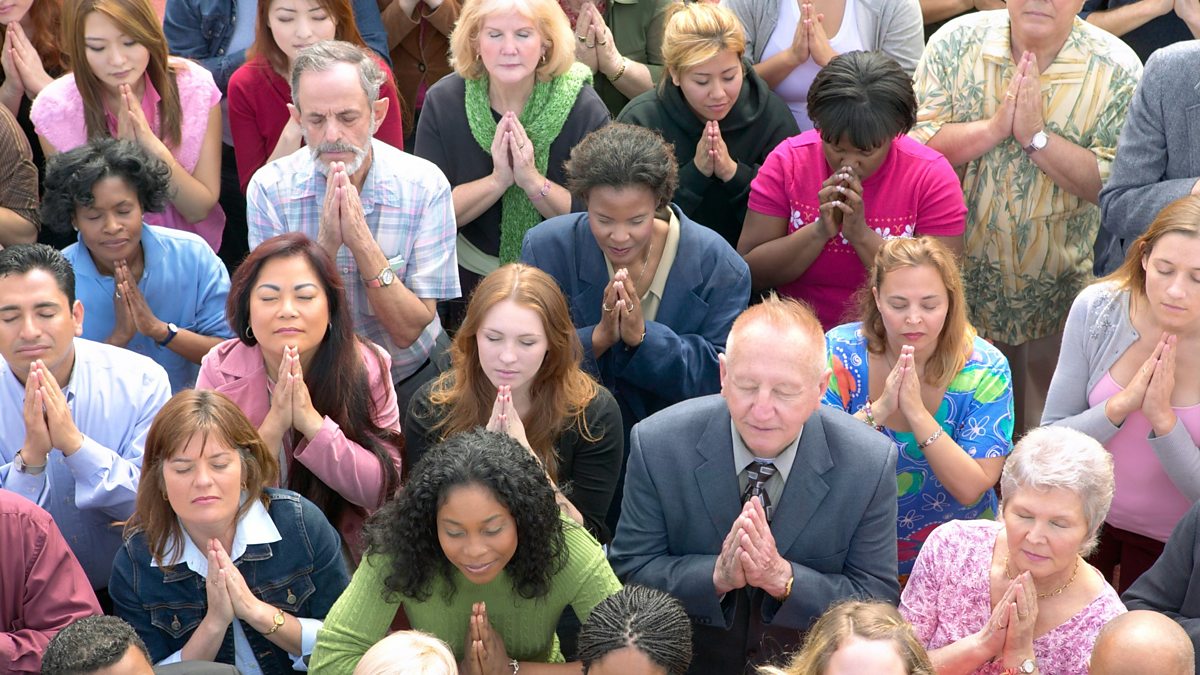
(Photo: A crowd of people praying. Credit: Digital Vision/Getty Images)

Source: BBC World Service – CrowdScience, What does prayer do to my brain?

Posted in Science | Tagged , , , , | Leave a comment