When you fly light aircraft around the UK, you start to notice things most people never see.
From altitude — and even from space — there’s an unusually straight line cutting across eastern England. It doesn’t follow a road, it doesn’t follow a river, and at first glance it doesn’t make much sense at all.
I’ve flown over it countless times, always wondering what it was and why it’s there. From the air it looks deliberate, engineered… but on the ground, it almost disappears.
In this video, I take a closer look at one of the most fascinating features in the English landscape — exploring it from the cockpit, on the ground, and through its history — and uncover why it’s still quietly shaping the land today.
I fly a 2011 Pipersport — also known as the PS28 in Europe or the SportCruiser in the USA, where it’s classed as an LSA. In the UK it’s a Part 21 aircraft, so it requires a full licence. It’s a fantastic little machine: affordable to run, fun to fly, cruising at around 100–105 knots, and with superb short-field performance. You’ll see me dropping into farm strips, backcountry fields, short runways — sometimes even international airports — always trying to learn something new along the way and brining you along with me for the ride.
I fly both VFR and IFR, including visual and instrument approaches. But please remember: my videos are for entertainment only. I’m not an instructor, and nothing you see here should be used for real-world aviation. Airfields can change or even close, so always check the latest information before flying yourself.
If you enjoy my videos, please give them a thumbs up, drop me a comment (I love reading them), and share with anyone who might be interested. And of course, hit Subscribe and tap the bell so YouTube lets you know when the next video is up.
Making these videos is an honour for me and I get to share my passion with you and so appreciate your precious time in watching them.
If you’re interested, some of my video content is available as stock footage — just email me through the About section. And if you’d like to support the channel, you can use the buy me a coffee link below. No pressure — I’m just glad you’re here watching. And if you ever spot me at an airfield, please come and say hi — chances are, I’ll end up buying you the coffee!
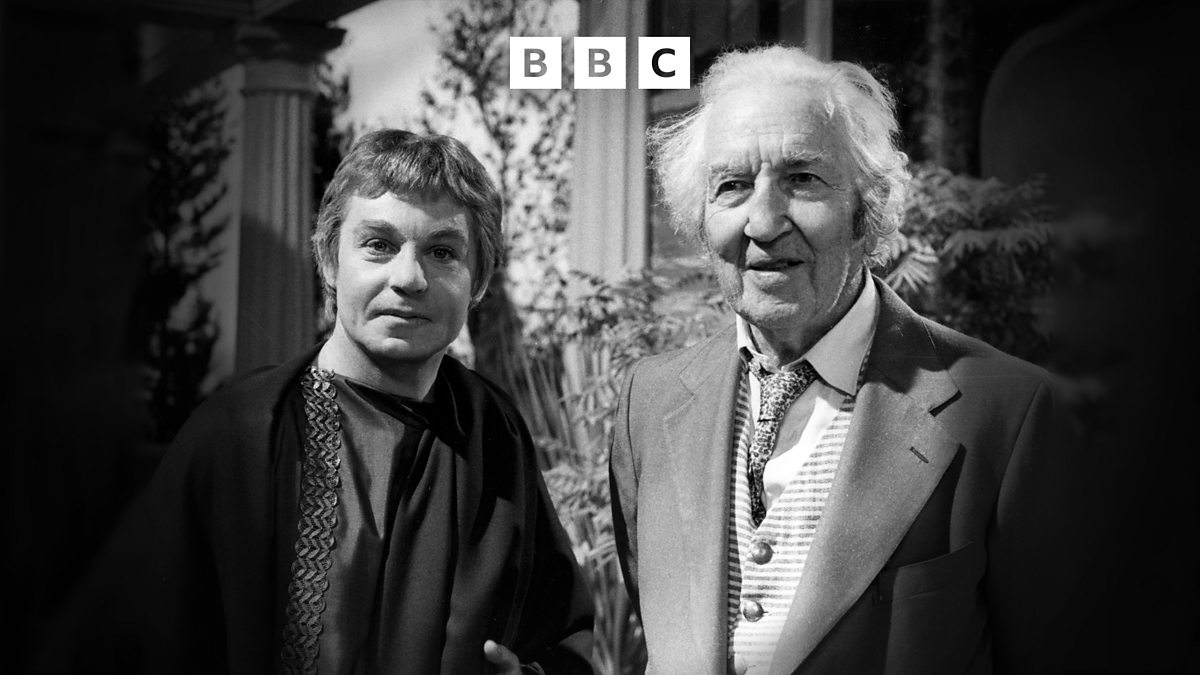
It’s 50 years on from the first screening of the TV series I, Claudius – the hugely popular and perhaps surprising cultural phenomenon that brought the story of a lesser-known Roman emperor into the living rooms of millions of families across the world. The person who wrote the novels that the series was based upon was the high-minded lyric poet Robert Graves, who was always quick to dismiss his achievements in prose, saying he’d knocked the books off as means of paying a bill.
Graves was a survivor of the Somme, with a pedigree background and a cut-glass English accent – but he was deeply connected to Wales, Germany and Ireland and spent most of his adult life living in Mallorca, have said goodbye to all that class-ridden England had to offer. He developed an elaborate personal pagan mythology of muse worship that made him hugely influential on a generation of mid-century poets like Ted Hughes and Sylvia Plath – and had, across the course of his career, four women who served as muse to his poetic efforts.
The poet Michael Symmons Roberts was too young to see I, Claudius on its first outing, and is only now catching up. Through exploring the rich archive of Graves himself, along with conversations with members of his family and his fourth and final muse, Michael investigates Graves’ extraordinary life and literary legacy. He seeks to discover whether, despite Graves’s desire to be remembered as a poet, he will instead be chiefly known for his war memoir Goodbye to All That and the imperial intrigues of I, Claudius.
Presented by Michael Symmons Roberts
Produced by Geoff Bird
Executive Producer – Jo Meek
A Naked production for BBC Radio 4
Let’s explore whether animals can talk. And go to https://ground.news/robwords to see how language shapes our perspectives. Save 40% for unlimited access to the Vantage Plan through my link.
What accent would a talking monkey have? What does an elephant saying “Margaret” sound like? Can parrots really talk? And do giraffes say anything at all?
In this episode, let’s explore the language of the animal kingdom. Through looking at the latest research, you’ll learn just how close to talking some species already are, and what’s stopping them speaking already.

 msamba