
MAY 21, 2024 KATE MOTHES
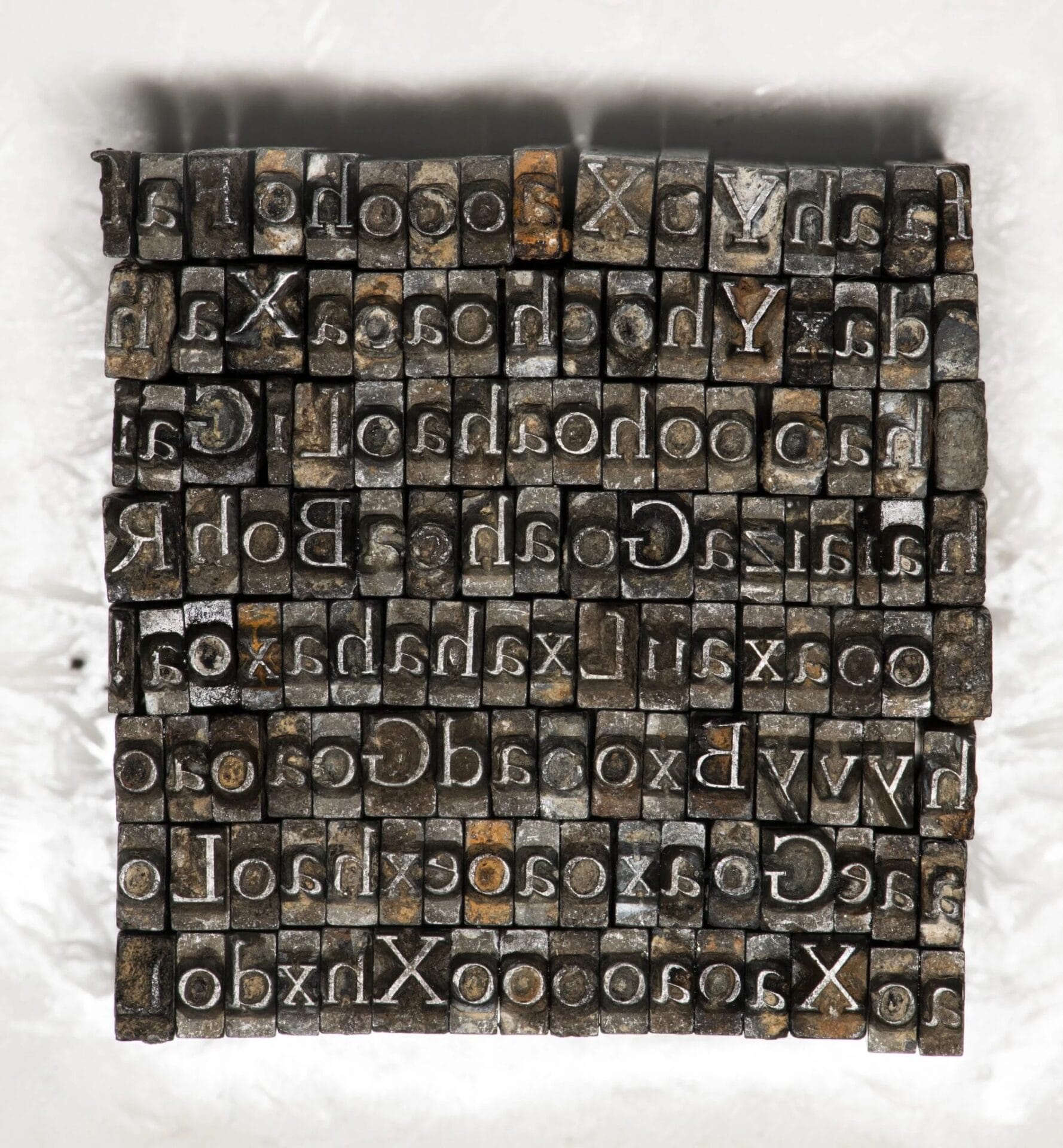 Photo by Matthew Williams Ellis. All images courtesy of Emery Walker’s House
Ten years ago, for type enthusiast Robert Green, a once-in-a-lifetime find emerged from the bank of the River Thames.
In 18th- and 19th-century London, the term mudlark was coined to describe someone who scavenged river banks for valuable items. Today, metal detectors aid in the continuing pastime—which now requires a permit—and every once in a while, a modern-day mudlark dredges up a striking discovery. Ten years ago, for type enthusiast Robert Green, a once-in-a-lifetime find emerged from the Thames.
Rewinding to the early 2000s, Green was in art school and became fascinated by Doves Type. The more he studied it, the more entranced he became by its idiosyncratic characteristics and the creators’ devotion to “pure” design. He began to meticulously digitize the font family.
The origins of Doves can be traced to T.J. Cobden-Sanderson—who has been credited with coining the term “arts and crafts”—and Emery Walker, who founded Doves Press together in Hammersmith in 1900. “For a typeface, they returned to Renaissance Italian books, but with the intention, however, of producing a set of letters that looked lighter on the page than their sources,” says a statement from the Emery Walker Trust. “The aesthetic vision was largely Cobden–Sanderson’s, who believed in ‘The Book Beautiful.’ Exteriors were stark white vellum with gold spine lettering; inside there were no illustrations.”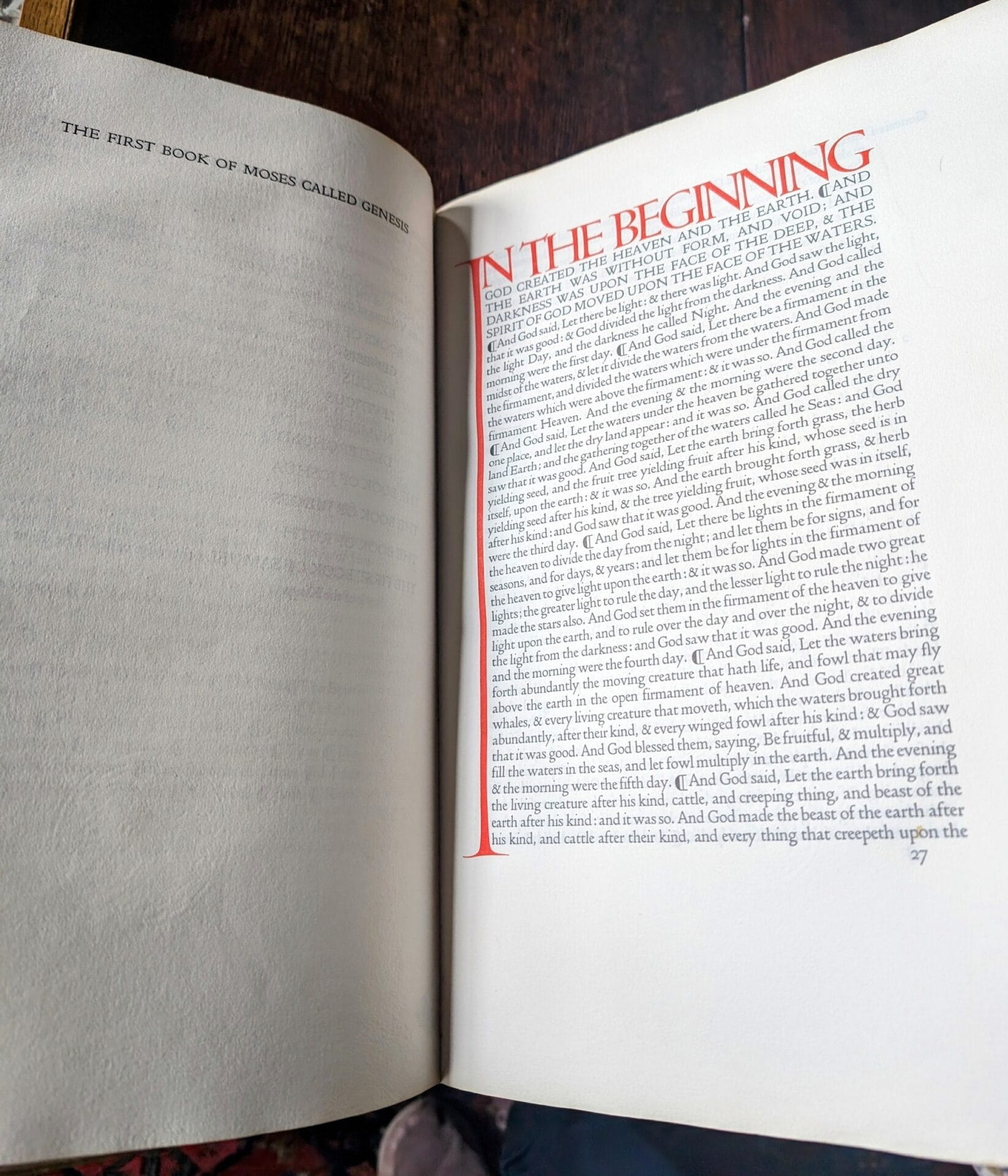 The Bible printed with Doves Type. Photo by Lucinda MacPherson
By 1909, the pair’s business partnership formally dissolved, but Doves Press continued without Walker’s participation. In a short film produced by the BBC in 2015, Green describes the breakdown as a result of “pragmatism versus obsession.” Walker was a practical-minded printer and Cobden-Sanderson, a perfectionist.
In March 1917, Cobden-Sanderson declared publicly that Doves Press was closed, and its type had been “dedicated & consecrated” to the River Thames. “Nobody actually quite got it,” Green says. “And Cobden-Sanderson writes a letter to the solicitor saying, ‘No, I wasn’t talking figuratively. The type is gone.’” He didn’t want Walker to have access—or anyone else, for that matter.
Remarkably, Cobden-Sanderson recorded in his journals the exact date and location that he dumped the type into the water, which took him 170 trips to discard in its entirety. With each load weighing around 15 to 20 pounds, that’s a lot of metal. For 98 years, the type remained on the riverbed, much of it washed away over the decades or sunken into the silt as the tidal flow continually rose and fell […]

