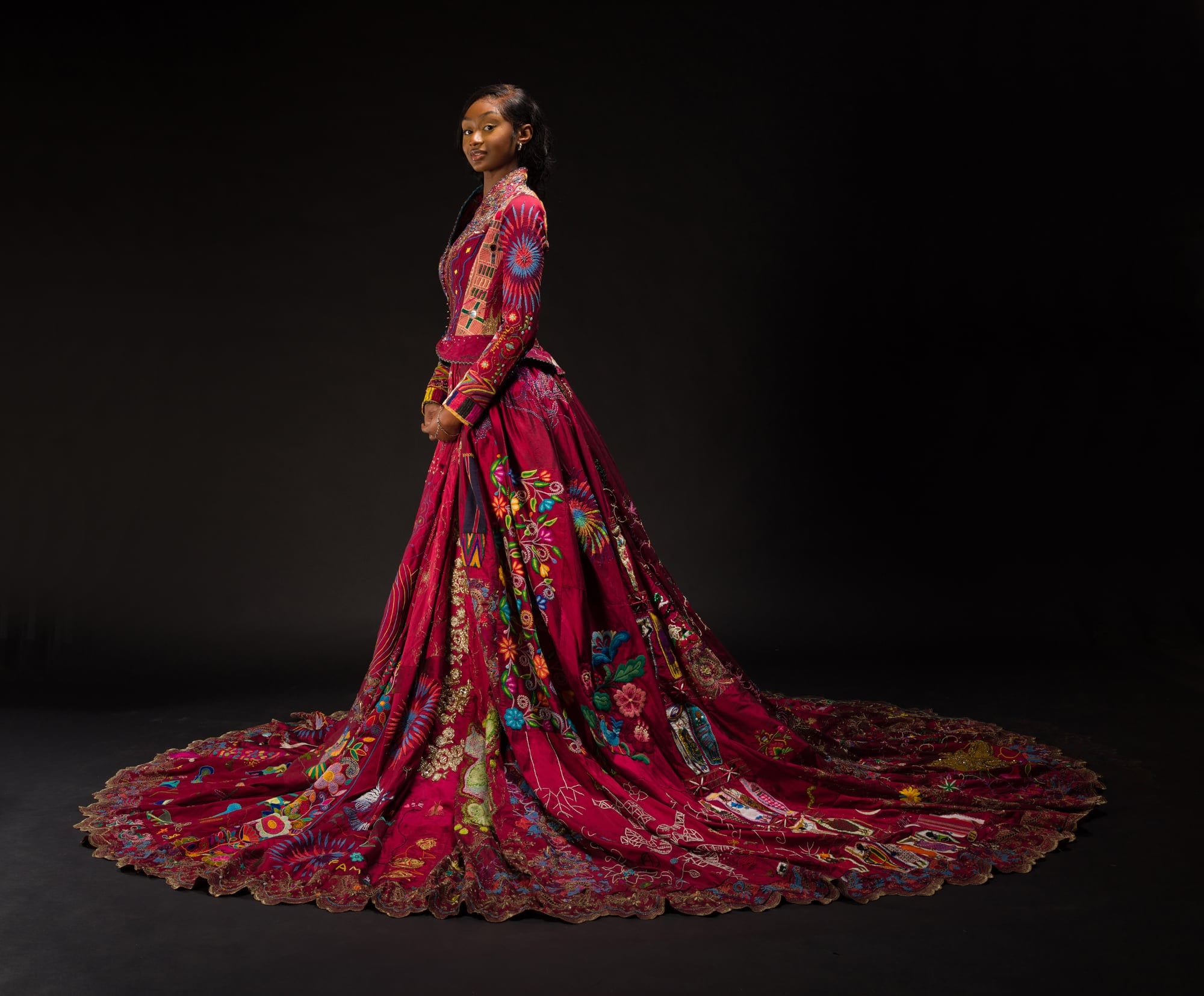
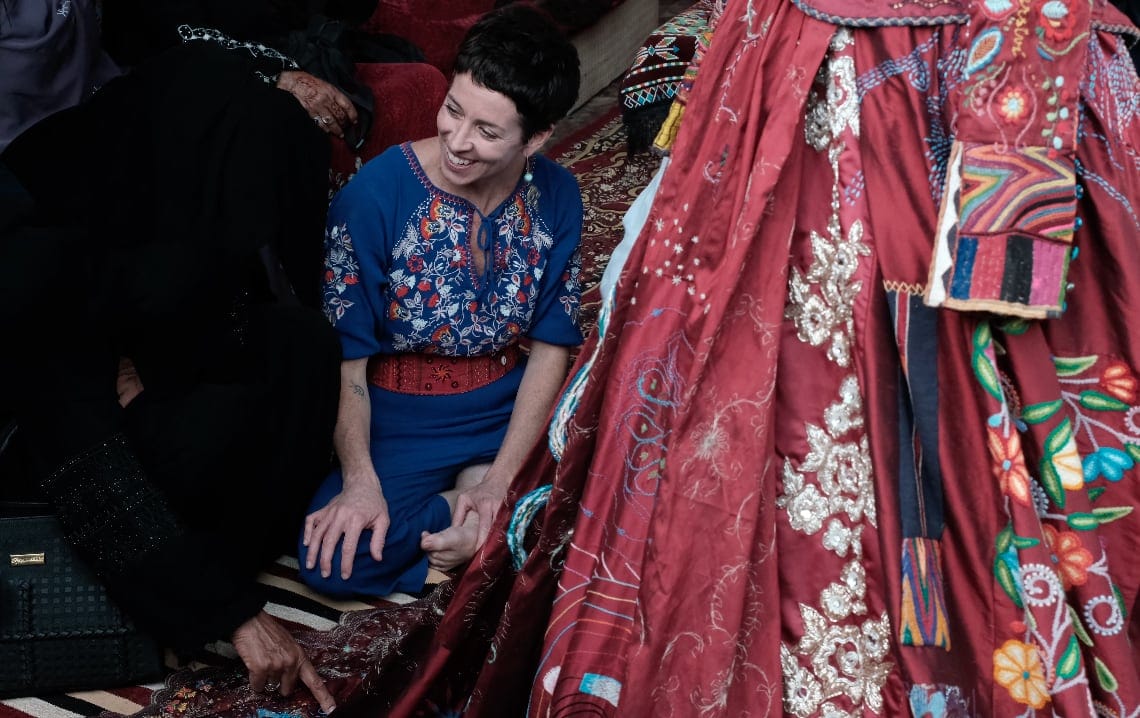
Lekazia Turner, Jamaica (2022). Photo by Mark Pickthall. All images courtesy of Kirstie Macleod
In her early 20s, artist Kirstie Macleod became intimately aware of the ways working with a shared purpose has the potential to form immediate bonds.
Macleod spent her childhood living around the world, moving from Venezuela to countries like Nigeria, Japan, and Canada, to name a few. At 21, she traveled to India, where she immersed herself in the country’s textile industry and craft traditions. She didn’t speak the language but found a connection, in part, through making. “I’d often be with people with whom I couldn’t communicate with words, but I could sit with them and stitch a jacket,” she told Crafts Council.
Photo by Dave Watt
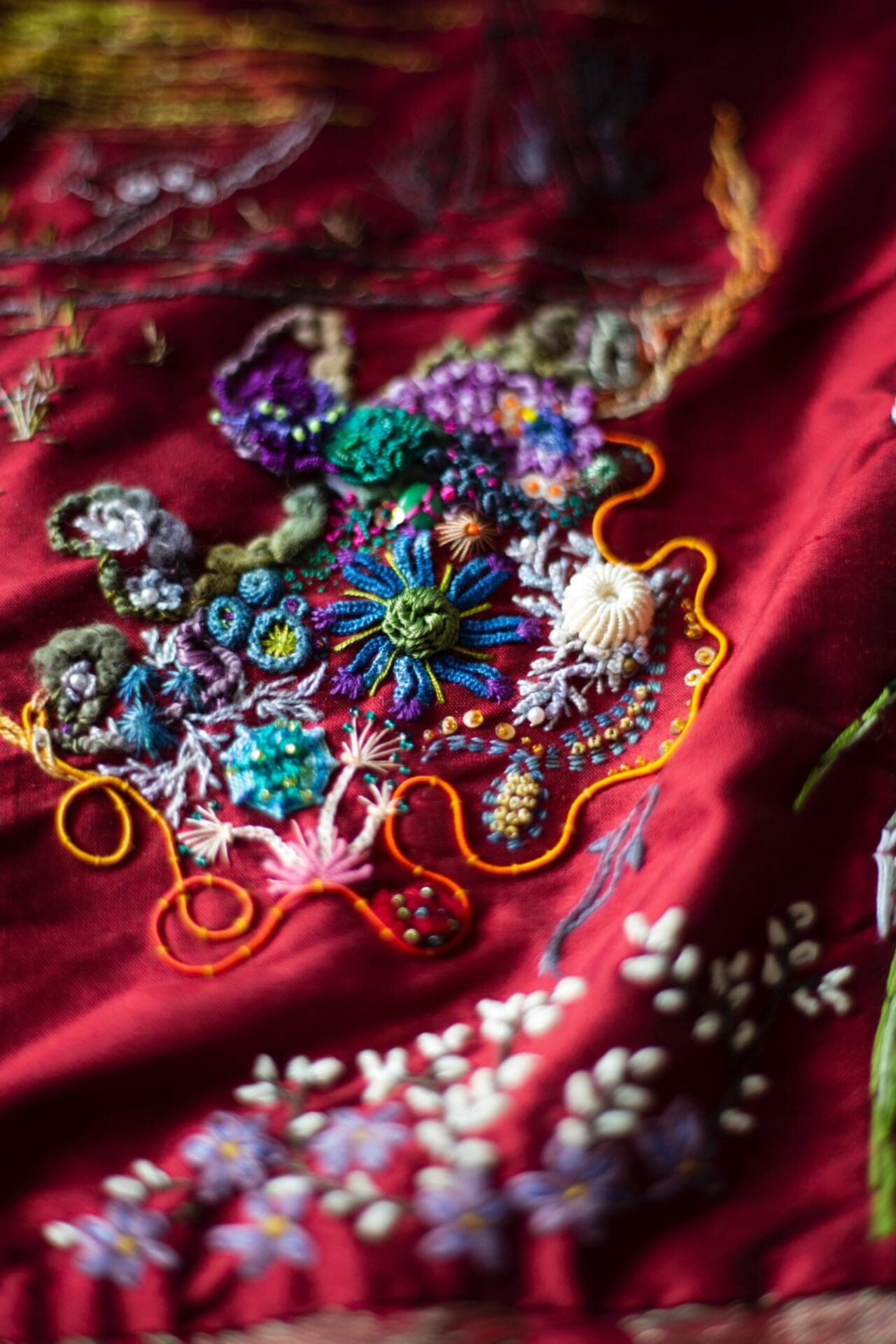
She clung to the idea that embroidery could serve as both a physical and symbolic link between people from different backgrounds, ideologies, and religions, and in 2009, she launched “The Red Dress,” a collaborative project featuring embroideries by hundreds of artisans around the world.
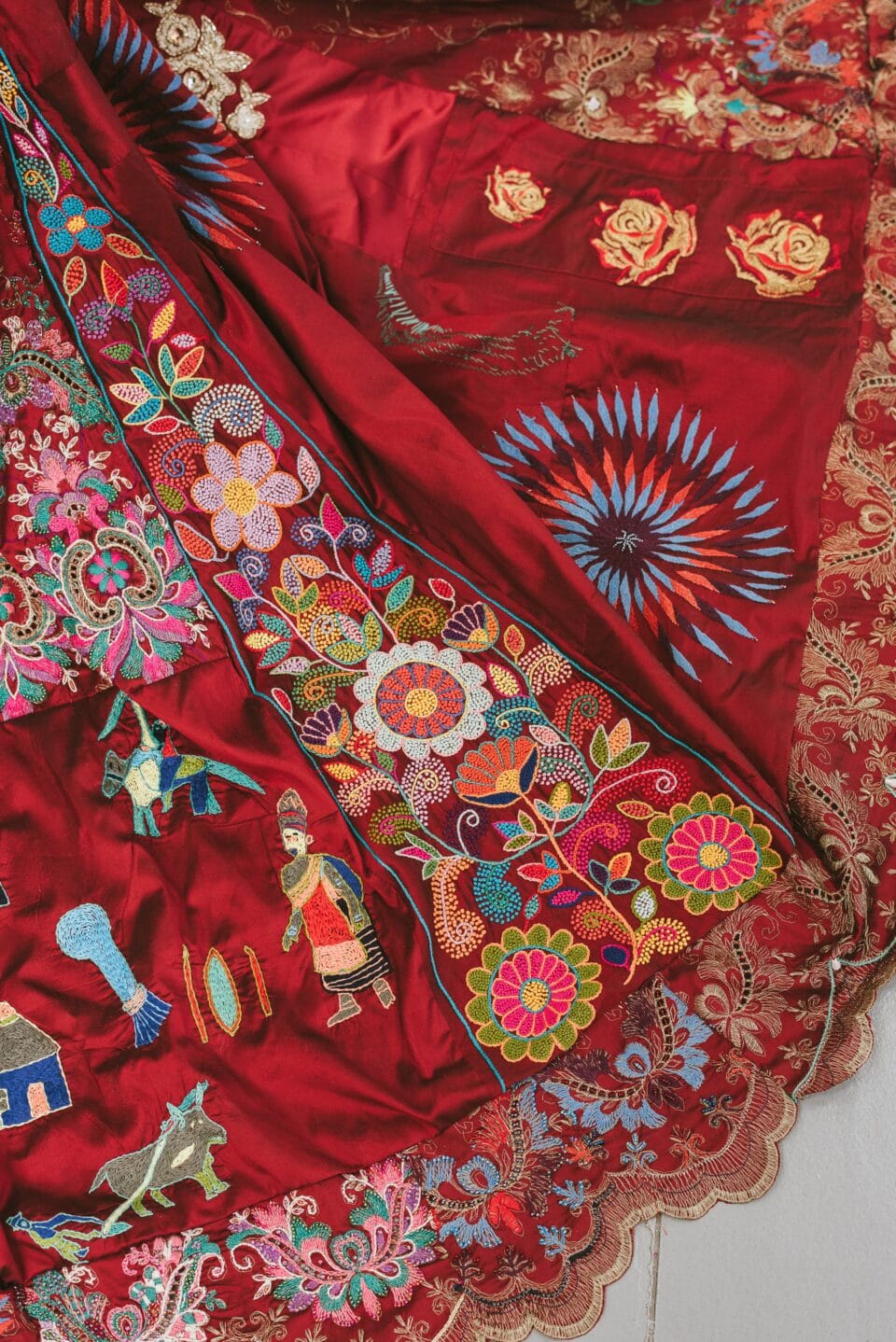
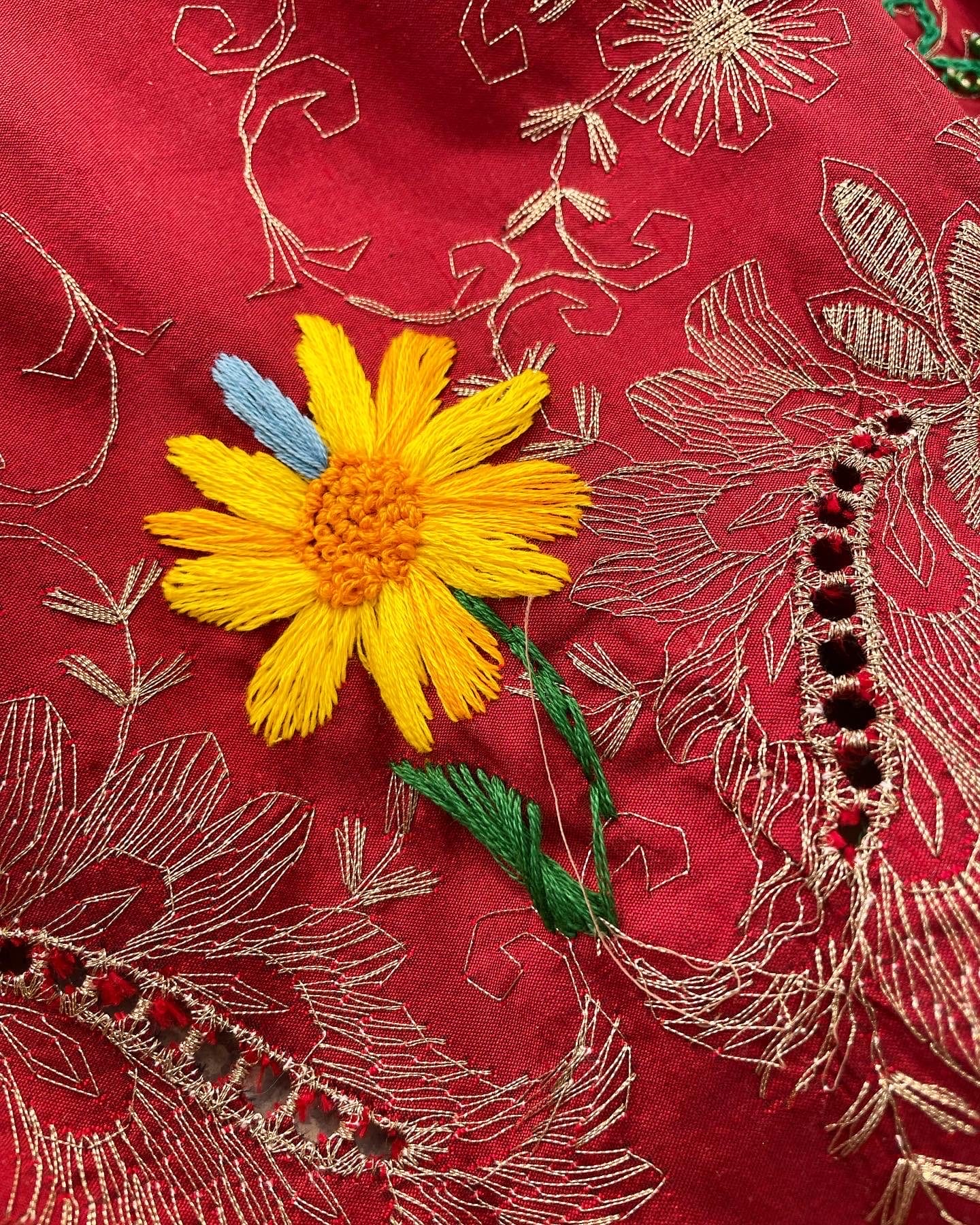
In Egypt, about 50 Bedouin Jabaliya women who are part of the FanSina collective created herbal motifs with curved flourishes inspired by their Mt. Sinai surroundings. During an exhibition in Warsaw, a group of Ukrainian refugees melded long stitches with tight French knots to render a bright yellow sunflower with one petal in pale blue. And in Chiapas, artist Zenaida Aguilar sewed a pointillistic patch of native flora and fauna, a symbol of her ability to thrive and support herself after leaving an abusive marriage.
Aguilar’s story isn’t unique among those involved in “The Red Dress,” many of whom are women in vulnerable positions in their communities and living on little means. Part of the project is to ensure that artists are compensated and have the opportunity to sell more of their work in the future. In total, Macleod commissioned 141 embroiderers to contribute, and these artists will continue to receive a portion of exhibition fees, profits, and sales through the project’s Etsy shop.
Additional contributions came from enthusiastic audiences along the way. A total of 380 embroiderers from 51 countries have since laid millions of stitches on the panels of burgundy silk dupion. […]
Ukrainian refugees Nadia Vaipan and Natalia Volovyh, Galeria Salon Akademii (2022). Photo by Kirstie MacleodUkrainian refugees Nadia Vaipan and Natalia Volovyh, Galeria Salon Akademii (2022). Photo by Kirstie Macleod
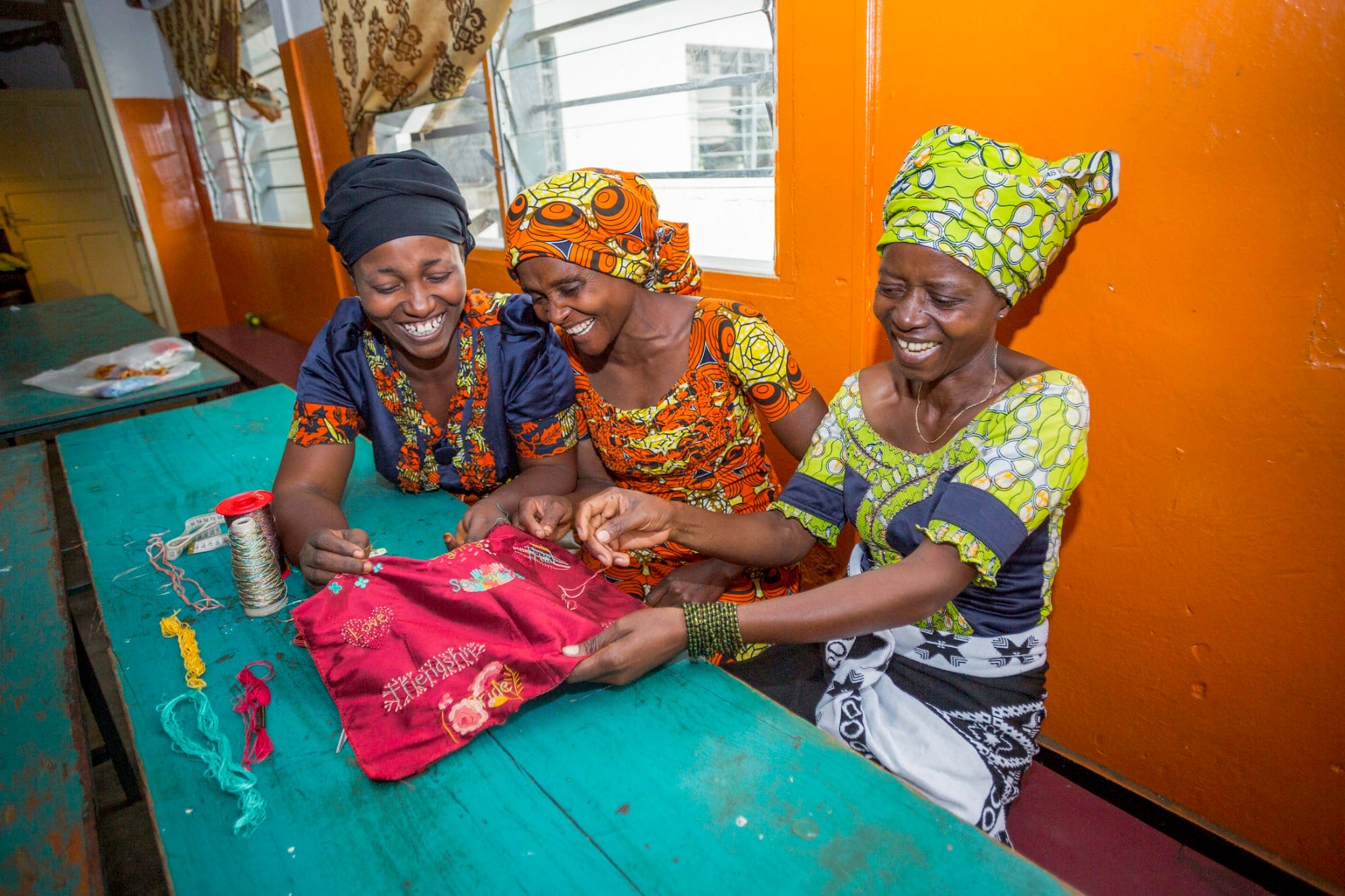
Gisèle, Esther, and Espérance, Congo (2018). Photo by Nicole Esselen
Allthreads Collective, Australia (2018). Photo by Sophia Schorr Kon
Kirstie Macleod and the FanSina embroiderers, Sinai. Photo by Georgina Sleap
When you think of animals of Antarctica, there’s nothing more classic than a penguin. But new research suggests that these lovable waddling water birds didn’t get their start on the icy continent. Turns out, they’re from Australia?
The insane machines that make the most advanced computer chips. Sponsored by Brilliant – To learn for free for a full 30 days, go to https://brilliant.org/veritasium and get started. Plus, our viewers get 20% off an annual Premium subscription for unlimited daily access to all Brilliant courses.
▀▀▀
0:00 The Machine That Saved Moore’s Law
3:12 How are microchips made?
9:11 What is extreme ultraviolet lithography?
15:04 Nuclear Fusion To The Rescue
21:59 How ASML Conquered The Chip World
35:35 Who are ASML’s biggest customers?
37:40 The Most Important Tech Company In The World
41:25 Inside ASML
▀▀▀
A big thank you to Marc Assinck, Jos Benschop, Jan van Schoot, and Jayson Stewart and the rest of the team at ASML.
We are also incredibly grateful to Vivek Bakshi, Andy Hawryluk, Marc Hijink, Asianometry & Claude Montcalm for their time and expertise.
If you want to learn more about ASML and how they developed EUV, check out Marc Hijnk’s book “Focus: The ASML way” – https://focus-dewereldvanasml.nl/
Explore the Asianometry channel (including a wealth of EUV videos) here – / @asianometry

 msamba